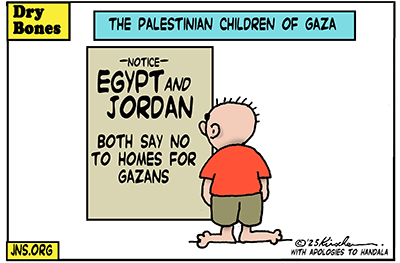
PEACE ON EARTH AND GOOD WILL TOWARDS MAN … EXCEPT FOR THE JEWS AND ISRAEL?

Israel at a Crossroads: Peace Talks, Pressure, and the Christmas Irony

As the global calendar turns toward Christmas – a season when billions of those who call themselves Christians proclaim messages of love, peace, goodwill, and reconciliation – the Jewish state of Israel finds itself under intense and coordinated international pressure. This pressure comes precisely at the time when the world reflects on the birth of Jesus: a Jewish Messiah, born in the Jewish city of Bethlehem, foretold by Jewish prophets, and raised among the Jewish people.

The contradiction could not be more glaring.

Even as diplomats speak the language of peace, Israel faces mounting demands to accept security arrangements that many Israelis believe would endanger their lives. Simultaneously, antisemitism is surging worldwide – often openly, violently, and without shame – during what is supposedly the most moral and compassionate season of the year.

A Fragile Ceasefire, But the Core Issues Remain

Over the last two weeks, a brittle and temporary ceasefire between Israel and Hamas has remained in place. Israel continues cautious security operations along the “yellow line” separating Israeli-controlled areas from the rest of Gaza, maintaining a defensive posture while avoiding large-scale hostilities. Israeli leaders have made clear that any transition to a second phase of President Trump’s 20-point Gaza plan is contingent on Hamas returning the remains of the last Israeli hostage – an issue that is not symbolic, but moral and humanitarian. 

On the ground, however, Hamas continues to claim that it cannot find the remains of the last hostage and also continues to oppose full disarmament. It has signaled only conditional willingness to discuss limited steps, explicitly tying any reduction of arms to political demands such as ending what it calls “occupation” or establishing a “Palestinian” state.

Israel’s position remains firm: there will be no sustainable peace without disarmament.

The United States and “Phase 2”: Diplomatic Momentum, Strategic Ambiguity

The Trump administration’s 20-point Gaza plan envisions a phased process:

Phase 1: Ceasefire and hostage returns
Phase 2:

• Demilitarization of Hamas

• Deployment of an International Stabilization Force (ISF)

• Gradual Israeli force withdrawal

• Governance transition and reconstruction

U.S. officials have stated that deployment of a multinational force could begin as early as 2026, with details still under negotiation.

A high-level planning conference is scheduled for today, December 16, 2025, in Doha (Qatar), bringing together over 25 countries. Guess which country is not invited to be present physically? Even though Israel will not be present, the U.S. plans to involve an Israeli representative via Zoom to present Israel’s views. Reports note that Israel holds veto power over who participates in the future stabilization force and has used that influence (for example to oppose certain countries’ involvement). But, it is not sending an official delegation to the conference itself.

Central questions remain unanswered:

• Who will actually enforce Hamas’s disarmament?

• Will foreign troops confront Hamas if it refuses?

• What are the rules of engagement?

• Who governs Gaza when the dust settles?

Without clear answers, “Phase 2” risks becoming diplomacy without security.

Qatar’s Diplomatic Pressure: Preserving Hamas’s Role

Qatar plays a central role as mediator and interlocutor with Hamas. Its leaders have repeatedly framed the ceasefire as merely a “pause,” insisting that stability requires full Israeli withdrawal and unrestricted movement in and out of Gaza.

This framing deliberately shifts the discussion away from disarmament, portraying security as secondary to political outcomes. The practical effect is unmistakable: Hamas’s political relevance is preserved, while Israel’s demand for total demilitarization is weakened.

Turkey, the Multinational Force, and the F-35 Controversy

Turkey has pushed aggressively for a role in the proposed stabilization force, while simultaneously arguing that disarming Hamas should not be the force’s first priority.

At the same time, a major controversy has erupted over the possible sale of U.S. F-35 stealth fighter jets to Turkey, which has experienced some forward motion between the two countries.

However, a Gatestone Institute analysis warns that selling F-35s to Turkey would:

• Undermine Israel’s air superiority

• Empower a government that supports Hamas

• Reward a NATO member that purchased Russian S-400 systems

• Create long-term strategic risks once U.S. political constraints fade

For Israel, this is not an abstract concern. It is a matter of deterrence, survival, and regional balance.

Hamas’s Refusal to Disarm: The Central Obstacle

Hamas remains the core obstacle to peace. It refuses to surrender its weapons unconditionally, treating disarmament as a bargaining chip rather than a prerequisite for stability. Israeli leaders have warned that any withdrawal absent verified disarmament will simply lead to the next war – deadlier than the last.

Rising Antisemitism: From Rhetoric to Bloodshed

While diplomats debate Gaza, Jews around the world are being targeted.

On December 14, 2025, a mass shooting at a Hanukkah celebration at Bondi Beach in Sydney, Australia, left more than a dozen Jews dead and many more wounded. Australian authorities described the attack as terrorism and “evil antisemitism,” convening emergency security meetings.This was the deadliest attack on Jews in Australia in decades – and it occurred during a Jewish religious celebration, in December. The hero of the day turned out to be a Syrian Moslem, who attacked one of the two terrorists, with the result that many lives were saved.

Jewish communities worldwide report on:

• Rising harassment

• Vandalism of synagogues

• Physical attacks on Jews in public spaces

The message is unmistakable: antisemitism is no longer whispered – it is acted upon. And while politicans and media personnel express regret over blatant antisemitism in their midst, one is hard pressed to find official acts to combat this rampant disease that cannot be cured by a vaccine, but only by a changed heart. 

A Necessary Denunciation: Christmas Rhetoric Without Moral Courage

It must be said plainly:

Those who proclaim Christmas as a season of love while excusing, tolerating, or fueling hatred of Jews are not celebrating peace – they are mocking it.

There is something profoundly corrupt about lighting candles, singing carols, and speaking of goodwill toward mankind while:

• Pressuring the Jewish state to accept mortal risks,

• Rationalizing terror as “resistance,” and

• Remaining silent as Jews are openly attacked in the streets.

A world that venerates a Jewish Savior, while demonizing the Jewish people, has learned nothing from history – and worse, refuses to learn.

Chanukah is the Festival of Light; Christmas reminds us of the One Who is the Light of the World. And yet, the behavior of the world reflects the fact that it loves the darkness rather than the light, because its deeds are evil and that darkness continues to spread worldwide against the Apple of His eye. 

Yesterday, they came for the Jew, but people did not speak out, because they were not Jewish. Tomorrow they will come for the Christian, and people will not speak out, because they are not Christian. One after one will be the target and people will not speak out, because they are not in the target group. And finally, they will come against the rest, who did not speak out. But, there will be no one left to speak out for them! See.

Peace Without Security Is Not Peace

The facts are stark:

• The ceasefire is fragile.

• Hamas refuses disarmament.

• Qatar and Turkey complicate enforcement.

• International diplomacy prioritizes optics over security.

• Antisemitism is rising, visibly and violently.

• All of this unfolds during a season supposedly devoted to peace.

Israel seeks peace – but peace that leaves Jews unsafe is not peace at all.

If the world truly believes in “peace on earth and goodwill toward men,” it must begin by extending that goodwill to the Jewish people – and by allowing Israel the right to defend its citizens without apology. 

Anything less is hypocrisy dressed in holiday language.

For those who celebrate the Feast of Lights with us, may you have a healthy, peaceful and joyful Hanukkah!

“The LORD is my light and my salvation; whom shall I fear?” (Psalm 27:1)

“I am the light of the world. Whoever follows Me will not walk in darkness, but will have the light of life.” (John 8:12)

Wherever you are and whatever you are involved with, remember: bless, be blessed and be a blessing.

Hag Sameach (Happy Holiday)!

Marvin

A Stabilization Plan that Destabilizes: How Post-Ceasefire Diplomacy Is Endangering Israel 

The November 2025 UN Security Council vote approving a U.S.-drafted “stabilization” plan for Gaza is being sold as the long-awaited turning point toward peace. It promises reconstruction, new governance structures, foreign oversight, and eventually – with enough diplomatic creativity – a “credible pathway” toward “Palestinian” statehood.

But diplomacy that ignores reality is not peacebuilding; it is wishful thinking dressed in respectable language.

For Israel, the logic of the plan contains a fatal flaw: it initiates Phase Two (reconstruction, normalization, political arrangements) before there is full compliance with Phase One (complete disarmament of Hamas and other terrorist factions). The result is not stability but a dangerous illusion – one that hands Hamas time, legitimacy, and diplomatic cover.

At its core, this moment tests Israel’s ability to think clearly and relationally: to understand both the rational consequences of the plan and the shifting commitments of its closest ally, the United States.

This post will briefly examine the risks Israel now faces – including Washington’s willingness to sell stealth fighters to Saudi Arabia, America’s softening on disarmament requirements, and the growing threat of Hezbollah’s rearmament – and why reason, not rhetoric, must prevail.

The Illusion of Progress: Diplomacy That Lets Hamas Terrorists Off the Hook

On 18 November 2025, the UN Security Council adopted Resolution 2803, a central piece of President Trump’s 20-point Gaza plan. It includes:

1. A transitional “Board of Peace” (BoP) to guide reconstruction.

2. An International Stabilization Force (ISF) mandated to oversee demilitarization and the “permanent decommissioning of weapons.”

3. A “credible pathway” to Palestinian self-determination.

The problem? Hamas rejects the core premise.

Hamas leaders have publicly refused to disarm, rejecting the ISF as partisan and claiming its disarmament function “strips the force of neutrality.” Meanwhile, 100–200 Hamas terrorists remain entrenched in tunnels beneath Rafah, refusing to surrender, even in exchange for exile and are ready to fight to the death.

This alone should have halted any move towards Phase Two of the Gaza Plan. Yet Western diplomats continue acting as though paperwork can accomplish what force of arms has not.

Prime Minister Netanyahu has repeatedly warned that: “This area will be demilitarized and Hamas will be disarmed – either the easy way or the hard way.” Defense officials have already made clear that if the ISF fails: “Gaza will be demilitarized down to the last tunnel … by the IDF”, if necessary.

The contradiction is glaring: an international plan demands disarmament, but the primary player, Hamas, refuses and the international community simply looks the other way.

Weak and Counterproductive Regional Actors Undermine the Plan

1. Arab States Want Peacekeeping – Not Peace-Enforcement

Fourteen Arab states supported the resolution, but none offered troops to enforce it – except Turkey. Jordan’s King Abdullah made the situation painfully clear a month ago: “What is the mandate of security forces inside Gaza? … [W]e hope it is peacekeeping, because if it’s peace-enforcing, nobody will want to touch that.” A stabilization force that cannot enforce anything is not a stabilization force. It is a symbolic presence – a political ornament.

Turkey even offered to supply 2,000 troops – a stunning irony given Ankara’s support for Hamas – but Israel rejected the proposal outright: “There will be no Turkish boots on the ground”, although it is willing to accept some Turkish involvement through humanitarian aid.

2. Turkey and Qatar Maneuver to Protect Hamas

Turkey and Qatar, both long-time supporters of Hamas, are working to secure influential roles in Gaza’s future. Such involvement is not “neutral.” Their strategic interest is clear: preserve Hamas as a political entity. 

Israel’s relations with Turkey are, at best, unstable and Jerusalam views Turkey as a quasi-enemy state – if such a term can be used. It openly allows Hamas to operate an office in Istanbul, using it as a base from which political, media, and even terror-related activities are carried out.  But, Turkey also has ideological and geopolitcal motives, that are part of its broader regional strategy, which looks towards re-establishing the Ottoman Empire, only modernized by Islamic politics of the 21st century. Allowing it to become part of the ISF would provide a level for Ankara to exert influence over “Palestinian” politics and limit Israel’s freedom of action.

But, more problematic is the apparent disconnect between Israel and the United States regarding the role of Turkey in the reconstruction/rehabilitation of Gaza. Washington views Turkey as a strategic partner, with influential and resource capability. Jerusalem, on the other hand, takes a more pragmatic approach, viewing events and partnerships in the Middle East from an existential security point of view, not as a potential real-estate transaction. In this regard, Israel’s concern is that the U.S. fails to see and to understand the threat to Israel’s strategic interests posed by Turkey. For an excellent discussion of the present dynamics between Israel and Turkey, see Jonathan Spyer’s article that appeared this week in Middle East Forum.

3. Saudi Arabia’s New Leverage: Normalization for Statehood, Not Security

Saudi Crown Prince Mohammed bin Salman (MBS) told President Trump that Riyadh wants to join the Abraham Accords – but only on the condition Israel accepts a clear path to a Palestinian state. Reports indicate MBS privately pushed for a final-status agreement within five years, including full statehood. Prime Minister Netanyahu has warned unequivocally that such a state in the geographic heart of Israel would be an existential threat.

Saudi priorities are clearly emphasized: “Palestinian” statehood takes precedence over Hamas disarmament. This provides Hamas with significant diplomatic oxygen.

Washington’s Troubling Drift: Security Guarantees in Question
In addition to the apparent disconnect between Jerusalem and Washington concerning Turkey’s involvement and presence in Gaza, as mentioned above, two additional developments reveal a concerning shift in U.S. policy, raising questions about Washington’s long-standing commitment to Israel’s security.

1. U.S. Willingness to Sell F-35 Stealth Fighters to Saudi Arabia

The U.S. has agreed to sell Saudi Arabia dozens of F-35 fighter jets as part of a massive trillion-dollar deal on energy, AI, minerals, and defense. Israel’s defense establishment immediately warned that this sale risks eroding Israel’s regional air superiority – the foundation of its deterrence.

This isn’t theoretical. Israel’s qualitative military edge (QME) is not a preference; it is American law: Arms Export Control Act, 22 U.S.C. §2776(h). Approving such a sale without making Saudi normalization with Israel a condition signals something uncomfortable: The U.S. appears willing to compromise the security of its closest ally for regional leverage and commercial benefit. This is a relational injury, not just a strategic one. A friend who strengthens your enemy forces you to rethink the nature of your relationship.

2. U.S. Softening on Phase One (Disarmament)

The original 20-point plan insisted that disarmament was non-negotiable. But Washington is now signaling openness to postponing Gaza’s demilitarization, if not to acquiesce in its failure to disarm at all. This reverses the order of the plan’s logic – and undermines the very foundation of desired peace in the region. Reconstruction without disarmament is the rebuilding of a fortress.

As noted in the Jerusalem Post: “Hamas is rebuilding control despite the ceasefire, raising doubts over Gaza’s future and the 20-point plan”. With the repeated ceasefire violations by Hamas, it is only a matter of time before the entire ceasefire will collapse. Major international reporting and policy analysts warn that the present ceasefire is a tactical break, not a durable fix, unless the ISF is empowered to enforce disarmament, not to act solely as “peacekeepers”. We’ve seen what the U.N.’s “peacekeepers” failed to do and we do not need a repeat performance. But, we should also take heed of King Abdullah’s statement that peace-keeping, not peace-enforcement, will be acceptable to Middle East nations. This is where intention needs to be put into practice, failing which, we are simply biding time until another flare-up occurs, igniting and involving not only the Middle East, but the international community as well. And while the U.S. is considering the value of Middle East real estate, and the desire to move negotiations along, events north of Israel must not be ignored.

The Hezbollah Factor: A Parallel Threat That Cannot Be Ignored

As the world fixates on Gaza, Hezbollah has been rapidly rearming in the north. Iranian resupply chains are active again. missile stockpiles have grown. Fortifications expand by the week. If Hamas remains armed in the south and Hezbollah strengthens in the north, Israel faces an intolerable two-front strategic chokehold. No rational nation would accept such a scenario.

Relational Wisdom: When Trust Is Strained

In human affairs – and in geopolitics – trust is built on consistency. When consistency breaks down, trust erodes. Proverbs 18:19 teaches: “A brother offended is harder to win back than a fortified city.” That statement should speak for itself.

Israel increasingly senses that the U.S. is willing to trade Israel’s security for diplomatic gains and economic incentives. Such actions wound not only the logic of the relationship but its emotional foundation. In Israeli discourse, a common refrain has long been heard: “We have no one to rely upon except our Father in Heaven.”Allies matter, but alliances that ignore reality and the needs of its partners can become liabilities.

The High-Stakes Choice: Containment or Empowerment?
The world faces a decisive crossroads. If reconstruction proceeds without verifiable disarmament, the consequences are entirely predictable:
Hamas survives.
Hamas rebuilds.
Hamas regains legitimacy.
Hezbollah accelerates its buildup.
Iran celebrates.
Israel walks into its most dangerous strategic configuration in decades.
This would be Hamas’s greatest victory since its founding.

If, however, the U.S., Israel, and the Gulf states tie every dollar and every step of reconstruction to complete, verifiable disarmament, then true stability, although for a season, becomes a potential reality.

Reason demands it.
History confirms it.
Relationships depend on it.
Peace without security is not peace.
Reconstruction without disarmament is not reconstruction.
A ceasefire without enforcement is not a solution – it is an illusion.

Unless the international community drives Phase One to completion, the “stabilization” of Gaza will become not a foundation for peace, but a dangerous pause – punctuated by repeated Hamas ceasefire violations – a pause that widens, rather than resolves, the region’s deepest fault lines.

And miles away, across the Big Muddy, there is the person to be sworn in as the next Mayor of New York City, who believes that, holding a meeting in a synagogue where Jewish people are encouraged to make aliyah – to immigrate to Israel, is against international law! What will be next? No right to pray outside of a church or synagogue?

As was stated a number of years back – The times they are a changin’.

Enough said.

We are about to begin a new week. May it be a blessing and a joy for you, as you remember:

Bless, be blessed and be a blessing.

Marvin
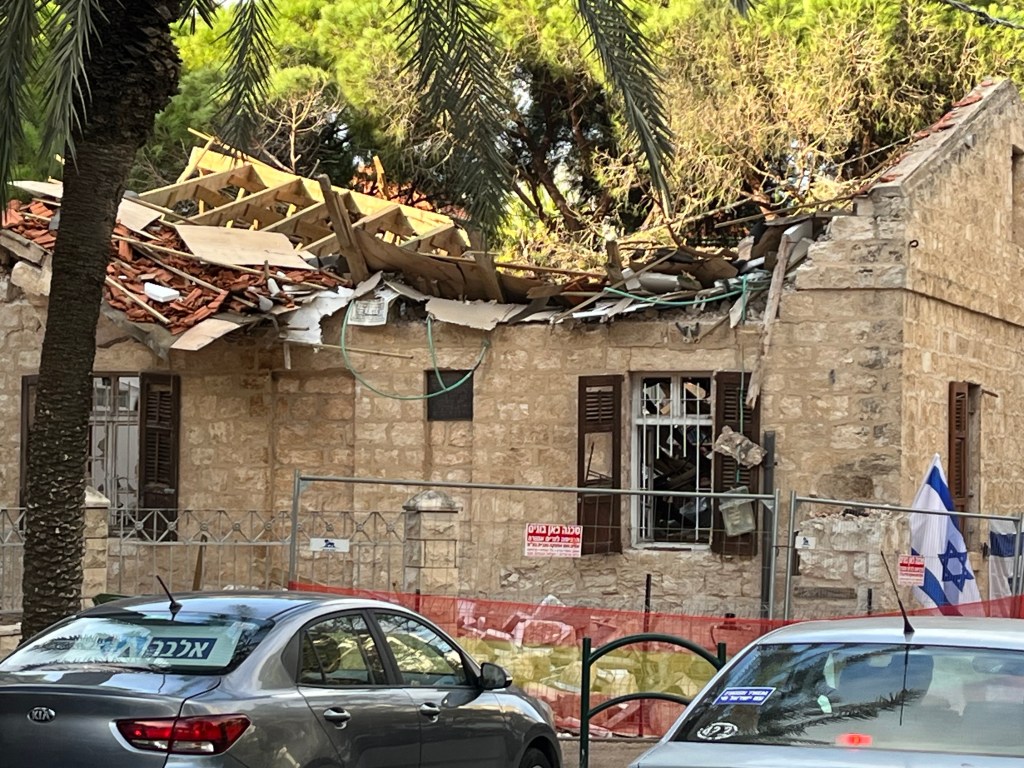
The World Sees What It Wants: Israel and the Illusion of Empathy – Part 2

Shalom all, 

International myopia and shortsightedness seem to dominate whenever the subject is Israel. As noted in yesterday’s post, the global community has long viewed Israel’s security challenges through a lens limited to surface impressions – momentary emotions, fleeting images, and diplomatic convenience. Such dulled vision inevitably leads to distorted responses. Yet even amid this haze, there are occasional rays of clarity – voices able to see the reality more sharply and to offer insight that Israel is the answer, not the problem. If only others would listen.

Hezbollah’s escalation: two-week surge, re-arming, and northern threat

While much diplomatic attention has focused on Gaza, Hezbollah has made tactical leaps and built deeper arsenals in the past two weeks. Israeli sources say weapons are being smuggled from Syria into Lebanon, new anti-tank missile caches have been formed south of the Litani, and Hezbollah drone incursions tested Israeli responses.

Key implications:

• Multi-front war risk: If Hezbollah opens a second theatre, Israel must split resources while still battling Hamas underground.

• Proxy escalation: Hezbollah’s probing of Israeli air defences and borders is not random – it’s testing the limits of will and rules. And the Lebanese government is not acting more forcefully to curb the activities of that terrorist organization.

• Supply route resilience: Arms flows through Syria and Lebanon are harder to interdict than Gaza rockets; stopping them requires sustained intelligence and readiness.

Israel must treat the northern threat not as “latent” but as active, building into a broader Iranian-led war strategy.

The operational picture: integration of threats, geography and diplomacy

These threads – Gaza tunnels, hostage intelligence, corridor-talk, Hezbollah escalation – converge into one operational reality:

• Hamas remains operationally capable despite the cease-fire.

• Hamas uses symbolic gestures, such as the Goldin transfer, as tools of negotiation.

• Hezbollah is re-arming south of the Litani, using civilian infrastructure as cover.

• Diplomatic drafts risk changing geography before threats are neutralized.

For Israel that means a single strategic fact: security sequencing must come before political settlement – not after. Anything else is upside-down strategy.

Time is becoming a critical factor, as other “players” will enter into the field, leaving Israel on the sidelines. Israel needs to make its voice heard loudly and clearly, so that Washington, Brussels, Moscow and the U.N. should never be left guessing what Israel will or will not accept. 

Israel needs to make demilitarisation the baseline condition for any future action relating to Gaza. Any proposal must first deliver verified dismantling of tunnels, weapons, and fighters. 

It needs to link all movement or safe-passage to independent hostage verification. Not a deal, a sequence: hostages returned → disarmament verified → then movement considered. 

It needs to maintain military pressure on Hamas – every cease-fire violation must be met with severe consequences.

It needs to firmly reject any corridor that carves Israel’s geography without security control. Sovereignty over airspace, borders and defence must remain unbroken. 

It needs to sustain northern interdictions, prevent Hezbollah’s rearmament and sever Iranian supply chains via Syria and Lebanon, while preparing for a larger conflict. Israel must anticipate, not react and pay particular attention to its borders with Egypt and Jordan, and the possibility that “friendly neighbors” may quickly turn, join ideologically and militarily with our enemies, and return to the goal of eliminating Israel’s existence.

It needs to demand clear ROEs (Rules of Engagement) for any multinational force deployed. International troops cannot be symbolic – they must have enforcement capability, which means they would need to act against Hamas terrorists if necessary (a fact that causes some countries to hesitate to commit troops to the multi-national force). 

It needs to brief allies with operational maps and intelligence. The contiguous corridor geometry and tunnel network should be visualised for decision-makers, not left abstract. This is seriously problematic, as even providing such visuals could be interpreted as Jerusalem’s consent to the establishment of a “Palestinian” state.
It needs to build a national consensus on the long haul. In light of the present political chasms, this will probably be one of the most difficult tasks – to get the nation behind a multi-year strategy of deterrence, reconstruction, intelligence and diplomacy. 

Conclusion: Clarity must take precedence over selective empathy. 

The return of Lt. Hadar Goldin should be a clarion call – not just a moment of mourning. It should highlight the transactional nature of the enemy, the depths of the threat, the geometric consequences of diplomacy divorced from defence. Hamas played its part. Hezbollah watches. Meanwhile the world clicks “like” on every humanitarian photo and thinks it’s done its job.

Israel cannot and must not accept that narrative. If global optics dominate strategy, Israel loses before the first bomb falls. Israel must insist on sequencing, verification, and geographic clarity (in this regard, a picture can truly be worth a thousand words). The war may pause – but the fight for lasting security is only just beginning … again.

Foreign governments view the Arab-Israeli conflict through news cycles, press briefings, electoral calculations and a shrinking attention span. They do not see the tunnels reaching under their homes. They do not hear sirens at night. They do not bury soldiers a decade after their deaths, because terrorists treat their bodies as trophies.

Last week was not merely a list of events – it was a reminder.

A reminder of the enemies Israel faces.

A reminder of how badly the world misunderstands those enemies.

And a remainder that survival requires clarity, not wishful thinking.

And then there is Iran, still around, still active and still planning its moves against Israel, while focusing on developing a massive missile supply, so that it can bombard Israel with some 2,000 missiles per day. But, that is a story for a different day.

In the age of selective empathy, Israel must act with full attention. Because the world’s vision is blurred, Israel’s must be sharp. Israel’s task is not only to defend itself militarily – it is to tell the story the world refuses to hear, to draw the map the world refuses to look at and to ensure that mistakes made in distant capitals do not become dangers carved into Israeli soil.

Woe to those who call evil good, and good evil; Who substitute darkness for light and light for darkness; Who substitute bitter for sweet and sweet for bitter! (Isaiah 5:20)

On your walls, O Jerusalem, I have appointed watchmen; all day and all night they will never keep silent. You who remind the LORD , take no rest for yourselves; and give Him no rest until He establishes And makes Jerusalem a praise in the earth. (Isaiah 62:6-7)

Keep looking up!

Bless, be blessed and be a blessing.

Marvin

The World Sees What It Wants: Israel and the Illusion of Empathy – Part 1

Shalom all, 

For too long the world has viewed Israel’s security problems through a narrow optic that privileges short-term appearances, emotive snapshots, and diplomatic convenience. The last two weeks make that myopia painfully clear. While Israel grapples with subterranean militants, hostage locations, and a steadily rearming Hezbollah on its northern border, many governments – distracted, earnest, or politically constrained – press the Jewish state toward policies that risk leaving it exposed. Israel needs to be guided by clarity of purpose – not selective empathy.

Israel is the only country that needs to constantly explain its history, as if it was presenting a press briefing. This past week compressed tunnels and hostages, U.N. resolutions and border escalation, among other things, into one dense package of strategic urgency. Many governments tend to respond with sympathetic statements or peace-talk proposals, yet too often miss the live combat realities beneath the surface and expose how badly foreign governments misunderstand the nature of Israel’s war for survival.

This is not just a story of policy or optics – it is one of real geography, real tunnels, real hostages, and real weapon flows. It is one of widening cease-fire cracks. It deals with the heart-wrenching return and burial of Lt. Hadar Goldin, with U.S. and Russian drafts at the UN, with a proposed contiguous corridor from Gaza to Judea & Samaria and with Hezbollah re-arming on Israel’s northern border. Read together, these events form a single, integrated narrative.

Cease-fire cracks and the underground threat

The accepted “cease-fire” is widely seen abroad as a sign of progress. For Israel, however, it remains a dangerous pause. Israeli forces repeatedly disclosed tunnel shafts and Islamist operatives beneath and across the “yellow line” – the nominal Israeli-controlled edge of Gaza. These tunnels provide ingress, egress, munitions movement and surprise-attack pathways. More alarming: recent assessments place 100–200 Hamas militants in those tunnel networks beneath Israeli-held areas near Rafah and Khan Younis, who are refusing to surrender and continue to pose a lethal threat to troops and civilians alike. This is a tactical reality that diplomatic frameworks seldom address: underground warfare that only claims light in surface negotiations.

In line with this, during the week, Israeli security services thwarted imminent shootings and bombings south of Jerusalem – a stark demonstration that small terror cells remain an active threat despite the “pause” in the fighting. According to Israeli reports, Hamas holds strategic hostage intelligence – they “know the locations of all remaining hostages.” The upshot: any suggestion of “safe passage” for militants must be conditioned on verified recovery of the bodies of the hostages remaining in the control of Hamas, as well as disarmament. Without that, Israel deals with more pie-in-the-sky empty promises. 

The return of Lt. Hadar Goldin – grief, symbol, and leverage

This week saw the long-awaited homecoming of Lt. Hadar Goldin, who was killed in 2014 during Operation Protective Edge and held by Hamas for more thaan 4,000 days. His funeral in Kfar Saba drew thousands. However, multiple sources indicate Hamas delayed the transfer of his body as a tactical offering, being part of broader negotiations over militants and cease-fire lines. This exposes a deeper reality: that humanitarian acts can be weaponized into bargaining chips. Every diplomatic framework must recognize that dynamic. If it fails to do so, then humanitarian aid and the protection of civilians risk becoming tools of coercion. This can undermine genuine relief efforts, incentivize bad-faith actors to manipulate suffering for political gain, prolong conflicts, and erode the moral and legal foundations of humanitarian norms.

U.S. pressure, UN drafts and diplomatic myopia

Washington’s diplomatic push this week focused on stabilization frameworks for Gaza and a pathway to “Palestinian” self-determination – a fancy term intended to substitute for the call for the establishment of a “Palestinian” state. Its efforts were marked by the circulation of a U.S. draft resolution at the U.N. Security Council.  Russia responded with its own draft, centered on humanitarian access and a simplified cease-fire guarantee, while resisting governance mechanisms that might impose a transitional authority.

The crucial problem is that while both resolutions attempt to redefine governance in Gaza and Judea–Samaria, the U.S. draft goes significantly further by incorporating an eventual pathway to Palestinian statehood – yet it pointedly avoids making Israeli security requirements a binding prerequisite. This omission is not a technical oversight, but a structural flaw: it establishes political expectations without embedding the security architecture needed to sustain them. By advancing statehood language absent enforceable sequencing, the U.S. proposal risks legitimizing political concessions without demanding the demilitarization, counterterror guarantees, and territorial controls essential for Israel’s safety. In practical terms, it pressures Israel toward an outcome while declining to anchor that outcome in the very security conditions that any responsible framework must require.

Deviations from the Trump 20-Point Plan

President Trump’s 20-Point Plan laid out a specific order: deradicalize Gaza, verify disarmament, secure the territory before granting political recognition – and preserve critical Israeli-controlled areas like the Jordan Valley. The U.S. draft this week diverges: it embeds stabilization and political horizons into the Security Council language before full verification of disarmament. That deviation is not technical. It means political settlement becomes the lever for security, rather than security being the foundation for settlement. For Israel, that inversion is perilous. Washington is pushing diplomatic deliverables, instead of confronting the nature of the enemy.

Why geographic contiguity matters – the Gaza-Judea & Samaria corridor

Diplomatic language likes the word “contiguity.” It sounds innocuous, but Israeli reality calls it a red line. If Gaza is linked to Judea & Samaria, Israel faces a corridor that slices across its body, splitting north from south and placing major population centres at risk. The corridor could be:

• A land route under the control of so-called “Palestinians”.

• A surface road or tunnel system under international supervision.

• A territory swap carving out Israeli sovereign land.

Each model creates strategic vulnerabilities: hostile seams, transit routes open to infiltration, and attack vectors previously absent. Even a “peace corridor” under international supervision is not bullet-proof. Decades of peace-keeping experience show that rules of engagement lag behind militant ingenuity. For Israeli defence planners, geography is destiny – compromising borders without security verification is not compromise, it is capitulation.

Any physical route connecting gaza to Judea & Samaria, whether above ground, below ground, surface roads, sovereign passageways, or even controlled lanes, would:

Create a permanent security vulnerability – a hostile corridor running across its midsection;

Place Israeli cities at risk – the corrector would pass within minutes of major population centers;

Create a logistical nightmare – Israel’s north-south contiguity would be interrupted, forcing rerouted traffic, military mobilization challenges and emergency-response delays;

Enable Iranian movement across the territory – a corridor would not just be a right-of-way for so-called “Palestinians”, but would become a strategic asset for Iran and its proxies;

Undermine every Israeli defensive doctrine – the IDF’s rapid-deployment model depends on internal geographic freedom. A corridor would shatter that.

Part Two of this post will be forwarded tomorrow.

Have a great week.

Bless, be blessed and be a blessing.

Marvin

Hope, Betrayal, and the Unfinished War for Israel’s Security

Shalom all.

It’s been another turbulent week for Israel — a week that exposed, once again, the widening gap between political rhetoric and reality on the ground. We witnessed continued maneuvering over Gaza’s future, fresh talk in Washington of ceasefire “frameworks” that sound more like fantasies than feasible plans, and the harsh reminder that Israel’s enemies remain resolute in their aims.

Amid this turmoil, one reality remains painfully clear: A month after the ceasefire agreement, Hamas still hasn’t returned all of the bodies of hostages killed in the 7 October attacks. Five families continue to wait in anguish, unable to mourn properly, while international diplomacy struggles to enforce even the most basic human decency.

At the same time, we heard a startling claim from Steve Witkoff, reported by World Israel News, that Hamas had privately agreed to disarm during a meeting with Jared Kushner before the ceasefire. If true, it’s the kind of statement that would have made headlines in any other part of the world – but in the Middle East, words are easy, weapons are not.

The “Disarmament” That Never Happened

According to Witkoff’s account, Hamas representatives told him and Kushner that they were ready to lay down their arms in exchange for an amnesty and a sweeping reconstruction plan for Gaza. In his telling, the U.S. was preparing a process – a kind of “decommissioning plan” — that would grant economic rehabilitation in return for genuine demilitarization.

It was a momentary spark of optimism. But the ink had barely dried on the news before Hamas made its real position clear: it has no intention of fully disarming.

Not only does Hamas continue to parade its fighters openly in Gaza, it maintains operational control of key neighborhoods, re-activates tunnel networks, and coordinates attacks under the cover of local “security units.” If this is what “disarmament” looks like, the word has lost all meaning.

Further undermining the credibility of the disarmament narrative is the recent report by the Algemeiner that Hamas and Hezbollah convened in Beirut and publicly rejected all regional peace initiatives and vows to continue fighting Israel, emphasising that weapons are central to their identity and survival. This declaration reveals the deep gulf between private assurances and public vows of resistance and war.

Together, these facts demonstrate that the word “disarmament” is a hollow term in Gaza, with no practical application.

This pattern – promise and pretense – is familiar to anyone who has watched Middle East events for any reasonable period. Western negotiators hear what they want to hear. Hamas says what it needs to say. And Israel, caught between diplomatic pressure and existential threat, is forced to navigate between illusions and survival.

A Pathetic Display of Gratitude

Adding to the irony was the visit of Donald Trump to Israel a month ago. The former U.S. president, hailed as a steadfast ally, was greeted with applause, photo-ops, and effusive words of thanks. He was praised as a friend of Israel, a man who “stood with us” – and, in many ways, he did.

But, beneath the smiles was something tragic. Trump’s earlier statements – that Hamas rule would end, that a ceasefire would mark the dawn of a new order in Gaza – now stand in stark contrast to the grim reality: Hamas remains entrenched, armed, and unrepentant.

The gratitude showered upon him feels misplaced. Not because Trump’s support for Israel was insignificant – it wasn’t – but because the optics of thankfulness without accountability cheapen the struggle for truth. The applause rings hollow when hostages’ remains are still being withheld, rockets can continue to fly, and the same terrorist leaders who vowed Israel’s destruction are still dictating terms and threatening to continue its actions against Israel.

Sometimes, the most painful truth is that good intentions and strong words are not enough. Israel doesn’t need another “deal” or “photo moment.” It needs its enemies disarmed – actually disarmed – and the world needs to stop mistaking symbolic gestures for progress.

The West Still Doesn’t Understand the Middle East

There is a deeper blindness at work here. The West still tries to view the Middle East through the lens of transactional diplomacy: “If you give us peace, we’ll give you aid.” It is the same formula that failed in Oslo, in Camp David, and in every round of “confidence-building” since the 1990s.

But this region doesn’t work that way. For Hamas, weapons are not bargaining chips – they are identity. Power in Gaza is not earned at the ballot box, but enforced at the barrel of a gun. The Western belief that economic incentives will tame militant ideology misunderstands the psychological fabric of a movement that glorifies martyrdom and despises compromise.

You cannot buy peace from an organization that sees negotiation as a tactic, not a goal. You cannot trade reconstruction for demilitarization when the act of surrendering weapons would destroy the very legitimacy Hamas claims as “the resistance.”

And you cannot impose Western diplomatic logic on a region where honor, survival, and “divine mandate” outweigh every rational cost-benefit equation.

The Multinational Mirage

Now, the same Western capitals that misread Hamas are floating a new “solution”, discussed last week: a multinational policing force to oversee Gaza “for the time being”.

On paper, it sounds reasonable – a neutral stabilizing presence to prevent further escalation. But anyone with memory knows how such forces perform in the Middle East. They arrive with noble language and limited rules of engagement. They report violations but rarely intervene. They “monitor” terrorism rather than stop it. If this force enters Gaza without full Israeli coordination and operational control, it will quickly become a hostage of Hamas itself – a shield for terrorists, not a guard for civilians.

Israel cannot subcontract its security. Not to the UN, not to NATO, and not to any coalition that lacks the will to fight the kind of war Hamas insists on waging.

Meanwhile in New York: The Political Earthquake

Thousands of miles away, Israel’s allies in the diaspora are facing their own wake-up call. The election of Zohran Mamdani as New York City’s new mayor – an outspoken anti-Israel activist aligned with the far-left Democratic Socialist movement – has stunned the Jewish community. See here and here.

Publications captured the sense of dread and disbelief. For decades, New York was a bastion of Jewish civic influence and support for Israel. Now, the city that once prided itself on standing with the Jewish people is led by a man who has openly praised BDS, called Israel an apartheid state, has been accused by critics of aligning with Hamas’s resistance narrative, and has said that the Palestinian cause was “central to [his] identity”.

The Anti-Defamation League (ADL) has even launched a “Mamdani Monitor” – an unprecedented move to track anti-Jewish and anti-Israel actions coming from the mayor’s office.

The symbolism is profound: if the cultural capital of the Jewish diaspora can elect an avowed opponent of Zionism, what does that say about the shifting moral compass of the West? It should serve as a warning to all pro-Israel voices, Jewish and Christian alike, that silence and complacency carry consequences. Anti-Israel activism is not confined to Gaza or university campuses. It has entered the political mainstream of the Western world.

The Cost of Leaving Hamas Armed — and Hezbollah Reorganizing

Back in the region, the implications of leaving Hamas armed are immediate and dire. Every day that Hamas retains even partial control of Gaza’s arsenals, it strengthens its claim to survival. It can re-arm through tunnels from Sinai, receive Iranian funding, and rebuild its military infrastructure under the cover of “reconstruction”.

Worse, Hezbollah is already watching and learning. The longer Hamas is allowed to survive, the more it emboldens Hezbollah to re-organize and test Israel’s northern border. What happens in Gaza doesn’t stay in Gaza – it sets a precedent.

If Hamas survives politically, Hezbollah thrives strategically. Despite Iran’s humiliation in its 12-day war with Israel in June, both terrorist organizations remain Iranian satellites. Both depend on the same ideological oxygen: Israel must fall, the West must retreat, and Islamism must rise. Every ceasefire that leaves Hamas breathing is a warning shot for the next war.

What Israel — and Its Friends — Must Remember

Israel’s leadership must resist the temptation of optics over outcome. No disarmament without verification. No ceasefire without control. No trust in pledges whispered in hotel rooms while rockets can still fly. No consideration of a second stage of a 20-point peace plan when the first stage is incomplete and has been repeatedly violated.

And Israel’s allies – in America, in Europe, in the evangelical world – must remember that moral clarity is more precious than diplomatic comfort. There is no “both-sides” here. There is no moral equivalence between a democracy defending its citizens and a terror regime that hides behind its own.

The West must rediscover the courage to call evil by its name, and Israel must stay strong enough to stand alone, if necessary. This is increasingly significant in light of Israel’s present willingness to allow foreign troops to have boots on Israeli soil.

A Final Word: This week exposed a truth that polite diplomacy would rather hide: the promises of men mean little when the will to enforce them is absent.

Hamas has not disarmed. Hezbollah is re-arming. The West still misunderstands the region it seeks to “fix.” And in the echo chambers of global politics, applause and gratitude continue to substitute for courage.

But Israel’s security – Israel’s survival – has never depended on applause. It has depended on resolve. And that, thank God, is something Israel still has in abundance.

Do not trust in princes, in mortal man, in whom there is no salvation. (Psalm 146:3)
The Lord is my rock and my fortress and my Savior, my God, my rock, in whom I take refuge; my shield and the horn of my salvation, my stronghold. (Psalm 18:2)

Bless, be blessed and be a blessing.

Marvin

Trump’s Plan, the Hostages, and the Kiryat Gat Center: The Unraveling of Israel’s Independence?

Shalom all,

This past week brought into sharp relief a key piece of post-cease-fire planning for Gaza and marked a watershed moment in Israel’s modern history — not because of a battle fought on the ground, but because of what may be taking shape in the heart of the country: the establishment of a multi-national command and coordination center in Kiryat Gat. The southern city, strategically located between Tel Aviv and the Gaza Strip, has emerged as a central node in both the logistical and operational management of Israel’s response. Acting as a coordination center for troop movements, humanitarian operations, and reconstruction logistics, Kiryat Gat symbolizes Israel’s dual efforts: immediate defense and long-term stabilization.

According to various news reports, the center – officially termed the Civil-Military Coordination Centre (CMCC) – will be staffed by U.S. military officials alongside senior Israeli officers. Its declared purpose is to oversee “security, humanitarian, and reconstruction coordination” related to post-war Gaza. Yet beneath the bland bureaucratic phrasing lies a tectonic shift in Israel’s sovereignty, one that has stirred deep unease among security analysts and ordinary Israelis alike.

The Center in Kiryat Gat – Symbol or Precedent?

The decision to host such a center on Israeli soil, far from the war zones, is being hailed by some as evidence of unprecedented cooperation between Washington and Jerusalem. But others are asking a harder question: cooperation at what cost?

For the first time, foreign military and civilian officials – including representatives of allied and regional states – will be operating inside a facility that is directly involved in the strategic decision-making process regarding Gaza’s future. The coordination center is expected to handle not only logistics and humanitarian oversight, but also deeper policy alignment and real-time monitoring – potentially giving foreign actors an advisory or even veto-like influence over decisions that have traditionally been the sole prerogative of Israel’s cabinet and military command.

This development, while dressed in the language of partnership, raises a critical issue: does Israel retain full sovereignty over the fate of Gaza, or is it ceding ground – literally and politically – to an international framework designed to “manage” it?

Kiryat Gat’s location is noteworthy. It lies near major transportation corridors, within range of Israel’s southern frontier with Gaza, yet sufficiently inland to serve as a logistics and command node far from immediate cross-border flashpoints. In the Trump plan’s conception, Kiryat Gat is envisioned as a hub for reconstruction, humanitarian assistance, and regional draw-down: as Israeli troops relieve Gaza and devolve to a stabilisation posture, the city becomes the operational center for moving personnel, materials, and expertise into Gaza.

However, the placement of this coordination center represents more than a logistics hub; it may signal a soft internationalization of the Gaza question. While Israel continues to assert its right to self-defense and strategic autonomy, the growing U.S. footprint – under the guise of coordination – could gradually evolve into a form of shared management, especially as Washington and its allies push for post-Hamas governance arrangements involving Arab states, NGOs, and multinational oversight.

If allowed to expand, this model could normalize the idea that the international community, not the sovereign State of Israel, holds decisive authority over Gaza’s security architecture. Once established, such precedents are notoriously difficult to reverse. The sovereignty that Israel has fought so fiercely to protect may, ironically, begin eroding from within – through consent rather than coercion.

The Architecture of the Trump Plan

Trump’s regional framework – though not publicly detailed in full – appears to rest on three pillars:

1. Military Transition: Israel moves from combat operations in Gaza toward a phased draw-down and stabilization role.

2. Humanitarian-Reconstruction Surge: A broad reconstruction program in Gaza begins in earnest, with Israeli and international coordination, and Kiryat Gat as a staging area.

3. Regional Political Realignment: Gaza’s eventual wind-down dovetails with normalization deals, perhaps Saudi involvement, Gaza governance reform, and muting of Hamas’s dominance.

In this schematic, Kiryat Gat serves as both a logistical and symbolic center for the shift from war to reconstruction.

The Trump Plan’s Missing Links: Disarmament and Short-Sightedness

In parallel, renewed attention has been given to the 20-point plan proposed by Donald Trump, aimed at a long-term solution to the Gaza crisis. While the plan has won some support among U.S. conservatives and Israeli centrists for its strategic scope, it contains two glaring omissions, the first of which is: how exactly will Hamas be disarmed?

The plan calls for a “new Gaza authority” and a phased reconstruction process under international oversight, but it sidesteps the most essential question — who will enforce disarmament, and with what authority? Without a credible disarmament mechanism, the plan risks leaving Israel bound by diplomatic commitments that limit its freedom of military action while leaving Hamas, or successor militias, armed and operational under the radar.

Further complicating the picture is the continuing failure to return the bodies of all the Israeli hostages killed during the Hamas-led 7 October 2023 massacre or its aftermath. As of 30 October 2025, Israeli officials reported that 11 deceased hostages’ bodies remain held in Gaza, despite ceasefire arrangements and multiple exchange rounds.

More recently, forensic tests confirmed that three partial remains handed over to Israel did not belong to any of the known hostages, a devastating blow to bereaved families and public confidence in the negotiation process.

This incomplete fulfilment of the hostages-return obligation directly undermines Israel’s faith in any broader roadmap, such as the Trump plan: if one of the most tangible and emotionally charged deliverables – the return of the dead – is not being honored, it raises serious doubts about whether the plan’s security provisions, disarmament steps, or verification mechanisms could ever be reliably enforced.

Israel therefore finds itself in a bind: asked to cooperate with a restrictive plan, while critical security and humanitarian obligations remain unfulfilled. It is a dynamic that risks replacing genuine sovereignty with managed dependency.

For Israel, this is a trap disguised as progress. Accepting the plan in its current form would mean agreeing to a process that demands Israeli restraint and reconstruction obligations without guaranteeing total demilitarization of Gaza. In practical terms, it could lock Israel into compliance with a flawed roadmap that undermines both its security and sovereignty.

While the framework emphasizes a phased wind down of Israeli forces and reconstruction of the territory, it relies heavily on the assumption that militant groups can be contained or neutralized in the short term. But, without a credible mechanism to enforce disarmament, the plan risks leaving Israel exposed to renewed hostilities, undermining both the humanitarian and political objectives.

Moreover, a glaring gap in Trump’s plan lies north of Gaza, in the Lebanese theatre. Recent reports reveal that Hezbollah continues to rebuild its military capability – including missiles, drones, and underground infrastructure – despite heavy losses in the 2023 conflict. A senior U.S. envoy has warned that Hezbollah still fields some 40,000 fighters and 15,000–20,000 rockets, stressing that southern Lebanon remains a threat to Israel. Meanwhile, the Israel Defense Forces has carried out intensified airstrikes in Lebanon and reported the killing of some 330 Hezbollah operatives since the ceasefire.

This northern front undercuts Trump’s Gaza-centered framework in two related ways:

1. Resource Diversion: The envisioned regional wind down in Gaza and transition to reconstruction (anchored at the Kiryat Gat hub) cannot succeed if Israel has to keep major military resources tied to Lebanon addressing a resurgent Hezbollah threat.

2. Deterrence Credibility: The plan assumes that once Gaza is stabilized, the regional axis (Israel–Gaza–Saudi–others) will hold. But a major actor – Hezbollah – remains effectively outside the framework, free to rebuild and rearm.

In effect, the Lebanese dimension becomes the second missing link – without a coherent strategy to integrate Hezbollah’s challenge into Trump’s 20/21-point roadmap, the entire scheme risks fragmentation, leaving Israel obligated to maintain a dual-front military posture while Washington hopes to pivot toward diplomacy and reconstruction.

Strategic and Political Implications

The combination of the CMCC in Kiryat Gat and the Trump plan’s ambiguities reflects a broader strategic trend: a creeping dilution of Israel’s decision-making independence in the name of multilateral “partnership.”

While the U.S.–Israel alliance remains vital, Israel’s leadership must recognize the thin line between coordination and control. Once international actors are embedded in operational frameworks on Israeli soil, it becomes increasingly difficult to disentangle shared missions from shared authority.

Moreover, these developments have domestic consequences. Critics within Israel’s defense establishment warn that allowing foreign personnel inside strategic facilities could create unprecedented intelligence and operational vulnerabilities. Others point out that symbolic sovereignty matters no less than military sovereignty: when decisions about Gaza’s reconstruction, borders, or demilitarization are made jointly with foreign powers, Israel’s autonomy – the core of its nationhood – becomes negotiable.

For Kiryat Gat, the Hezbollah factor has direct consequences. The city must serve not only as a reconstruction hub but also as a staging ground for redeployed forces freed from the northern front. Its infrastructure, therefore, must be both robust and flexible to accommodate potential shifts in military logistics. Kiryat Gat’s role extends beyond Gaza: it may function as a contingency support node for any renewed northern conflict, reinforcing the city’s strategic significance.

From a broader perspective, Israel faces a complex balancing act: safeguarding sovereignty while coordinating reconstruction and humanitarian operations, all under the shadow of multi-front threats. The dual pressures from Gaza and Lebanon amplify the importance of Kiryat Gat as both a practical logistics hub and a symbol of national resilience.

Moreover, the Trump framework’s reliance on post-Gaza reconstruction as a stabilizing lever is only viable if both fronts are addressed. Without integrating Hezbollah’s threat into the strategic calculus, the plan’s credibility, effectiveness, and sustainability are jeopardized. This scenario underscores the need for Israel to maintain a dual-focus strategy, simultaneously pursuing reconstruction, deterrence, and multi-front security.

The Larger Question: Who Decides Israel’s Future?

Without doubt, decisions regarding the future of Israel are made by God of Abraham, Isaac and Jacob, the Creator of heaven and earth, whose plan for Israel is far greater than any human alliance can envision. But, from an on-the-ground, what-we-see, perspective, Israel is making efforts to navigate a post-war landscape fraught with moral, military, and diplomatic challenges. And in the process, it faces an uncomfortable question: will it continue to act as a fully sovereign nation, or drift toward becoming a managed participant in a regional or global governance scheme?

The presence of multinational forces – even under a “coordination” mandate – may be the thin end of the wedge. But, once such structures are normalized, the pressure for “international oversight” in other areas, such as Judea and Samaria, will only intensify. The precedent being set in Kiryat Gat could thus shape the contours of Israel’s sovereignty for years to come.

The Imperative of Clarity

Israel’s alliance with the United States is considered to be indispensable. But alliances must be built on mutual respect, not administrative dependency. The Coordination Center may offer tactical advantages, but strategically, it tests the boundaries of sovereignty. If Israel fails to define those boundaries clearly NOW, it may one day find them defined for it by others.

The past week has underscored Israel’s delicate balancing act: managing immediate defense, reconstruction logistics, and humanitarian obligations while navigating the enduring threats posed by militant actors on multiple fronts. Kiryat Gat emerges not merely as a logistical hub but as a strategic anchor in the unfolding regional plan – a center where the success of Trump’s framework, the stabilization of Gaza, and Israel’s sovereignty intersect.

Yet the full success of any plan hinges on accounting for every critical factor, including the resurgence of Hezbollah in Lebanon. Without resolving the northern dimension, even the most meticulous coordination at Kiryat Gat may be insufficient to ensure comprehensive security and sustainable reconstruction.

We need to see things with spiritual eyes. God remains faithful to His promises to Israel. One day, war, sorrow, and death will be abolished (Isaiah 2:4; Revelation 21:4). Nations will not lift up swords against other nations, neither will they learn war anymore. From my perspective, the sooner the better.

Until then, bless, be blessed and be a blessing.

Marvin

Peace Isn’t a Press Release: Why Israel Still Can’t Let Its Guard Down

Shalom all,

This past week has pulled into sharp focus the delicate balance between war-termination, diplomacy and Israel’s security red-lines. From the return of bodies of slain hostages, through the ongoing failure of Hamas to meaningfully disarm, to the heightened role of the United States and the unfolding architecture of a multinational stabilization force for Gaza, the central question facing Israel remains the same: can we move from crisis to credible security?

Here are the main developments and why they matter.

1. The return of the remains of hostages – a moral, operational and political pressure cooker

This week, Israeli authorities confirmed the identification of the bodies of two additional hostages. While this is a moment of closure for the families involved, the fact remains: a double-digit number of deceased hostages still remain in Gaza under Hamas control.

From an operational point of view, the grafting of this process onto the ceasefire/hostage-deal framework is revealing several points of distortion: locating bodies under rubble, verifying identity, coordinating cross-border transfers – these are all time-consuming, hazardous tasks. Hamas repeatedly cites the difficulty of locating remains under rubble and the need for heavy equipment. Israel doesn’t believe Hamas’s claims that it cannot locate the remains of the dead hostages whose bodies have yet to be returned.

Politically and morally, Israel is under intense pressure. Families of hostages and the wider Israeli public are demanding that every body be returned before moving to any further concessions. The slow pace feeds suspicion that Hamas is deliberately using the remaining bodies as leverage and Israeli officials are saying exactly that.

The implication is that until Israel has credible assurances of the return of all remains of the deceased hostages, any “next stage” of the deal will face both public resistance and operational uncertainty. In other words, the return of remains is not simply a humanitarian detail – it is part of the power-balance and sequencing of the deal.

2. Hamas remains armed – crisis in disarmament

If the return of bodies is the moral/operational metric, the disarmament of Hamas is the strategic one. Israel has stressed one uncompromising condition, that any viable peace architecture must include the demilitarisation of Gaza and the complete removal of Hamas, so that the horrors of 7 October 2023 cannot be repeated.

Hamas officials have already made clear they could not commit to full disarmament. Meanwhile, Israeli commentary warns that the deal will collapse if disarmament is not enforced.

Put simply: Israel is being asked to walk a tightrope. On the one had, there is the public/political pressure to move toward “normalisation” (a term that needs consensual clarification); on the other had there is the ever-present risk that a still-armed Hamas will be able to reconstitute its capability. Without real disarmament, the so-called “peace phase” is provisional at best and delusional at worst.

The policy implication for Israel is stark: if disarmament is not verifiable, then security fallback options must be retained, namely, Israel must have the right and responsibility to resume operations. A deal without that capacity is like a cloud without water.

3. U.S. role and Israeli diplomacy this week

This week saw intensive U.S.–Israel interaction. The J.D. Vance visit to Israel, and follow-up engagements by U.S. envoys such as Jared Kushner and Steve Witkoff, signal Washington’s commitment to ensure the Gaza ceasefire and the hostage deal don’t unravel. 

One key piece of the diplomatic puzzle is the U.S. establishing a “Civil-Military Coordination Centre” in southern Israel, amazingly with Israel’s consent, and deploying surveillance drones over Gaza to monitor implementation. Such a move, however, underscores the fact that Israel cannot proceed to act unilaterally. It also means Israel must accept a degree of external scrutiny and coordination of its operations and the enforcement of the ceasefire agreement.

On the bilateral front, Israel is using the U.S. connection to shape the composition of the international force for Gaza, insisting on certain red lines, for example, Turkish troops are reported to have been vetoed from the Gaza force. In effect, Israel is saying: yes to international partners, no to honey-traps that might compromise its security.

In sum, the U.S. is playing the role of architect and monitor. Israel is the guarantor and ultimate fallback. Any mis-alignment between them will quickly translate into operational and political risk.

4. The Multinational Stabilization Force for Gaza – design, pitfalls and impact

One of the week’s most under-reported, but strategically vital, items is the emerging architecture of the proposed international stabilization force for Gaza (the “ISF”). According to Israeli media, the core of the force will be drawn from two Muslim-majority states, Indonesia and Azerbaijan, following Israeli insistence that Turkey be excluded. The force is expected to number in the tens of thousands (though details remain inexact). The United States will provide oversight and a coordination hub, but will not place large combat units inside Gaza.

This is important, because for Israel, the presence of a credible external force provides a potential exit strategy: if Gaza is stabilised, Hamas demilitarised and reconstruction underway, Israeli forces can gradually withdraw and focus on high-risk corridors rather than continued full presence.

However, the pitfalls are numerous:

Legitimacy vs capability: While Indonesia’s peacekeeping credentials and Azerbaijan’s security ties with Israel are encouraging, deploying a tens-of-thousands-strong force in Gaza is uncharted territory. Will they have the legal mandate, the logistics and the trust of Gazans?

Rules of engagement & Israeli control: Israel insists it must approve any operations inside Gaza. This is a “yellow line” of demarcation on the ground, marked by the Israel Defense Forces (IDF) this week. It is already a reminder that Israel’s position is that it will retain territorial and operational control until disarmament is assured.

Verification of disarmament: Even if the ISF deploys, what will it monitor? Without access to tunnels and weapons caches, the presence of the international force may become symbolic rather than effective. Indeed, one analysis warned that successful disarmament historically depends on an independent body that will have intrusive inspection powers.

Timing and sequencing: Israel is clear: the ISF’s deployment and Israel’s withdrawal must be conditional on Hamas’ compliance. The deal’s next phases cannot be front-loaded ahead of verification. (The legal framing of “what happens if Hamas violates the deal” remains alarmingly fuzzy.)

Bottom line: This force could provide a gateway out of perpetual war for Israel, but only if it is built on a solid foundation of Hamas disarmament, credible oversight and guaranteed Israeli involvement. If those plugins fail, the force could become a liability, providing illusions of stability while Israel remains exposed. In the absence of clear operational guidelines, the ISF’s mission will be doomed to failure and it should be renamed the IMF (“Impossible Mission Force”).

5. Implication for Security Policy and Domestic Priorities

Security posture remains paramount. Despite the diplomatic moves, Israel is not in “normalisation” mode. The slow pace of the return of the remains of hostages, the absence of real disarmament and the need to guard against a repeat of the October 7 devastation mean Israeli leaders must retain a robust fallback plan for renewed operations.

Domestic pressures are intense. Hostage families continue to dominate the public narrative. Any sense that Israel is conceding territory or reducing operational vigilance without full returns and verifiable disarmament will create political backlash. The past week’s developments show that the issue of the return of the hostages is a litmus test of Israel’s credibility.

Diplomatic stamina is required. Israel is leveraging its U.S. relationship but must remain vigilant that Washington’s demands (for sequencing, for international oversight) do not constrain Israel’s ability to act decisively when required. Israel’s ability to approve or reject participating states in the international force, for instance, reflects Israel’s insistence on preserving its security prerogatives.

Long-term change remains conditional. The promise of reconstruction, normalized relations with Arab states and a post-war Gaza are still in play, but they hinge on three pre-conditions this week: (1) full return of hostages/remains, (2) Hamas disarmament, (3) credible deployment of the stabilization force under Israeli-acceptable terms. Without all three, the status quo of frozen war and controlled presence in Gaza continues.

Final word

This week underscored a simple but uncomfortable truth for Israel: the peace deal is only as strong as the weakest link. That link now resides in the intertwined areas of remains-return, disarmament, and the architecture of international involvement. Israel is ahead on diplomacy and framing the deal, but the deal’s fragile nature means there is zero room for complacency.

For Israel, this means staying alert, maintaining operational freedom, and not handing over the keys before the door is unlocked. For policymakers, the lesson is clear: the devil is in the sequencing. If the returns aren’t complete, if Hamas doesn’t disarm and its the weapons remain hidden, if the international force lacks political heft or legitimacy, the deal may fall for lack of structure and operational authority.

Israel is not seeking war today; it is seeking security tomorrow. How this week’s maneuvers play out in the coming weeks will tell whether the peace track is credible, or merely another pause in a cycle.

One last point: Under the Gaza–Israel truce, Israel deported 154 convicted terrorists to Egypt rather than allowing them to remain in the territories under the control of the “Palestinian” Authority. A report claims many of them have been staying comfortably at a five‐star hotel in Cairo, raising serious security, accountability and political concerns about how the truce’s terms are being implemented. The article highlights the potential for these individuals to move, network and regroup, with little transparency on oversight or funding, and raises questions about the future stability and efficacy of the agreement. Freedom from an Israel jail and living it up in a luxury hotel after release, with minimal restrictions – it would seem that, at least for them, it pays to be a terrorist.

“They have healed the brokenness of My people superficially, saying, ‘Peace, peace’, but there is no peace.” (Jeremiah 6:14) 

Bless, be blessed and be a blessing.

Marvin

The Return and the Rupture: Mixing Joy and Betrayal

Shalom all,

There are moments when a nation inhales and the whole body seems to hold its breath. The return of the living hostages on October 13, 2025 felt like such a moment for Israel – a raw, ecstatic, exhausted inhalation after two years of torment. Twenty people who had been ripped from their homes on October 7, 2023, were finally back on Israeli soil. They were frail and starved. They had been beaten and tortured. Some were confused. But they were all loved by the millions in Israel who had informally adopted them as family. They are slowly being loved back into life. “Hostage Square” in Tel Aviv was packed by uncountable numbers, as people stood shoulder to shoulder, their eyes fixed on the large screens in front of them, waiting for the first group of live hostages to be returned and then for the second group, a total of 20 in all. And then, after two years of pain and anguish, the moment came. The hostages were in Israeli hands. A collective shout rose from across the nation. It was a time of jubilation in the streets, in homes, in offices and everywhere in Israel where the news was being broadcast: “It’s official: There are no more living Israeli hostages in Hamas captivity.” Hospitals, which had long prepared to render special care to returning hostages, began to be filled with 20 live hostages. Synagogues filled with prayers of thanksgiving. Even many who were strongly opposed to any “deal” with Hamas terrorists were carried along by the moment and shed tears of joy. Our sons had been brought back into the borders of Israel.

But, the relief was immediately shadowed by a different, corrosive emotion: betrayal. The U.S.-brokered “20-point” framework – presented as a hard-won mechanical list of steps to bring the living home, return the dead hostages, open crossings, and allow humanitarian relief – required more than applause. It required trust, painstaking verification, and the simple decency of returning every human that had been taken hostage. Within days, Israeli officials, grieving families, and pro-Israel outlets began to say bluntly that Hamas had failed to live up to the deal.

“Hamas has still not handed over the remains of 19 deceased hostages … violating its obligation under the agreement to release everyone who was abducted during the Oct. 7 atrocities.”

The concrete tally that matters to grieving families is stark and unforgiving. The living: 20 returned on Oct. 13, processed into medical care and homecomings. The dead: Hamas has handed over only a fraction of the 28 bodies Israel expected under the deal – many reports converge around nine returned so far, with families and authorities sharply disputing Hamas’s explanations that some remains cannot be reached. One of the returned coffins was discovered not to contain an Israeli hostage at all, but the body of a Gazan – a fact that brought back memories of the return of another body earlier this year that was supposed to be that of the mother of the Bibas children, but which was that of an unknown Gazan, before the alleged “mistake” was corrected. This present failure of Hamas to abide by the terms of the ceasefire agreement has become a focal point in accusations that the group is purposely obstructing or manipulating the process of returning the dead bodies of the hostages, who are still being held by Hamas. As of this writing, the remains of 19 hostages are still being held by the terror group. “This represents a blatant breach of the agreement by Hamas…The families of the deceased hostages are enduring especially difficult days filled with deep sorrow.”

That single misidentification is not a clerical error in a bureaucracy; for the families who have waited two years for the chance to bury their children, spouses, parents, it is an assault – a twisting of memory into bargaining chips. Reports captured the raw spectrum of human response: overwhelming joy as living hostages reunite with parents in streets and hospitals, and bitter fury from families who have not received the remains of their loved ones. The refrain heard at Israeli cemeteries and in hot lines to ministers is that we cannot permit history to repeat itself and our fight is not over until every last hostage is returned home.

Politically, the consequences are immediate and jagged. The right-wing in Israeli politics – voices who never trusted the deal – pounced, framing the mismatches and delays as proof that any concession is fertile ground for terror. Centrist and left-leaning factions, while grateful for the living returns, warn that a breakdown in compliance risks consigning Israel back to all-out war and the obliteration of fragile diplomatic inroads. The public mood is bifurcated: gratitude tangled with a gut-level sense of being deceived. Commentators from pro-Israel outlets argued in strong language that the breach – whether intentional or a consequence of chaos in Gaza – undermines any narrative of a stable cease-fire.

Yet one fundamental breach of the ceasefire agreement is not enough for the terror group. As noted in the Algemeiner headline of October 16, 2025: “Hamas Aims to Keep Grip on Gaza Security and Can’t Commit to Disarm.”

International reactions have been a study in careful choreography. The White House, while celebrating the hostage releases, publicly urged patience and verification, cautioning that recovering remains from a shattered urban battlefield “will take some time.” Other pro-Israel governments and pundits praised the return of the living but echoed Israel’s demand for full compliance on the dead and on opening Rafah crossing for humanitarian aid. Meanwhile, far-right outlets and commentators hailed the deal as a political victory for the U.S. administration, even as they pointed to the mismatched coffin and retained bodies as evidence that Hamas can – and will – flout agreements.

From the ground, the voices most often drowned out by geopolitics are those in private rooms and hospital beds. One freed hostage’s father described the reunion as “a miracle” and “the answer to prayers,” while other families, standing at the edge of freshly dug graves, described a sense of being cheated by an enemy that treats the dead as leverage and is lying about being unable to find dead hostages. These conflicting emotional traumas have fed political tensions: ministers and MPs demand clarity and immediacy; fathers and mothers demand coffins that hold their children, not excuses.

What does Hamas’s “breaches” of the ceasefire agreement mean in practice? For Israel, it means tangible policy levers: closing or restricting crossings, slowing aid, or even reinstituting limited military measures to pressure compliance. For mediators – the U.S., Qatar, Egypt – it means frantic diplomacy to prove the deaths were not the result of bad faith but of battlefield realities: tunnels collapsed, sites inaccessible, remains scattered. Pro-Israel outlets have been unsparing: the narrative they advance is that Hamas has both the capacity and the motive to delay or manipulate returns to maximise political gain.

And so the week closed on an uneasy holiday of relief and recrimination. The smiles in the hospital corridors cannot erase the empty chairs at so many Shabbat tables, nor can diplomatic rhetoric mend the raw wound of a wife, whose husband is still missing after two years, or the agony of a mother who has not received the child she buried in her mind. The deal brought the living home – a long, prayed-for event, but it also exposed a fault line: agreements without trust are brittle, and when the dead are bargaining chips, the whole moral architecture of peacemaking starts to crumble.

If diplomacy cannot convert the week’s fragile cease-fire into verified, complete compliance – full returns, open crossings, reliable aid – then Israel will be forced to choose between accepting partial justice and reopening the violence that consumed so many lives. In the meantime, the nation will carry both gratitude and grievance, the two emotions braided tightly together, as families wait, politicians argue, and mediators scramble to mend what may already be tearing.

For millennia, the Jewish people have faced relentless attempts – through exile, persecution, forced conversion, and genocide – to erase their faith, identity, and existence, yet have endured as a testament to divine preservation and a promise that is as unchangeable as God Himself. This latest battle lasted two years. But, the war is far from being over. We’re experiencing only another ceasefire, already violated by a terrorist organization with no moral compass, whose signature on an agreement is a matter of convenience, not a matter of commitment. Your continued prayers would be appreciated for wisdom for Israel’s leaders, for comfort and compassion for the wounded and for grace for the families who wait for the return of the bodies of their loved ones, so that they can finally achieve closure.

Our soul waits for the LORD; He is our help and our shield. For our heart rejoices in Him, because we trust in His holy name. Let Your lovingkindness, O LORD, be upon us, according as we have hoped in You. (Psalm 33:20-22).

It’s the beginning of a new week and with new opportunities to be thankful.

Bless, be blessed and be a blessing.

Marvin

Fragile Hope Amid Unfinished Battles

Shalom all,

The Human Toll Revisited

On Saturday, October 7, 2023, a day that was intended to be the “Great Day” of the most joyful Biblical holiday, the Feast of Tabernacles (“Succot”), Israel suffered a convulsive trauma, a national tragedy unparalleled in modern history: over 1,200 Israelis were massacred by Hamas terrorists in a single morning, and 251 were taken hostage – among them children, women, and elderly. The effects have echoed ever since – through entire families being extinguished, kibbutzim being razed, cities being scarred. During the two years of war that followed that Black Saturday, the nation mourned, fought, endured sirens and missiles, from Gaza, Lebanon, Iran and Yemen (of all places) and waited. That war claimed more than 1,152 defenders, including members of the IDF, Police, The “Shabak” (Shin Bet -Israel’s Security Agency), special operations forces, and members of local readiness squads, and nearly 1,000 civilians. For Israelis, the Gaza War was never a campaign of conquest. It was an existential struggle for survival.

The grief has not subsided. The memorial ceremonies that marked the two years since that dark day of infamy were saturated with sorrow and longing, a collective ache and cry for justice, for the safe return of all hostages, and for the healing of a nation that continues to suffer a seemingly endless national trauma.

The suffering extended beyond Israel’s borders, with thousands killed in Gaza. Communities in Israel and neighborhoods in Gaza lie in ruins. The devastation and loss is real and no speech or piece of paper can ameliorate the loss, the pain and the anguish. 

The Deal and Knesset Ratification

Yesterday, Israel and Hamas signed a draft ceasefire and hostage-release agreement under U.S., Egyptian, and Qatari mediation, the first tangible product of President Donald Trump’s 20-point peace framework. Within hours, the Israeli Cabinet and Knesset ratified the agreement by a clear majority. The deal’s first phase includes:

•       A verified ceasefire within 24 hours.

•       The release of all remaining Israeli hostages, both living and deceased, within 72 hours after Knesset approval of the draft agreement.

•       The release of approximately 2,000 Palestinian prisoners, including 250 serving multiple life sentences for their involvement in the murder of Israelis.

•       Gradual withdrawal of Israeli troops to designated zones inside Gaza.

•       International supervision of humanitarian corridors and reconstruction oversight.

The full text of Trump’s plan can be seen here and here.

Political Implications and Cabinet Analysis

The deal carries not only humanitarian and military weight but immense political consequence. For Prime Minister Benjamin Netanyahu, the ceasefire and hostage-release agreement represents both a respite and a redemption of sorts. After two years of mounting public anger, protests, and a relentless erosion of trust following October 7, Netanyahu now stands to regain some of the legitimacy and stability that had been slipping away. The image of Israeli hostages returning home—children embraced by their parents, soldiers saluting amid tears—may provide a symbolic renewal of leadership at a time when his coalition has been internally divided and internationally criticized.

According to analysts cited by PBS.org, the Israeli Cabinet’s approval of the outline of the deal reflected not only the deep divisions within the government but also the shared recognition that a return of the hostages is a moral imperative that transcends politics. The PBS report noted that even Netanyahu’s most skeptical ministers voted in favor of the deal, aware that opposing the release of Israeli captives could be politically ruinous. Yet the report also underscored a tension within the Cabinet: while the agreement offers a short-term diplomatic victory, it may also weaken Israel’s strategic leverage by ending the war without decisively dismantling Hamas.

Domestically, Netanyahu benefits from the emotional relief sweeping the country. The ceasefire offers him breathing room from months of demonstrations calling for new elections and investigations into governmental failures on October 7. In the short term, this agreement allows him to reposition himself as the statesman who delivered Israel’s sons and daughters back from captivity – an image that may momentarily outweigh earlier criticisms. Internationally, the deal provides Netanyahu with a stage to appear as a pragmatic partner to U.S. diplomacy and to Arab mediators, countering the narrative of isolation that has surrounded his government in recent months.

Nevertheless, PBS and Israeli commentators alike caution that the long-term outcome may define whether this is Netanyahu’s triumph or his undoing. If the ceasefire collapses, if hostages are harmed, or if Hamas reconstitutes its power under the guise of reconstruction, the current political gain could quickly turn to renewed backlash.

Netanyahu’s Speech

Following the Knesset’s approval of the draft agreement, Prime Minister Benjamin Netanyahu addressed the nation early this afternoon. The Prime Minister repeatedly emphasized that Israel would not relent until all hostages are returned and its security goals are fulfilled. In his remarks, Netanyahu insisted: “Hamas never agreed to release all of our hostages while we remain deep inside the Strip . . . Hamas agreed to the deal only when it felt the sword resting on its neck … and it is still on its neck.” He also thanked President Trump for applying “massive diplomatic pressure” on Hamas, which he framed as a key factor in forcing the agreement. Netanyahu pushed back against pundits who claimed a full hostage deal would require Israel’s complete withdrawal, stating he knew that with “massive diplomatic pressure … this powerful combination will cause Hamas to give back all of our hostages, while the IDF remains deep inside the Strip.” Netanyahu also promised, by way of a threat, that “Hamas will be disarmed, and Gaza will be demilitarized . . . If this is achieved the easy way, great. And if not, it will be achieved the hard way.” He framed this objective as being non-negotiable.

He denied that the deal was viable earlier, saying the terms only became possible when Hamas was isolated and pressured. Netanyahu framed the war and negotiations as part of broader strategic aims, namely removing threats from Iran, breaking the Iranian axis, and ensuring Israel’s security.

A JNS article quotes Netanyahu calling the hostage-ceasefire deal a “diplomatic success and a national and moral victory for the State of Israel.” He declared: “With the approval of the first phase of the plan, all our hostages will be brought home”, noting “From the beginning, I made it clear: We will not rest until all our hostages return and all our goals are achieved.” 

It should also be noted that while critics aim to cast Netanyahu as the war’s scapegoat, when all the dust and fallout from the Gaza War settles, the opposite will become clear and that “only [Netanyahu’s] steadfast focus on denying victory to Hamas forced it to surrender to Trump’s demands.” 

A Joy Mixed with Pain

Across Israel, the news of the hostages’ release was met with tears of joy and heartbreak intertwined. Crowds gathered in Tel Aviv, Jerusalem, and the Galilee to celebrate the names of those returning home. Flags waved. Families held pictures of their loved ones and whispered the “Shehecheyanu” prayer, thanking God for bringing them to this moment (“Blessed are You, Lord our God, King of the Universe, who has granted us life, sustained us, and enabled us to reach this occasion”).

But, amid the relief lies a gnawing pain. Hamas remains operational in parts of Gaza, its leadership remains intact, its ideology remains unbroken. On the one hand, we rejoice that the hostages will return home; but along with that, our hearts are torn, because the evil continues to exist in our midst.

Israeli media and security analysts echo the concern. Only weeks prior to the signing of the draft agreement, it was reported that “Gaza City has long been a central stronghold for Hamas, and beneath its streets lies a vast, strategic network of tunnels and terror infrastructure that has not yet been dismantled”. That being the case, it may well be that the cost of the ceasefire may be the seeds of future violence.

Similarly, the Foundation for Defense of Democracies (FDD) warned that Hamas forces attacked Israeli positions even as the ceasefire was announced, and that the IDF remains “deeply concerned about kidnapping attempts” in border sectors. Such incidents reinforce fears that Hamas views ceasefire diplomacy as another theater of war.

Adding to the ongoing grief, an IDF soldier was killed by a Hamas sniper near Khan Yunis just hours before dawn – a stark reminder that peace expressed on a piece of paper has not yet silenced the guns. Over 15,000 Israeli soldiers have been wounded since the war began, many permanently disabled. For their families, the word “ceasefire” carries both hope and the ache of unfinished sacrifice. 

Difficulties and Dangers

Even as the Knesset’s ratification signals a form of resolve, Israel faces formidable challenges:

1.      Security Vacuums: Withdrawal from Gaza could allow Hamas and allied militias to regroup under humanitarian cover. Israeli defense officials are demanding guarantees that reconstruction materials will not be diverted to weapons manufacturing.

2.      Verification and Hostage Releases: Every name on the list is sacred to Israelis. We’ve already experienced deception in the return of the murder of the mother of two young children. Any further deception along these lines, or delay in the return of all of the bodies of the slain hostages, will ignite national outrage with potential serious consequences for breach of contract.

3.      Domestic Political Strains: Critics argue the Israeli concessions are too steep; supporters see them as a painful necessity. Both agree the price exacted from Israel is heavy.

4.      Global Pressure and Legal Risks: Israel must now navigate international investigations, media scrutiny, and moral expectations, all while ensuring its people remain safe.

5.      Potential Spoilers: Iranian-backed groups and Hamas hardliners could sabotage the fragile calm to undermine both Israel and moderate Arab partners.

The Ceasefire has begun – The timeclock for the release of the hostages is now ticking and in a stage of countdown.

Special Envoy to the Middle East, Steve Witkoff, announced in his post on “X”: “CENTCOM has confirmed that the Israeli Defense Forces completed the first phase withdrawal to the yellow line at 12PM local time. The 72 hour period to release the hostages has begun.”

Fallout for Israel and the Jewish World

Around the world, Jewish communities stand in solidarity, but also in fear. Antisemitic incidents have surged to levels unseen since the 1930’s in Germany. Jewish students, synagogues, and organizations face hostility for merely expressing support for Israel’s right to exist. This, too, is part of the war’s fallout – a moral reckoning between civilization and barbarism. And with the Pandora’s box of antisemitism having been opened, it may be difficult to close it again and to diminish the surge of blind hatred that has already been released like a spreading disease for which there is no human cure.

Yet Israel endures. Despite isolation in world forums, despite global condemnation, despite sorrow, the Jewish state remains steadfast. The survival of Israel, battered but unbroken, is itself a living testament to God’s promise of Genesis 12:3:

“I will bless those who bless you, and the one who curses you I will curse; and in you all the families of the earth shall be blessed.”

That principle is not merely an historic statement, etched in the fibre of an eternal promise; it is an undeniable reality, still operational in the unfolding drama of nations. Every attempt to harm and destroy Israel will be a moral judgment and result in condemnation of the one who seeks Israel’s harm; every act of kindness toward it carries unseen blessings.

Reaching a crossroad

The signing of this ceasefire is not an ending; it is a crossroad between mourning and rebuilding. Israel has paid a staggering price in lives, in pain, in moral exhaustion. Yet amid the tears of remembrance and the uneasy quiet of a new truce, the faith of a people endures. It is being asked to pay an enormous price, not in currency, but in trust and faith. The question is: In whose arm are we going to trust? “Do not trust in princes, In mortal man, in whom there is no salvation. His spirit departs, he returns to the earth; In that very day his thoughts perish.How blessed is he whose help is the God of Jacob, Whose hope is in the LORD his God, Who made heaven and earth, The sea and all that is in them; Who keeps faith forever; Who executes justice for the oppressed; Who gives food to the hungry. The LORD sets the prisoners free.” (Psalm 146:3-7)

The nation that buried its dead and still sings Am Yisrael Chai – “The people of Israel live” – remains a light that the darkness cannot extinguish. The world will watch whether this fragile attempt at peace brings healing or relapse. But one truth endures beyond politics: God’s promises to Israel, both as a people and as a nation, still stands. And so does its hope, which burns eternal. “Now may the God of hope fill you with all joy and peace in believing, so that you will abound in hope by the power of the Holy Spirit.” (Rom. 15:13)

Bless, be blessed and be a blessing.

Marvin

Trump’s Two-Week Window: Deceptive Delay or Determined Diplomacy in the Israel-Iran Conflict?

As war intensifies between Israel and Iran, a pivotal question looms large: Will the United States join in the military campaign? Yesterday (Thursday), the White House Press Secretary, Karoline Leavitt, read aloud the President’s statement: “Based on the fact that there is a chance for substantial negotiations that may or may not take place with Iran in the near future – I will make my decision on whether or not to go within the next two weeks.” She added: “The President is always interested in a diplomatic solution … if there’s a chance for diplomacy, the President’s always going to grab it. But he’s not afraid to use strength as well….” This move on the part of Trump could potentially reshape the course of the war.

A Pause for Diplomacy?

This pause reflects Trump’s latest pivot in a week that was marked by sharp swings between his hawkish rhetoric and diplomatic restraint. Only one day before this latest announcement, Trump threatened Iranian Supreme Leader Ayatollah Ali Khamenei, adding: “Nobody knows what I’m going to do” .

Behind-the-Scenes Talks

While waiting for “push to become shove”, and notwithstanding Israel’s ongoing strikes against Iranian nuclear and ballistic targets, U.S-Iranian dialogue has not entirely broken down. According to a Reuters report, referred to in The Jerusalem Post, Trump’s envoy, Steve Witkoff, has been in contact several times with Iranian Foreign Minister Abbas Araghchi. Iran expressed a willingness to return to the negotiating table and that it “could [note: not “would”] show flexibility in the nuclear issue”, but it is not willing to resume negotiations as long as Israel continues its war against Iran. Notwithstand the U.S. position that Iran must prohibit uranium enrichment and dismantle its ability to produce nuclear weapons, Iran views uranium enrichment as a sovereign right and asserted that this matter is non-negotiable. Israel’s position is that Iran’s nuclear ambitions need to be dumped into the trash bin of history. 

Given the conflicting positions of the major players, a delay of two weeks to test the waters of diplomacy appears to be an exercise in futility. But, that doesn’t deter representatives of the United Kingdom, Germany and France, as well as the European Union’s foreign policy chief, from meeting with Iran’s Foreign Minister to pressure him that Iran needs to put the brakes on its nuclear program. It was pointed out that the Iranians can’t just “sit down” with the Americans, but the European representatives can and that they would urge the U.S. to consider renewing negotiations about Iran’s nuclear intentions before the situation explodes out of control. Despite Germany’s involvement in a push for renewed negotiations, German Chancellor Freidrich Merz said earlier this week that by taking action against Iran’s nuclear program, “This is the dirty work Israel is doing for all of us.”

The primary issue for consideration, at least from Israel’s point of view, remains to be whether the U.S. would strike Iran’s heavily fortified Fordo uranium enrichment facility, which Israeli jets may be hard pressed to reach.

Just to clarify:The Fordo facility in Iran is one of the most heavily fortified nuclear sites in the world. Israeli jets would face significant challenges if tasked with bombing it, even with advanced “bunker buster” bombs. Some of the reasons for Israel’s present difficulty are the following:

1. Extreme Depth and Fortification

• Location: Fordo is built deep inside a mountain near the city of Qom.

• Depth: It is estimated to be buried under 80 to 100 meters (260–330 feet) of rock and reinforced concrete.

• Purpose-built: It was specifically designed to withstand aerial bombardment.

Even the most advanced conventional bunker-busting bombs, such as the U.S.-made GBU-28 (used by Israel) or GBU-72, have limited penetration capabilities. The most effective bomb for such a deep facility is the Massive Ordnance Penetrator (MOP) of the U.S., which is:

• 30,000 pounds (13,600 kg)

• Designed to penetrate up to 60 meters of concrete or deep rock structures. But Israel does not possess the MOP or the B-2 or B-52 bombers required to deliver it.

2. The U.S. Holds the Most Effective Weapon

• Only the U.S. Air Force has the aircraft (B-2/B-52) and bombs (like the MOP) capable of reliably damaging or destroying a site as fortified as Fordo.

• Israel’s F-15s or F-35s cannot carry the MOP due to its size and weight.

3. Risk of Incomplete Destruction

• Even if Israel used multiple bunker busters in succession (a technique called “burrowing”), there’s no guarantee of a successful strike that would disable the facility.

• Partial damage might leave centrifuge halls intact, allowing rapid repair and reactivation.

4. Operational Complexity

• Fordo is not just deep—it’s also protected by advanced Iranian air defenses, including:

◦ Russian-made S-300 systems

◦ Hardened missile and radar sites

• Israeli aircraft would need to:

◦ Penetrate heavily defended airspace

◦ Coordinate multiple refuelings

◦ Conduct a precise strike on a very small and buried target 

5. Diplomatic and Strategic Consequences

Even if it were technically possible, a bombing strike on Fordo could:

• Trigger a regional war

• Lead to Iran accelerating its nuclear program

• Put Israel at odds with key allies, including the U.S., unless the strike was fully coordinated

For the foregoing reasons, Israel cannot reliably destroy the Fordo facility with its current bunker-buster weapons or military aircraft. Fordo’s depth, fortification, and the limitations of Israel’s arsenal make it a uniquely challenging target—perhaps only vulnerable to a direct U.S. strike with strategic bombers and next-generation bunker busters.

Israeli Expectations vs. U.S. Timelines

In Jerusalem, the two-week timeline is causing visible tension. Israeli officials believe that if the U.S. intends to participate, it must act within days – not weeks. One senior official earlier told The Times of Israel, “The expectation is that they join, but no one is pushing them. They have to make their own decision.”

During an interview with one of the leading television news networks here, Israeli Prime Minister Benjamin Netanyahu said that the military campaign is progressing “ahead of the schedule we set – both in terms of timing and results.” and that Israel has the ability to hit all of Iran’s nuclear facilities, which of course would include Fordo, presumably even without U.S. assistance. Here and here.

Mounting Criticism and Skepticism

The Democrats are opposed to military involvement and the Republicans are split over Trump’s indecision. The concern is that America would be pulled into another, seemingly endless conflict. One Democratic U.S. Senator dismissed the president’s remarks about a two-week hold on decision-making, saying, “He’s used this ‘two weeks’ tactic a million times before to pretend he might be doing something he’s not.” But, given Trump’s track record and modus operandi, it’s worth considering that this statement may reflect a more complex calculation. And, it is quite possible that, beneath the surface of his diplomatic choreography, there lies a web of strategic ambiguity, political stagecraft, and psychological maneuvering. Time will tell and, realistically, it won’t take too long. 

Iranian Threats and U.S. Precautions

As President Trump considers a potential strike on Iran, Tehran has warned that any U.S. involvement would result in “irreparable damage to them”. Iranian Defense Minister Aziz Nasirzadeh stated that all U.S. bases in the region are within striking distance and would be targeted in the event of an attack. 

With a significant U.S. military presence across the Middle East, these bases could, indeed, serve as launch pads for an assault – and likely face Iranian retaliation. In preparation for potential Iranian retaliation, the U.S. military has been repositioning its assets in the region, moving unprotected aircraft to other locations; U.S. Navy ships leaving ports in Bahrain; increasing blood supplies (usually indicative of anticipated potential conflict and major U.S. airlines once again cancelling flights to the Middle East (not just to Israel). Moreover, although initially standoff-ish, the U.S. has since deepened its logistical support for Israel, with at least 14 U.S. cargo planes landing here in recent days, delivering weapons and supplies to bolster the IDF.

Final Thoughts: War or Waiting Game?

President Trump’s two-week deliberation window could be either a genuine opening for diplomacy or another calculated delay. While Jerusalem accelerates its military objectives, Washington appears indecisive, caught between an urge for non-involvement and a pull toward military action. One thing, however, remains clear: Iran’s nuclear ambitions need to be brought to nought and any negotiations that do not bring this to pass will simply be another “business deal” for the benefit of the U.S., at the considerable expense of Israel. .

Whether Trump chooses the path of restraint or military engagement, the consequences – for Israel specifically, and for the Middle East and global stability generally, will be profound.

This complex and rapidly evolving situation between Israel, Iran, and the United States stands at a critical juncture. 

The most likely short-term outcomes will hinge on four key variables:

🔑 1. Trump’s Strategic Calculation: Delay or Decisive Action?

🔑 2. Israeli Military Momentum: Self-Reliance or Expecting Backup?

🔑 3. Iran’s Posture: Threats vs. Real Red Lines

🔑 4. European Mediation & International Pressure

Fordo remains the “doomsday target” – its bombing could well mark the beginning of a regional war. But, for Israel, who is already dealing militarily on seven fronts, there is no middle ground. Maybe an earthquake will do the job and put an end to Israel’s need to destroy the Fordo plant.

From the macrocosm to the microcosm:

Iran’s missile attacks on Israel occur at all hours of the day and night. Their goal is to generate as much death and destruction as possible and target Israel’s civilian population and structures. Two days ago, residential communities in Israeli cities and a major hospital in Beer Sheva were hit. A serious catastrophe was averted when the hospital director instructed a day earlier that the third floor, which is used for operations, be completely cleared and the patients removed to other locations. But, where was the world’s outcry of Iran’s blatant war crimes?

Today’s attacks on the City of Haifa also resulted in severe damage, as well as injuries to about two dozen people, with several of them being in serious condition. 

Iran’s latest missile barrages against Israel included cluster‑munitions warheads. Around seven kilometers above the ground, these ballistic missile warheads are specifically designed to break apart in mid‑flight and release multiple smaller missile bombs, each of which contain about two kilograms of explosives and could affect an area with an approximate eight-kilometer radius. This shift marks a troubling evolution in tactics – as these missiles combine speed, maneuverability, and area saturation to overwhelm Israeli air defenses and increase the risk to civilian zones.

Your prayers are genuinely solicited:

For wisdom for the government in its decisions;

For wisdom, courage, boldness and precision for the IDF to accomplish its objectives;

For a spirit of unity amongst the people of Israel;

For the people of Iran who seek to live in peace;

For the hostages, alive and dead, being held in Gaza to be released;

For the thousands of wounded, that they would receive care and be treated with compassion;

For the families who lost loved ones as a result of the Gaza War, to be comforted.

“The Lord is my light and my salvation;
Whom shall I fear?
The Lord is the defense of my life;
Whom shall I dread?

When evildoers came upon me to devour my flesh,
My adversaries and my enemies, they stumbled and fell.

Though a host encamp against me,
My heart will not fear;
Though war arise against me,
In spite of this I shall be confident.” (Psalm 27:1-3)

Whatever situation you find yourself in, there is One Who is greater than all of our problems. So remember: Bless, be blessed and be a blessing. Your rewards will be eternal.

Shabbat Shalom,

Marvin

“Operation Rising Lion” – Israel’s Strategic Strike on Iran Cloaked in Deception and Biblical Symbolism

In what experts describe as the most intricate deception campaign in Israel’s history, the Israeli government launched a major preemptive strike against Iran – code-named “Operation Rising Lion”—targeting key nuclear facilities and senior military leadership. This unprecedented operation was concealed beneath layers of real political drama and misleading signals that misdirected both domestic and foreign observers.

Strategic Deception Behind the Strike

Israel’s operation against Iran was not only a military event but a carefully choreographed illusion. Amid genuine political turmoil over the controversial Conscription Law and speculation about a potential collapse of Netanyahu’s government, military preparations proceeded in secrecy.

Disguising Intentions: Key figures, such as Mossad Director David Barnea and Strategic Affairs Minister Ron Dermer, remained in Israel instead of traveling abroad for expected diplomatic consultations with U.S. Special Envoy to the Middle East, Steven Witkoff. Reports falsely suggested diplomatic priorities, while covert military plans were already in motion.

False Timelines: Prime Minister Netanyahu’s personal calendar—including a planned family vacation and his son’s wedding scheduled for the beginning of this coming week—helped foster the impression that no military action was imminent.

Information Control: Only a tightly restricted circle within Israel’s leadership was aware of the strike’s details. Even top officials were kept in the dark to avoid leaks.

Despite clear signals—like U.S. evacuation alerts in the region and increasing speculation in international media—Israel’s silence held, successfully preserving the element of surprise. Presumably, the only “outsider” who knew about the planned strike was U.S. President Donald Trump.

Operation “Rising Lion”: The Strike Itself

In the early morning hours of Friday, Israel initiated a sweeping aerial assault against Iran’s nuclear infrastructure. Over 200 Israeli fighter jets struck around 100 high-value targets, including:

Natanz and Fordo: Iran’s underground nuclear enrichment facilities

Military Command: Islamic Revolutionary Guard Corps commander Hossein Salami and Chief of Staff Mohammad Bagheri were killed, along with some other, senior personnel

Scientific Core: Six senior nuclear scientists were eliminated.

According to the IDF, the attack marked a critical point where Iran’s nuclear capabilities posed an imminent existential threat. Netanyahu emphasized that Israel could not afford to delay: “If we don’t act now, we simply won’t be here.” As one tabloid expressed it: “The danger is here, and the choice was between preemption and regret.”

The operation itself was planned and put together over a number of years. It was executed following extensive intelligence, covert operations inside Iran and meticulous planning, combined with an “extraordinary joint effort by the IDF, Mossad and Israel’s defense industries” .

Biblical Symbolism: Naming the Operation

The name “Rising Lion” is drawn from the biblical prophecy of Balaam in Numbers 23:24, where Israel is described as a powerful lion rising to conquer its enemies. This reference comes from the Torah portion Balak, where Balaam, sent to curse Israel, ends up blessing them under divine compulsion.

“Behold, a people rises like a lioness, and lifts itself like a lion; it will not lie down until it devours the prey and drinks the blood of the slain.” – Numbers 23:24

Netanyahu reportedly placed a written prayer with this verse into the Western Wall ahead of the operation, framing the strike not just as military necessity, but also as fulfillment of a prophetic vision of national survival and triumph.

Aftermath and International Reaction

Though the strike dealt a significant blow to Iran’s nuclear ambitions, retaliation was expected and was not late in coming.

Israel’s strike on Iran revealed deep political divides:

In Israel: Broad consensus across political lines supported the action. Israeli Defense Minister, Israel Katz, after being briefed on the results of the operation, including the pin-point elimination of military personnel and others who plotted to destroy Israel, lauded the operation as a “striking achievement” that sent a clear and unambiguous message: “Anyone working to annihilate Israel will be eliminated.”

In the U.S.: While the Trump administration backed the move, Democratic leaders and much of the international community condemned it, calling for restraint and renewed diplomacy, with very few countries taking their heads out of the sand and truly understanding “the threat that Iran’s nuclear and ballistic missile program represents to international peace and security…”

The strike against Iran’s nuclear facilities and military capabilities may have delayed Iran’s nuclear progress and restored Israel’s regional deterrence. But, it has also heightened tensions in an already volatile Middle East. As with the October 7 attack that left Israel reeling, this strike represents a critical turning point – except this time, Israel dictated the terms. The strike also clearly demonstrated that Israel is willing – and able – to act decisively when it perceives its very existence is at stake.

What is expected to happen in the coming days? As of this writing, it appears that Iran will be acting like a wounded lion in its hatred of Israel and blood lust to retaliate against it. Within hours following Israel’s preemptive strike, Iran launched over 100 armed drones, as well as Cruise missiles, from Iran and other locations, including Iraq.  Certain television news sites published that about 850 drones were actually sent against Israel by mid-morning.

Multiple barrages of ballistic missiles punctuated the sky line over Israel during the night (between Friday and Shabbat), particularly, in the center of the country. Most of the projectiles were downed by Israel and some of its neighbors, who came alongside when push came to shove. Nevertheless, some of the missiles did manage to get through, causing major damage to property, as well as injury to dozens and, as of this post, resulting in the deaths of at least three Israels. Israeli Defense Minister, Israel Katz, said that by targeting civilian population centers, Iran “crossed red line” and that  “We will continue to defend the citizens of Israel and ensure that the Ayatollah regime pays a very heavy price for its heinous actions.” See here and here.

While many of the missiles managed to make their way to Israeli air space, it is important to note what was expressed on Channel 12 News last night. Many Iranians reported independently of one another that a number of missiles that were launched from Western Teheran mysteriously exploded seconds after being launched. It was as though the “Beeper Operation” that occurred with the Hezbollah pagers took place in Iranian missiles. The attached site is in Hebrew.

Teheran accused the United States of complicity in Israel’s actions against Iran, saying that continued U.S.-Iran nuclear negotiations were meaningless and that Israel “succeeded in influencing” the diplomatic process and the Israeli attack would not have happened without Washington’s permission.” For its part, the U.S. gave mixed messages. The Secretary of State claimed that Israel’s action was “unilateral”, with Israel acting alone. The President, on the other hand, first expressed public opposition to Israel attacking Iran, but after Israel’s amazing accomplishments, he claimed to know and impliedly took credit for the preemptive strike against Iran. He gave the Mullahs 60 days to come to terms with the U.S. over their nuclear ambitions. The implications were clear. “Today is day 61…I told [Iran] what to do, but they just couldn’t get there.”

The days ahead, several key developments can be expected. These can be grouped into military, diplomatic, domestic, and regional outcomes:

1. Military Escalation: 

Continued Israeli airstrikes; Missile interceptions and damage control; Targeting of Hezbollah (if Hezbollah enters the conflict, Israel will likely open a second front in the north, including preemptive or retaliatory attacks on southern Lebanon); Cyber warfare: Both countries may escalate cyber operations, targeting infrastructure, military systems, and communications.

Regional Fallout: Proxy activation (Hezbollah, Houthis in Yemen, militias in Iraq and Syria) may launch coordinated attacks on Israel and U.S. interests in the region.

Gulf States will be on increased Alert: UAE, Saudi Arabia, and others may tighten defenses, anticipating possible spillover or being dragged into broader confrontation.

Oil Prices and Shipping: Disruption in the Persian Gulf could cause oil prices to spike; Iran may threaten shipping in the Strait of Hormuz, impacting global trade.

Civilian and Domestic Impact in Israel: Mass Mobilization: The IDF may expand its call up tens of thousands of reservists; Casualties and Trauma: If Iran’s missile barrages continue to penetrate Israeli defenses, civilian deaths and infrastructure damage could be significant.

Internal Unity or Political Crisis: A “rally-around-the-flag” effect could occur initially, but criticism of leadership decisions might increase rapidly, if casualties increase and the government response falls short of what will be required (primarily due to lack of sufficient resources and qualified personnel).

Massive casualties: Shelters and hospitals could become overwhelmed, with insufficient staffing and facilities.

2. Diplomatic Repercussions

U.S. and Western Response:

Strong rhetorical support for Israel is likely, along with enhanced military aid; increased U.S. presence into the region and offer of interception assistance. This could be accompanied by internal U.S. dissent, urging restraint to avoid full-scale regional war and potential U.S. involvement.

UN and International Condemnation: Nothing new on this end – condemnation of Israel and expressions of sympathy for Iran, as the terror king of the Middle East.

European Mediation Efforts: France, Germany, or Turkey may seek to mediate a ceasefire to avoid uncontrollable escalation.

3. Risk of Broader War:

All-Out War Potential: If attacks on civilians in Israel escalate or Hezbollah again opens a northern front, the situation could spiral into a multi-front war resembling or surpassing the scale of 1973 or 2006.

Nuclear Threshold Tensions: In response to Israel targeting of Iranian nuclear facilities, Iran may make an all-out effort to accelerate its nuclear program in response, or even withdraw from the NPT, prompting the need for more urgent and global intervention.

4. Media and Psychological Impact:

Disinformation and Propaganda: Both sides will flood social media and news outlets with narratives to sway domestic and international opinion.

Global Protests and Unrest: Expect pro-Israel and pro-Iran demonstrations around the world, along with increased antisemitic or anti-Muslim incidents in some regions.

Final Thought: The immediate days will likely be shaped by uncertainty, escalation, and international anxiety. The key question will be: Will this stay or contain the Israel–Iran conflict, or will it become a regional or even global crisis? Much will depend on:

The scale of civilian casualties.

The duration and targets of Iranian retaliation.

The role of the United States and the West.

And whether de-escalation channels remain open, especially via backdoor diplomacy.

Just as this was about to be sent out, Iran threatened to attack the U.S., the U.K. and France. Wake up now, world! You’ll never forgive yourself tomorrow, if you don’t act today.

“I pursued my enemies and overtook them, I did not turn back till they were destroyed,” (Psalm 18:37) quoted yesterday by Israeli President Isaac Herzog.

Thank you for continuing to pray for Israel (Gen. 12:3), for wisdom for its leadership; wisdom, skill, precision and success for the IDF; for healing, grace and compassion for the wounded; for the return of all of the hostages, both alive and dead; for a spirit of national unity; for an outpouring of a spirit of repentance and a return to the God of Abraham, Isaac and Jacob.

Bless, be blessed and be a blessing.

Shabbat Shalom.

Marvin

Failed Nuclear Diplomacy May Lead to Multi-Front War

Shalom all,

We all need a break from time to time. The pressures in the Middle East, the unending hostage crisis, the continuation of the Gaza War against the Hamas terrorist organization, the increasing missile launches from the Houthis of Yemen and the blaring of air-raid sirens, the internal divisions within Israel, the conflicts between left and right, religious and secular, just to name a few, affect all of us, in Israel as well as abroad. Included in these events are the increasing demonstrations calling upon the government of Israel to “bring the hostages home NOW”. We need to take a step back and try to put all of the pieces together and, sometimes, after we look at the entire picture, we notice that there are a few pieces still missing.

Add to that the events surrounding the recent trip to the Middle East of the President of the United States – a trip that left out a visit to Israel, with whom the U.S. has an “unbreakable bond” of friendship. Deals of different kinds were made with countries that were enemies of Israel, without any input from Israel. Political pundits began to express concern that the “New Middle East”, from America’s political and economic point of view, might not include Israel, who is seeing a few cracks in the bond that was supposed to be unbreakable. Many politicians who have a solid grip on the mentality of the Middle East, believe that the West, represented by the United States, was being played, lulled into a sense of false security with grandiose gifts and empty promises. From Washington’s perch of 9,500 miles from Jerusalem, its clouded vision doesn’t allow it to see that a terrorist who puts on a suit and tie is still a terrorist. But, that’s for another time. 

The big issue of the day, as it was yesterday, and as it was last year and the years before that, is Iran. The United States and Iran had been discussing a renewed “deal” regarding Iran’s nuclear ambitions. Israel has always considered such discussions a play for time on the part of Iran and that the U.S. was being dragged along into what could be the greatest fiasco in history. Iran can signed a thousand deals, but it will still consider the United States as the “big Satan” that needs to be brought under the thumb and rule of Islam.

As reported by most media, the latest round of nuclear talks between the U.S. and Iran in Rome ended without progress. Iran insists on enriching uranium at home, while the U.S. demands a full stop to enrichment. A key U.S. diplomat even left the talks early, signaling deadlock. According to U.S. defense intelligence, Iran could have enough weapons-grade uranium for a bomb in under a week. That leaves Israel with almost no time to act if it hopes to prevent a nuclear-armed Iran. 

At a recent Middle East Forum event in Washington, a simulation of conflict in the Gulf showed just how fast diplomacy can fail and military action can spiral. In the exercise, Iran used talks to stall while advancing its program and triggering a regional crisis.

Israeli leaders and intelligence officials are no longer just preparing quietly—they’re openly getting ready. Top officials flew to Rome to monitor talks firsthand, and U.S. intelligence has picked up signs of Israeli military readiness, including movement of special munitions and completed air force drills. We have learned that when an enemy hates us and says he wants to kill us, we take him seriously. When he has the means to harm us, we also have learned that the best defense is a strong offense.

Amid reports from CNN about Israel’s intentions to strike Iran, the IDF is ramping up preparations for a potential multi-front war, focusing on both home-front readiness and coordination within the General Staff. As part of these preparations, a military exercise was conducted to ensure continuity of operations on the home front, defensive measures, and the protection of critical military infrastructure. 

The IDF Spokesperson announced the completion of the drill, named “Barak Tamir”, that was designed to simulate multi-front war scenarios. According to the statement, the exercise aimed to improve coordination between various military branches and units during emergencies, ensuring a faster and more effective response to evolving threats.

Israel has already acted to reduce threats from Iranian-backed groups. Hezbollah’s rocket arsenal has reportedly been slashed, Hamas is isolated after the Gaza war (although its military wing continues to fight and missiles continue to be launched from Gaza into southern Israel), and Iran’s proxy networks in Syria have been disrupted. One Israeli official noted, “Iran’s regional allies lie in tatters.” Such statements should not be made publicly, if at all. We should be careful not to be proud or to boast about our military achievements. We still have the embarrassment of the intelligence failures that allowed October 7th to happen and have to live with the aftermath of the deadliest and most traumatic attacks in Israel’s history, the failure to bring about the return of all of the hostages who were taken by Hamas, as well as the sprawling anti-semitism that crept out and/or burst out from every nook and cranny following our retaliatory responses.

In light of Israel’s ongoing preparedness, Iran sent a letter to the UN threatening to hide enriched uranium at secret sites if Israel continues to pose a threat. This means Iran might move nuclear materials out of sight from international watchdogs, which should be an alarm not only to the region of the Middle East, but a blaring wake-up call to the rest of the world.

In the above simulation during the Middle East Forum event, China played both sides—supporting Iran while offering Gulf states a security alternative. It also reflects reality: China buys oil from Iran and helps it bypass sanctions. Meanwhile, Russia is supplying Iran with military upgrades and could soon sell it advanced air defenses.

Israeli Defense Minister Israel Katz has declared that Iran is “more exposed than ever” to an attack, indicating that Israel should seize the moment. The U.S. is also sending signals—like deploying B-2 bombers and transferring bunker-buster bombs to Israel—showing support while keeping official policy vague.

Israeli intelligence believes Iran is dangerously close to crossing the nuclear threshold. Without a diplomatic breakthrough, Israeli officials are preparing to act alone. Every sign—military, diplomatic, and intelligence—points to a strike happening within days, not weeks. <https://www.meforum.org/mef-observer/days-not-weeks-israels-imminent-attack-on-iranian-nuclear-sites>

If Israel does strike, the fallout could be global. Iran has promised a “devastating” response. Missiles could rain on Israeli cities. Iranian forces could retaliate from the locations of its proxies (Lebanon, Syria, Yemen), and beyond. Jewish communities worldwide could be at risk. And if they are at risk, the countries where they reside will be at risk as well.

But from Israel’s perspective, the cost of not acting is even higher: a nuclear-armed Iran that poses an existential threat.

All signs suggest that a major military confrontation is on the horizon. As diplomacy crumbles and Iran nears nuclear capability, Israel may act very soon. What happens next could reshape the Middle East—and test how far the world is willing to go to stop nuclear proliferation.

How can you pray?

For wisdom – for the government of Israel; for wisdom, courage, boldness and precision for the IDF; for a spirit of unity throughout the nation – we are all in this, together; for the families who have lost loved ones in the ongoing Gaza War; for the families who are still waiting for their loved ones to return from captivity, both alive and dead; for the thousands of wounded, whose lives and livelihoods have been upended because of their injuries; for the medical personnel treating the wounded and the hostages who have returned from Hamas captivity; for the inability of Iran to complete its nuclear ambitions.

Thus says the Lord,
Who gives the sun for light by day
And the fixed order of the moon and the stars for light by night,
Who stirs up the sea so that its waves roar;
The Lord of hosts is His name:
“If this fixed order departs
From before Me,” declares the Lord,
“Then the offspring of Israel also will cease
From being a nation before Me forever.” (Jeremiah 31:35-36)

Bless, be blessed and be a blessing – it is a “win win” situation.

Marvin

Fire Emergency Around Jerusalem – Need Prayer!

My plan to resume posting today on The Week That Was took an unexpected turn.

Fires broke out in a number of different areas in the mountains and fields leading up to Jerusalem, primarily from the north on the main highway. At this point, the fires are raging out of control. Israel has asked for assistance from neighboring countries in the region, with whom we have cooperation agreements. These include requests for water-carrying planes to extinguish fires from Greece, Bulgaria, Cyprus, Croatia and Italy. According to fire department spokespersons, the fires will continue at least until tomorrow.

Added to the problem is the weather – warm Mediterranean breeze and severe pollution.

The situation had become very bad earlier in the day, causing the defense establishment to request that bereaved families not go out to the cemeteries where their loved ones are interred. In addition, the celebrations for Israel’s Independence Day have been cancelled throughout many locations in Israel.

It is clear from Israeli authorities that the present situation was caused by arsonists, who wanted to prevent events for Memorial Day for Israel’s fallen soldiers and victims of terror, as well as to interfere with Israel’s Independence Day celebrations, which were scheduled to begin tonight and were cancelled – at least the live celebrations. And it was just reported on the news that Hamas and voices in the “Palestinian” Authority are telling their various media to call upon “Palestinians” to start fires all over Israel.

As I’ve stated on many occasions: the easiest way to prove that this land was given to Israel and not to those who call themselves “Palestinian” is to see the readiness with which these “Palestinians” try to destroy it.

To keep it short and to the point: We need prayer – for God to intervene; for strong winds to prevent the fires from spreading to communities along the main road going up to Jerusalem, as well as to communities in a broad area in and around it; for an outpouring of rain that will help to douse the fires; for strength, skill and determination for the fire-fighters and for the rescue teams to be able to reach those injured and/or trapped by the fires, some of whom have already been evacuated to hospitals; for the water-carrier planes from neighboring countries to expedite arrival to Israel; for wisdom for the government and for the IDF; for the Israeli Police to catch the arsonists (one has already been caught); for the outworking of Genesis 12:3.

While the present situation is difficult, may God use it to open the eyes of many and reveal to the nation the demonic spirit of those who seek to destroy it. May the events of this day in particular be used to bring about a spirit of unity within the nation, to stand together and put political divisions aside. The Holy One of Israel did not put the “dry bones” together, so that we would tear them apart. He did not raise this nation out of the hell fires of the Holocaust and put His Spirit within us, only to have us cower and crumble when we are attacked and face national disasters. We are here … and we will not be moved!

Whatever you may be facing today, bless, be blessed and be a blessing. Keep us in prayer and may the loveliness of the Lord our God be upon you and confirm the works of your hands (Psalm 90:17).

Marvin

Terror, Tears and Trauma

Shalom all.

This is one of the most difficult posts that I’ve ever written. I wrote daily for the first three months of the war, trying to capture the emotion and loss experienced by a grieving nation, a people that experienced national trauma, that shed unrelenting tears, that felt ever-increasing agony. There was a point at which the stories of the dead and those taken hostage became almost insurmountable. There were daily doses of “released for publication” – the names of soldiers, young and not so young, who made the ultimate sacrifice, whose names were added to the growing list of Israeli deaths that began from an event that took place on October 7th, 2023, that exacted its toll on a nation that yearned to embrace, and be embraced by, its sons and daughters. Rachel was once again “weeping for her children and refusing to be comforted, because they are no more”. (Jeremiah 31:15)

Can one shed more tears after the tears run dry? Can we grasp the unimaginable? Can our hearts return to normal beats after the rush of adrenalin causes them to feel as if they are going to burst? Can we look at coffins of a young wife and mother and of her two infant children, draped in Israeli flags, and not be stirred with anger, pain and sorrow? Can we continue to mourn over lives lost and lives destroyed or has the sheer volume of victims made us insensitive to the tragedies that have touched the heart strings of Israelis and foreigners alike? Can our broken hearts be fully healed, or are the breaks beyond repair? Can our tortured souls survive our silent screams and gain the strength and the desire to overcome and press on? Can the memories of months of extended darkness fade in the light of the memories of loved ones who are no more?

Today, Israel and the world were slapped once again with the reality of the existence of pure evil. Many words have been used to describe the events of October 7th and the barbaric behavior of heartless terrorists. The events of Black Saturday have been etched in our collective memory banks and we have run out of words to describe those who perpetrated unspeakable atrocities on a day that has been said to be the single worst disaster to befall the Jewish people since the Holocaust.

Entire communities were devastated in a handful of hours of one day, a day intended to be a day of rest, a day of celebration of the end of the most festive of the feasts of Israel. And those communities, along with the nation, were left to grapple with the unimaginable, yet very real, consequences of expressions and displays of unrestrained evil. 

According to Israel’s best reckonning, on October 7th, over 1,200 men, women and children, Israelis, visitors and foreigners, were attacked, slaughtered, butchered, dismembered, raped and burned by Hamas, by “Palestinian” Islamic Jihad and by a host of others, both terrorist factions and Gazan civilians. They took photos of their butchery and barbarism, called family members in Gaza and boasted of raping and murdering Jews. And, as if to add insult to injury, the murderous invaders carried off to Gaza men, women and children, most of them alive, but some already dead.

And among the hostages taken were Yarden Bibas, his wife, Shiri and their infant sons, Ariel, aged 4, and Kfir, then aged 9 months. And as the communities in the Gaza Envelope mourned, the neighbors in Gaza and their ilk around the world rejoiced, calling for more blood, more death, more destruction. And the consequences of one day of fanatic terrorism left Israel traumatized, wounded and in emotional pain. The next day we were chanting “United, we will be victorious!” A nice slogan, but just that, a slogan. Before even a short time would pass, the slogan was understood to mean, “If we are united, we will overcome!” But, that was more a dream than a reality. We were not united, neither were we victorious, nor did we overcome. In fact, while fighting the enemy from without, we turned on each other, pointing fingers of blame and verbalizing that the “leftist” or “rightist” policies were to blame for October 7th and the resulting war. Our internal strife was our weakness, recalling the historical claim of blind brotherly hatred that eventually resulted in the fall of Jerusalem.

Some will argue that we dismantled Hamas, we eliminated the entire command structure of Hezbollah, we were involved enough to see the downfall of the Iran-backed tyranny in Syria, that we eliminated Hamas leadership in Gaza, as well as in Tehran, all of which evidenced our victory and our overcoming the events of Black Saturday. Really? Hamas is weakened, but not defeated. It still has military strength and still controls Gaza. Hezbollah took advantage of Israel’s cease fire to re-arm and once again threatening the northern communities of Israel. Syria replaced one dictator with another, as a terrorist puts on a suit and becomes a politician coveting the favors of well-meaning, but blinded, democratic governments. And Iran, embarrassed, but still threatening death and destruction to Israel, to the United States and to the “West”. 

And today, the stark realities of October 7th revived the pain and anguish, the distress, the feeling of hopelessness, and the waterfall of tears, as the coffins bearing the remains of four Israelies were released by Hamas to the Red Cross and from them to Israeli authorities. One of the oldest hostages, Oded Lifshitz, and definitely the youngest hostage, Kfir Bibas, were included in the release of dead bodies.

Lifshitz, a journalist and peace activist who was 84 and alive when he was taken hostage. He had been shot in the hand and lost consciousness. He was reported still alive at least two months after he was taken to Gaza as a hostage by those whom he was devoted to help. It is unknown whether he ever learned that his wife remained alive and was released in the hostage release that took place in November, 2023. Apparently, according to a breaking report, he was killed by the “Palestinian” Islamic Jihad while in captivity.

As for Shiri, Ariel and Kfir, the country is dealing with the shock and tragedy of their being returned from Hamas captivity in coffins. This was not what the country, indeed, many around the world, had been anticipating. The head of the family, Yarden Bibas, 35, was held hostage under inhuman conditions and was released on February 1st under the present hostage return/cease-fire/prisoner release. His wife and sons were kept by Hamas until today, when their bodies were returned. Hamas claimed that they were killed during an Israeli attack in 2023, while negotiations were ongoing for the release of hostages that took place in November of that year, but there was never any confirmation of that allegation.

The bodies of Oded Lifshitz, Shiri, Ariel and Kfir were taken in their coffins to the Israeli forensic laboratory, where they underwent certain examinations for purposes of identification. According to an Israeli evening news report, it turns out that all of the coffins were locked by Hamas and that they intentionally gave the wrong keys of the coffins to the Red Cross. So, before transferring the coffins to the Israeli forensic laboratory, they underwent x-ray examination to make sure that the coffins were not booby-trapped. One can only wonder to what degree of evil and depravity these terrorist can sink. We should not be surprised that they haven’t gotten to the bottom yet. 

Various television stations reported on the return of the bodies of the hostages. One well-known Australia television news anchor choked up while reporting about the release of the bodies of Shiri, Ariel and Kfir. He had a very good handle on the situation and said that they are dead because of their having been taken hostage by Hamas. what needs to be done with Hamas: “Hamas needs to be eliminated and destroyed, not negotiated with.” Watch here and the same here. His message needs to be repeated and shouted from every major news broadcast. Evil unchecked only expands. Today, Israel. Tomorrow…where you live. 

And in exchange for the dead bodies, Israel has agreed to release terrorists with much blood on their hands. We shook hands with the devil, thinking that he has become transformed into an angel of light. May God keep us from ever underestimating the intention of someone who says that he wants to kill us. They usually mean what they say. We need to resist the evil and remove it far from us. “Like a trampled spring and a polluted well, So is a righteous person who gives way before the wicked.” (Proverbs 25:26)

The body of Oded Lifshitz has been verified. As of this writing, the Bibas family is awaiting confirmation of the identities of Shiri, Ariel and Kfir. After the identities of the bodies are verified, arrangements will be made for them to be laid to rest. In the repose of the dead and the silence of the grave, they will no longer be able to be used as human shields for Hamas. And after their burial, all of Israel will join with the Bibas and Lifshitz families and begin to mourn, all the while praying for the remaining hostages that need to be returned.

“A jealous and avenging God is the LORD ; The LORD is avenging and wrathful . The LORD takes vengeance on His adversaries, And He reserves wrath for His enemies.” (Nahum 1:2)

Despite the difficult situations we all face, remember: bless, be blessed and be a blessing. 

Marvin

Gaza – the Proposed “Riviera of the Middle East”

Shalom all.

By now, most people who pay attention to the news will have heard and/or read of the plan of U.S. President Donald Trump to vacate Gaza of its present residents, clear the land and rebuild it to become a 21st-century, upscale, resort area. Such a plan would naturally be part of his background and experience as a real-estate developer and entrepreneur. Get, renovate and resell or rent to reap the financial profits and other benefits that result from completing a major project of urban renewal, including the passive income.

Is this fact or fantasy? Real or imagined? Capable of being carried out or more political puff? Most of the media promotes a “yea” or “nay”, “yes” or “no”, approach, because they think that the President’s plan is either good or bad. Emotion plays a large part of the decision-making process, particularly for the media. But, when emotion steps in, reason tends to be cast aside or fade by the wayside. “I’ve made up my mind. Don’t confuse me with the facts!” We have all met people who have compulsive personalities and who often act like bulls in a china shop, who later say “Oops!” 

Shortly after being sworn into office for the second time, and while speaking to reporters during a question and answer interview that took place on Air Force One on January 25th, President Trump referred to Gaza as a “demolition site” after the end of the present Gaza War, adding that it was necessary to “clean out that whole thing”. As expected, the immediate reaction from surrounding Arab countries was negative. Ayman Safad, the Jordanian Foreign Minister, said: “Jordan is for Jordanians, and Palestine is for Palestinians.” This statement, obviously, ignores the historical reality (worth reading) that Jordan is the proper place for Gazans that call themselves “Palestinian”. Egypt, Qatar and Saudi Arabia rejected Trump’s comments, saying that forced displacement of Gazans would destabilize the region, a position joined by Foreign Ministers and officials from Jordan and that it would undermine prospects for peace. But, they did not want to alienate any relations with the United States, so they expressed their willingness to work with the new U.S. Administration to create a comprehensive plan for peace in the Middle East, not related to Gazan emigration, but based upon a two-state solution.

The openly expressed concern is that if Gazans left Gaza, it would be a repetition of the “Nahba” event of 1947, when Arabs left the area that had been under the British Mandate and were not allowed to return after the establishment of the State of Israel. Notwithstanding the verbal opposition of Egypt and Jordan to Trump’s plan and his intention for those countries to take in Gazans, Trump said on January 30th: “They will do it. They are going to do it. We do a lot for them and they are going to do it.”

The Dry Bones Blog – 27 January, 2025

The Dry Bones Blog – 3 February, 2025

We also need to keep in mind the historical context. Prior to 1967, Gaza was under the control of Egypt, while Jordan was home to millions of so-called “Palestinians”. The term “Palestine” was a designation that was given to this area subsequent to the fall of Jerusalem in 70 A.D. After the Bar Kokhba Revolt against the Romans in 135 A.D, the province of Judea was renamed Syria Palaestina—that is, “Palestinian Syria”, later simply called “Palestina” by the Romans. That name continued in one form or another until after the Great War (WWI) and the British Mandate.

But, back to Trump’s vision of Gaza becoming the “Riviera of the Middle East”. In his Oval Office interview, alongside Israeli Prime Minister Benjamin Netanyahu, the President stated, among other things: “We’ll own it…We’re going to take over that piece, develop it and create thousands and thousands of jobs, and it will be something the entire Middle East can be proud of.” His comments continued at the Press Conference that took place after the in-office meeting. See the full Press Conference here. Trump’s statements regarding Gaza appear at 7:10-12; 7:32-35; 19:27-33; 20:17-23; 22:46-24:22; 27:03-28:50; 38:08-39:42 minutes into the conference.

The Trump plan for a U.S. takeover of Gaza and its redevelopment as a place beneficial for “everyone” has been ridiculed by most nations. Some lawmakers within the U.S. have criticized the plan, saying that taking over Gaza “seems like a bit of a stretch”, calling it “problematic”, “outrageous”, “deranged” and “nuts”, or saying it has “a few kinks in that slinky”, or it is “evil”, “immoral”, “insane” or is a form of “ethnic cleansing”, and a host of other negative adjectives. 

The Arab countries are united, at least outwardly, in their opposition to the U.S. plan to take over Gaza and develop it into a lucrative piece of real estate, claiming that a two-state solution is the only viable plan to resolving the Arab-Israeli conflict. But, by repeatedly expressing the desire to resurrect the many times dead idea, Israel’s neighbors and enemies, near and far, overlook the simple fact that a state has been offered a number of times to various “Palestinian” leaders, who have rejected it time and again. Many of the countries who want the Gazans to remain in Gaza are also responsible for failing to take in and absorb the Arabs  who left Israel prior to the 1948 Israeli War of Independence – a refusal that eventually caused those Arabs to become refugees. An independent state was offered by the then relatively new United Nations and rejected. 

After the 6-Day War In 1967, Israel wanted to exchange captured land for peace. But, the Arab League replied with the famous Khartoum Resolution: “No peace with Israel, no recognition of Israel, no negotiations with Israel.” While a few countries have departed from that Resolution, such as Egypt and Jordan and those who have signed the Abrahamic Accords, on the whole, the policy of no peace with, no recognition of, and no negotiations between Arab countries and Israel remains the order of the day.

We should remember that in 2,000 and 2008, Israeli heads of state again offered to allow a “Palestinian” state to be established, only to have their offer rejected again. When Israel unilaterally withdrew from Gaza in 2005, Israel’s gesture, at the expense of some 9,000 Israeli citizens, was met with the election of the Islamist terrorist organization, Hamas. Since then, compromise with Israel was not a consideration and the only expressed goal of those who call themselves “Palestinians” was the elimination of the State of Israel. That goal eventually led to the devastating attack, massacres, rapes, dismemberments and burning of some 1,200 people and the taking of over 250 hostages back to Gaza. 

The creation of a “Palestinian” state could never come about without the willingness of the recipients of such a legal entity. And, if Gazans and those who live in Judea and Samaria are asked if they want an independent state, the vast majority questioned responded in the negative. What they do want is the removal of the State of Israel. That’s it. Plain and simple. The much-pursued – but dead, buried and repeatedly propped up for international and political intravenous infusion – two-state solution, is not the remedy for peace, but an encouragement to terrorist organizations everywhere that yells out: “Terrorism Wins”. Every other course of action to achieve the desired goals of terrorists is doomed to failure.

Trump’s plan is not unique. But, for a politician and a world leader to make such a proposal, it is definitely a thought “out of the box” of traditional ideas and concepts that perpetuated a political powder keg that exploded on October 7th. It may sound good in theory, but is not workable in reality. He has neither the power nor the ability to carry it out and bring to the region, or to the world, the peace that he proposes. There is only one Messiah and President Trump is not Him.

Israel, of course, is in favor of such a plan, although specifics on how Trump’s vision would be implemented are, essentially, absent … at least at this point. Other politicians try to bolster Trump’s statements and want to give the proposal a chance. But, by doing so, they ignore the practicalities of implementation and the political risks associated with such an endeavor.

Despite all of the negative reactions to the U.S. plan to take over Gaza and develop it into a lucrative piece of real estate, hardly anyone is talking about the positive aspects of such an initiative. Are there positive aspects? One article proposes that what Trump is offering is, in essence, “an end to the Israel-Palestine conflict”. <https://thedailyscroll.substack.com/p/feb-6-trump-repeats-gaza-plan-as> But, it my opinion, it will not really end the conflict. Even if Gaza comes under new management, there is still the ongoing conflict in the areas of Judea and Samaria (commonly referred to as “the West Bank” [of the Jordan River]). If people have been paying attention, this is presently the hotbed of military activity and our young warriors continue to be killed or wounded. The area is controlled by the “Palestinian” Authority, an entity that did not exist until the disastrous Oslo Accords were signed in 1993. The P.A. is controlled by the Fatah branch of “Palestinians”, under the leadership of Mahmoud Abbas, who denies the Holocaust and desires the elimination of the State of Israel as much as Hamas and “Palestinian” Islamic Jihad. So, allowing the U.S. to take over Gaza really would not end the Arab-Israeli conflict, because the conflict is not only about land, but about Israel’s existence in it. 

There are other problems related to the Trump proposal, the two major ones being (1) that a U.S. takeover of Gaza and forcible expulsion of Gazans beyond the present territorial limits of Gaza would be illegal under international law, preventing any nation, including Israel, from assisting in such expulsion and takeover, and (2) Israel has no moral right to “give” Gaza to the U.S. As for the latter, it needs to be remembered that when Israel conquered Canaan under the leadership of Joshua, the city of Gaza was allotted to the Tribe of Judah (Joshua 15:21, 47), which took it (Judges 1:18). It was entrusted to Israel as God had commanded (Numbers 34; Joshua 13:1-17) and, as such, we have no authority to transfer to anyone else what He has entrusted to us.

Notwithstanding the difficulties, the present President of the United States is known for pursuing matters with an attitude of “damn the torpedoes, full speed ahead”. Pursuing his Gaza revitalization plan may appear rewarding and promising from certain business perspectives, but it could be disastrous for the United States, as well as for any other country taking part in that plan. Even if other countries in the region would be in favor of removing all of the Gazans, they would not publicly declare their approval, at least not at this point in time. 

As this post comes to an end, my heart breaks for the hostages who were released today by Hamas, for those who are still alive and being held by Hamas and for the families awaiting to receive their loved ones back, not knowing if some are alive or dead. One of the hostages released today did not know that his family was killed on October 7th. I can only imagine that the thought of his being re-united with his family was the motivation that helped to keep him alive for almost 500 days. The hostages released today show signs of severe malnutrition. They looked like Holocaust survivors at the time of liberation. Other hostages released over the last couple of weeks shared their stories of hell on earth and how they were barely given sufficient food and that they had to make every effort to stay alive. The hostages released today are but walking shadows that remind us of history’s promise: “Never Again!” Before being turned over to the International Red Cross (an organization that never reported on the health status of the hostages and whose primary function was to serve as a taxi between Hamas and Israeli authorities), the three hostages were paraded by Hamas on a platform under a sign that read “total victory”, similar to what the prior hostages had to do. The psychological warfare carried out by Hamas has far seriously crossed the line of what would be considered as crimes against humanity. And still, we negotiated with the devil’s representatives for the release of hostages who can barely walk, in exchange for the release of prisoners with blood on their hands serving multiple sentences of life imprisonment. Stage 2 of the “deal”, if it is carried out, is expected to be considerably more difficult, at least from Israel’s point of view.

A final word: Yarden Bibas was released last week. He was taken hostage by Hamas on October 7th together with his wife, Shiri, and their two young children, Ariel and Kfir. Hamas claimed that Yarden’s wife and children were killed while in captivity. Israel has not be able to confirm that. Yarden’s words following his release: “Sadly, my family hasn’t returned to me yet. They are still there. My light is still there, and as long as they’re there, everything here is dark.” If Shiri, Ariel and Kfir were killed after they were kidnapped by Hamas, the national trauma that Israel is experiencing will turn to national mourning. This is not the time or place to express the potential consequences of such a revelation. Need more be said?

These are difficult days and Israel needs moral and spiritual support. For those who pray, please remember the hostages who were released; the hostages that are still alive and need to be returned; the thousands of wounded in hospitals, rehabilitation centers and homes whose lives have been forever altered by the injuries they sustained; for the families who lost loved ones and who are waiting for their loved ones to return and for the families of the wounded; for wisdom, courage and precision of the IDF and the ongoing fighting in different arenas, that they would go out in peace and return in peace; for the leadership of Israel, for wisdom and the courage to act in the best interests of the entire nation. 

“When a man’s ways are pleasing to the Lord, He makes even his enemies to be at peace with him.” (Proverbs 16:7) If this is true on an individual level, how much more true would it be on a national level?

As we begin a new week, keep looking up and don’t let the devil get you down. Remember: bless, be blessed and be a blessing. 

Marvin

33 Hostages for 2,000 Prisoners

At first blush, the numbers seem to be lopsided and cannot be true. After all, this was a “deal”, negotiated at length. Or so we are told. But, if we delve into the situation behind the numbers, and examine the factors leading to the “deal”, we walk away shaking our heads in wonderment and questioning how in the world could Israel have agreed to such a “deal”. Don’t get me wrong. I rejoice with all Israel over the return of every hostage. The first two releases of the hostages left many without a dry eye, both here and in nations across the world. But, “Even in laughter the heart may be in pain and the end of joy may be grief.” (Proverbs 14:13).

The numbers in the caption do not tell the entire story, not even a major part of the story. As noted, it is only Stage One of the agreement. There is a Stage Two, as well as a Stage Three.

In order to grasp the difficulty of justifying the agreement signed between Israel and Hamas, we need simply to remember the unspeakable savagery and horrors perpetrated by Hamas, “Palestinian” Islamic Jihad and other terrorists, both adults and minors, who invaded both the communities in the Gaza Envelope on October 7, 2023, as well as an outdoor festival taking place in the same region. Rape, dismemberment, burning, murder, mayhem and destruction were carried out by thousands of blood-thirsty Gazans – call them by whatever name you want. As if this were not enough, the barbaric multitudes also abducted over 250 men, women and children, young and old, healthy and sick, some of whom were already killed, but most of whom were alive and some of whom were wounded. Most of the world originally joined Israel and reacted with shock and horror. But, shortly thereafter, the focus changed.

A visit from the former United States Secretary of State, followed by an historic visit by the then U.S. President, resulted in changing Israel’s original plans for conducting the war that was supposed to result in eliminating Hamas and returning the hostages. Originally, the plan was for Israel to conduct a siege of Gaza – no one and nothing in and no one and nothing out, no water, no electricity, no supplies. It wouldn’t have taken long before white flags would have appeared in Gaza and Israel’s goals would have been achieved with minimal loss of life. We were told that we have an “unbreakable bond” that was repeated over and over again by what should have been the strongest nation in the world. What we weren’t told was that friendship and support sometimes comes with a price – for example, telling us what our priorities should be in fighting terrorism in urban warfare, that was unlike any other modern warfare fought by enlightened, democratic countries.

It didn’t take long when the pressure began to be applied. The siege couldn’t take place, as it was to be replaced by humanitarian aid to the population in Gaza – a population that put Hamas in power and cheered with ecstasy as hostages from Israel were brought into their midst. And like fire that never says “enough”, the demand was for Israel to allow more and more humanitarian aid supplies into Gaza. It was quickly discovered, however, that the supplies were grabbed by Hamas and were sold by them to the people of Gaza for exorbitant prices. 

Missiles from the 3-H Club of Terrorism (Hamas, Hezbollah and Houthis) were launched into Israel and, eventually, Israel was attacked by their puppeteer, Iran. Within a short period of time, Israel found itself fighting on seven different fronts, while the demand to continue to allow the supply of humanitarian aid was not diminished. Israel re-evaluated its strategy and methodically pursued its goals against Hamas, while the latter inflated the casualty figures, which were blindly accepted by most of the world without verification. Anti-Israel sentiment grew, as monkey-see, monkey-do governments blamed Israel for the high-death toll in Gaza, ignoring that Israel warned the population to get out of harm’s way and that Hamas was using civilians as human shields. The atrocities of October 7th were quickly forgotten and, in some instances, the undeniable, documented facts of Hamas barbarism were even denied. 

While the fighting was going on, efforts were made to “negotiate” the release of the hostages. An agreement was reached and about forty percent of the hostages were released in November, 2023, in exchange for a brief moratorium in the fighting and the release of several hundred “Palestinian” prisoners being held in Israeli prisons. Memories were refreshed over the disastrous deal that was made for the return of one Israeli soldier in exchange for a thousand prisoners, a deal that included the release of Yahya Sinwar, one of the masterminds of the events of October 7th. Hamas breached the deal and the release of hostages ended, resulting in a renewal of fighting on December 1st.

But there were continued efforts, on and off, and the negotiations were eventually renewed. Terms were discussed, agreed upon, and then changed. One proposal put forth in May, 2024, looked as though it would succeed. But, the deal collapsed. Throughout almost the entire course of the war, there were additional pressures placed upon the government of Israel to agree to a deal, seemingly at any price, so that the hostages would be released. Israel steadfastly refused to agree to what would not be in the best interests of the nation as a whole. And along the way, adding insult to injury, some anti-Israel governments decided to accuse Israel of genocide in the International Criminal Court. 

As the United Nations and various member states turned more and more against Israel, very few fingers were pointed towards Hamas, the terrorist organization that truly tried to carry out genocide against israel. While a substantial part of its fighting forces were killed, Hamas continued to refuse to come to terms with Israel for the release of the hostages, hoping that at some point, the increasing international condemnation of Israel would force us to cease our military activity against Hamas. This way, the organization would not have to agree to anything, while keeping the hostages, remaining in power and proclaiming victory over Israel.

Time after time, negotiations were almost finalized, but they always fell through due to demands for changes and disagreements over terminology. Then the U.S. elections were held and Donald Trump was re-elected as President. Threats were made that there would be “all hell to pay” if the hostages were not released by the time he was sworn into office. That threat seemed to trickle with each passing day.

 Dry Bones cartoon, Israel, Hostages, Shuldig, Gaza, Hamas, War, Oct7,

The Dry Bones Blog – 16 January, 2025

Trump sent his Mideast envoy, Steve Witkoff, to join the negotiations that were taking place in Doha, Qatar. Then he came to Israel and met with Israeli Primer Minister, Benjamin Netanyahu. According to an article appearing in The Times of Israel:

“A ‘tense’ weekend meeting between Prime Minister Benjamin Netanyahu and incoming Mideast envoy Steve Witkoff led to a breakthrough in the hostage negotiations, with the top aide to US President-elect Donald Trump doing more to sway the premier in a single sit-down than outgoing President Joe Biden did all year, two Arab officials told The Times of Israel on Tuesday. (my emphasis)

“Witkoff has been in Doha for the past week to take part in the hostage negotiations, as mediators try to secure a deal before Trump’s January 20 inauguration. On Saturday, Witkoff flew to Israel for a meeting with Netanyahu at the premier’s Jerusalem office.

“During the meeting, Witkoff urged Netanyahu to accept key compromises necessary for an agreement, the two Arab officials on Monday told The Times of Israel on condition of anonymity. Neither Witkoff nor Netanyahu’s office responded to requests for comment.” (my emphasis)

One would naturally have to ask why Netanyahu would agree to accept “key compromises” after rejecting them for so long? How was he “urged” by Witkoff to agree in “a single sit-down” to what he rejected to do for an entire year when Biden was President? Why was the meeting between Netanyahu and Witkoff described as “tense”? Witkoff is a businessman, as is his boss, the new U.S. President. As such, his primary interest was making a deal and, apparently, enough pressure was applied to Netanyahu to get him to abandon the position that he maintained throughout the entire course of the war. Whatever that pressure (or threat) was, it was sufficient to bring about the desired result – hostage release, prisoner release, cease fire and, potentially, worse.

It needs to be remembered that Netanyahu had always maintained that the fighting in Gaza would not end until Hamas no longer was a military threat to Israel. For its part, the terrorist organizaton had always insisted that any hostage-release deal must include a permanent ceasefire and Israel’s total withdrawal from Gaza, which terms were refused by Israel. While there were other issues, these were the primary ones and, despite more than a year of back and forth haggling, after a brief, face-to-face meeting between Netanyahu and Witkoff, suddenly there was a readiness to “close the deal”. 

The terms of the deal are actually laid out in two separate documents. The provisions of the first agreement contains the general principles and can be found here, while the terms of the second (actually an appendix to the first agreement) can be seen here. These terms were not agreed to eight months ago, but, suddenly, they are revived and became “acceptable” by Israel.

It is not necessary for the cease-fire agreement and the appendix to the agreement to be explained by a lawyer. The essence of the “deal” jumps out from the written words.

Stage One (to last 6 weeks): 33 hostages are to be released; temporary cessation of military operations in the Gaza Strip; removal of Israeli troops from key areas in Gaza; temporary cessation of aerial and military surveillance of movement in Gaza on days when hostages and prisoners will be released; return of displaced Gazans “(without carryiing arms while returning– the Appendix includes [in paragraph 7 – “without carrying arms and without inspection” – my emphasis)”; increased humanitarian aid to the Gaza Strip; release of prisoners in Israeli jails (on a ratio of 1 civilian hostage for 30 prisoners); release of prisoners (on a ratio of 1 Israeli female soldier for 50 prisoners); “In the event that the number of living Israeli hostages to be released during this stage does not reach 33, the difference will be completed through the release of a corresponding number of human remains from the same categories. In exchange, Israel will release all women and children (under 19 years who are not militants) who were detained from the Gaza Strip after 7 October 2023 and this will be done on Week 6.”; released prisoners “will not be required to sign any document as a condition to their release”.

Stage Two (to last 6 weeks): Announcement of the permanent end to the fighting before additional exchange of hostages and prisoners and the complete withdrawal of Israeli troops.

Stage Three (to last 6 weeks): Exchange of “all human remains with the two sides after locating and identifying them“. (my emphasis) Reconstruction of Gaza over 3-5 years under the supervision of Egypt, Qatar and other countries and organizations, including the U.N.; opening all “border crossings, facilitating movement of people and transfer of goods.”

This deal is not new. It was, in essence, considered back in May, 2024. But, the 3 stages are actually 3 separate deals, each of which is subject to separate negotiation. The first stage of the hostage release – prisoner release is bad enough. But, whene the different stages are looked at as a whole (even though it is difficult to believe that Hamas will live up to its commitments under Stage One and we can actually move on to Stage Two), we come to the conclusion that we fought a war for 15 months and at the end of the day, Israel will totally withdraw from the Gaza Strip, Hamas will remain in control, armed, ready to rebuild its military and tunnel infrastructure and planning its further attacks upon Israel. 

The lessons of October 7th have either not been learned, or they have been totally ignored. Israel was determined not to allow terrorism to win, but that determination was not followed through to the end. We will remain scarred from the wounds of October 7th. The Biden administration and, potentially, the Trump administration, have coerced Israel into making a disastrous deal, which, considering the nature of the terrorist beast, will never be fully complied with by Hamas. Hostages, some alive and some dead, will not be returned. The West bet its money on the wrong horse. It needed to stand behind Israel, fully, and allow Israel to defeat Hamas, fully and quickly. Only then would other terrorist organizations think twice about committing acts of terror. Until then, terrorists only celebrate the claimed defeat of Israel and laugh at the West, while smiling behind their masks at the media.

 Dry Bones cartoon, Hostages, Hamas, Terrorists, War, Oct7, Gaza,

The Dry Bones Blog – 26 January, 2025

We should not be deceived over the return of some of the hostages. We all genuinely rejoice with them and their families. But, the first releases did not release some of the children and civilians who were taken hostage. Nor did Israel get the promised list of those who are alive and were to be released in the first stage of the deal. The failure to eliminate Hamas is an unspoken invitation to abduct more Israelis, not only from across the reconstructed border fence along the Gaza Envelope, but wherever they may be found. If the U.S. and other democratic countries hail the hostage-prisoner exchange agreement, they are most to be pitied as being unable, or worse, unwilling, to see or to understand the nature of Islamic Jihad, which is a quest for world domination. The wilful ignorance of the West is a sign of weakness and constitutes an open invitation not only for international terrorism, but for home-grown terrorism. There are some in the new U.S. administration that understand the nature of the beast and are unabashedly willing to stand behind Israel in its defense against terrorism. But, in that new administration, the decisions will come from the head, not from the representatives.

Hamas “read” the attitudes of the nations, including the United States, regarding Israel’s war against terrorism. And the nations continued in their failure to grasp the reality behind the October 7th invasion and the relentless attempts to destroy Israel. We were demonized, while Hamas, the real demon, succeeded, at least to a degree, to ride the wave of anti-Israel sentiment. As I have repeatedly stated, in this area of the world, if one does not clearly lose a war, he is treated as having won. 

We fought a justified war and it was morally right for us to do so. And, we may soon continue the fighting, as Hamas remains true to its colors and is breaching its commitments once again even as this post is being written. But, we don’t need only a moral victory, we need a military one as well. Leaving Hamas in control of the Gaza Strip as a military power will be acknowledged by many as a Hamas victory. It will encourage other terrorist organizations to pursue their aims not only against Israel. The risk of terrorism has now increased significantly to all of Western society as it has been demonstrated that terrorism can win. Hezbollah will consider its set-backs as temporary – that being the nature of Hudna (a temporary break in warfare). The Houthis will only gain momentum. Revolts in Judea and Samaria will continue to take immediate, military center stage. Hamas will continue its holy war, Jihad, against Israel. And Iran will laugh, while continuing to spread its tentacles across the landscape of the Middle East and reaching as far as the Americas, as it coasts casually forward to becoming a nuclear-terrorist threat, while everyone in the world sleeps, except Israel. 

Irrespective of what the world may say or do, whether all of the hostages are returned or not, whether the cease fire will continue or be renewed, there is another plan that will be carried out. 

“I know that everything God does will remain forever; there is nothing to add to it and there is nothing to take from it, for God has so worked that men should fear Him.” (Ecclesiastes 3:14)

“Thus says the LORD, Who gives the sun for light by day And the fixed order of the moon and the stars for light by night, Who stirs up the sea so that its waves roar; The LORD of hosts is His name: ‘If this fixed order departs From before Me,’ declares the LORD, ‘Then the offspring of Israel also will cease From being a nation before Me forever’.” (Jeremiah 31:35-36)

We are at the beginning of a new civil year, with new opportunities to be thankful. Let’s make every effort to take full advantage of those opportunities.

Bless, be blessed and be a blessing.

Marvin

The holidays are over, the new year has begun, but the war that should have ended long ago, continues.

Shalom all,

Lots of folks wanted to take a break for the holidays, slow down and take it easy a bit, spend time with family and friends and bring in a healthy new year, with anticipation that it will be better than the year that was passing away. The holidays came and went, Christmas, Hanukkah and the year 2024. We entered 2025 with prayers and hope that maybe, just maybe, this will be the year when people will take the time to listen to one another, to embrace rather than right, a year when weapons will be turned into plowshares and the citadel of self will collapse, giving way to concern, compassion and care. Nice thoughts, but the realities of human existence push them to a future time, when truth and righteousness will indeed reign. In the meantime, the population of planet earth continue to spiral downward, caught in the web of sin and the quagmire of death and destruction. 

Israel entered 2025 pretty much the same way that it ended 2024 – fighting wars on multiple fronts, facing enemies whose raison d’etre is not only to remove the State of Israel from the Middle East, but to eliminate it and the Jewish people entirely. Of course there were changes in this area of the world during the last quarter of the year – the leadership of Hezbollah was decimated and the organization’s missile arsenal was significantly diminished; the rule of Bashir al-Assad in Syria came to an end and terrorists formerly associated with ISIS and Al-Qaida donned suits and began to woo the west, lulling many into a readiness to believe that leopards will change their spots overnight. And the Houthis became an unexpected military nuisance that Israel, as well as the rest of the world, needs to reckon with. Iran lost prestige, but continues to bide its time, as it continues to try to foment conflict throughout the Middle East and other parts of the world, while it pursues Its nuclear ambitions.

But, what hasn’t changed much is the ongoing war with Hamas, the terrorist organization that succeeded to invaded southern Israel on October 7, 2023, and caused the worst death and destruction to the Jewish people since the Holocaust. About 100 hostages are still being held by Hamas and on-again, off-again, on-again negotiations have become another form of psychological warfare, which has taken its toll on Israeli society. The IDF managed to eliminate a sizeable portion of Hamas’s military forces, but a massive recruitment effort by the terrorist organization has managed to restore much of the military manpower that it lost during the last 15 months of fighting. And, it still makes the decisions regarding the hostage release – prisoner exchange negotiations. 

Throughout most of the course of the fighting, Israel has systematically pursued the terrorists that wreaked havoc in the communities along the Gaza Envelope, raping, burning, dismembering and killing over 1,200 people and taking 251 hostages. When Israel responded in force, it didn’t take very long for the international community to point its finger in the wrong direction, accusing Israel as the aggressor and forgetting that it was the victim of terror, not the instigator. Hamas was almost a non-entity in the international equation. The “people of Gaza” became the victims, instead of the “people of Israel” along with the citizens from dozens of countries who were also victims of the slaughter perpetrated by Hamas and Islamic Jihad. Over the months, the blind and befuddled international community accused Israel of committing ethnic cleansing and genocide in Gaza – a totally absurd accusation, given the fact that the population in Gaza had increased, not diminished. Military experts from different countries praised the IDF and lauded its morality and professionalism. But world pressure on Israel shifted the focus of the reason for the war in Gaza and demanded that Israel provide humanitarian aid to the people in Gaza, the very people who cheered Hamas’s belligerency towards Israel and shared the terrorist organization’s desire to eliminate the State of Israel. There was a widespread willingness to be voluntarily blinded to the reality that the mindset of Hamas is deeply ingrained in the mentality of the population. The organization grew in numbers and influence with each terrorist incident, beginning with the suicide bombings in the ’90s and continuing beyond the second intifida. The use of human shields by Hamas rarely made the tabloids. Its violent behavior towards “its own people” was similarly ignored and almost irrelevant, as long as there was Israel, who could be blamed for every evil, even for continuing to exist after numerous attempts had been made to destroy her.

A rational person would have thought that at some point, the finger-pointing and the blame for the ongoing war would be directed at Hamas, instead of Israel. But, with rare exceptions, that didn’t happen. Some of the hostages died during the course of the last fifteen months, a few by military accident, others by cold-blooded murder and still others from injuries and disease. The IDF has also suffered the loss of over 800 soldiers. Thousands were seriously wounded and the number of suicides among the IDF is the highest that it’s been in decades. So, why hasn’t the war ended? Why haven’t the hostages been released? Why is Israel still being blamed for trying to finish what Hamas started?

In two weeks time, the United States will undergo a change of leadership. The incoming President has issued a stern warning to Hamas that there will be “hell to pay”, if the hostages are not released by the time he is sworn in. Will this warning be effective? Will Hamas act in anticipation that the threat by the incoming U.S. President will be carried out? Maybe, maybe not. They still have two weeks to find out.

But, why should it be necessary for the U.S. to threaten Hamas? Because until now, the one that has been “threatened” by the American leadership has been Israel. Some may think that this is a fairly strong accusation. Indeed, it is. But, if the shoe fits…

And then, almost as a gift from heaven, the outgoing U.S. Secretary of State, Antony Blinken, gave an interview to the New York Times. The content of the interview was eye-opening and illuminating, enabling us to gain insight into the processes and pressures that, in effect, extended the war in Gaza, shifted its original focus and explained the rationale and the continued resistance of Hamas to conclude negotiations that will result in the return of the hostages and end the war. If you saw, or are interested in seeing and listening to the interview, you might want to pay close attention to the questions that were asked and the impression that those questions were to make upon the listener. The interview about the Israel-Hamas war starts around 24.45 minutes.

The interview can be seen/heard here and a few of its main points appear in an article by the Times of Israel, such as:

1. Blinken traveled to Israel 5 days after October 7th, and met with Prime Minister Benjamin Netanyahu and other Israeli leaders, where he argued “for hours on end about the basic proposition that the humanitarian assistance needed to get to Palestinians in Gaza…And that was an argument that took place because you had in Israel in the days after October 7 a totally traumatized society. This wasn’t just the prime minister or a given leader in Israel. This was an entire society that didn’t want any assistance getting to a single Palestinian in Gaza. I argued that for nine hours.”.

2. He had to threaten Israeli leaders that if the humanitarian aid would not be forthcoming, then he would call President Biden, who was planning to come to Israel, and tell him not to come.

3. Blinken actually did call the President “to make sure that he agreed with [Blinken’s position] and he fully did”.

4. He stated that the U.S. does not believe that Israel is carrying out genocide in Gaza, but said there were times when Israel wasn’t “doing enough” regarding humanitarian aid.

5. On the positive side, he said that Hamas was to blame for the failure of the hostage-cease fire deal, not P.M. Netanyahu. “What we’ve seen time and again is Hamas not concluding a deal that it should have concluded…Whenever there has been public daylight between the United States and Israel and the perception that pressure was growing on Israel…Hamas has pulled back from agreeing to a cease-fire and the release of hostages…There are times when what we say in private to Israel where we have a disagreement is one thing, and what we’re doing or saying in public may be another.”

6. He was astonished that most of the global pressure to end the war in Gaza has been directed at Israel and not at Hamas. “[You] hear virtually nothing from  anyone since October 7 about Hamas.”

7. He added, “Why there hasn’t been a unanimous chorus around the world for Hamas to put down its weapons, to give up the hostages, to surrender — I don’t know what the answer is to that. Israel, on various occasions [prior to the war], has offered safe passage to Hamas’s leadership and fighters out of Gaza. Where is the world? Where is the world saying, Yeah, do that! End this! Stop the suffering of people that you brought on!”

8. He also noted that world pressure on Israel harmed the hostage release negotiations and provided encouragement to Hamas to reject, time and again, the deals to release the hostages and end the war. “Hamas, when they saw Israel under pressure publicly, they pulled back. The other thing that got Hamas to pull back was their belief, their hope that there would be a wider conflict, that Hezbollah would attack Israel, that Iran would attack Israel, that other actors would attack Israel, and that Israel would have its hands full. Hamas could continue what it was doing. So we’ve worked very hard to make sure that that didn’t happen.”

There was more in the interview, but let’s take a brief look at the importance of what was said by Blinken.  He came to present a position in preparation for President Biden’s planned visit to Israel. And when Biden came, he expressed unequivocal support of Israel. But, as I have repeatedly mentioned in this blog, in this area of the world, no one does something for nothing. So, there was a price to pay for the unequivocal support of the United States – a re-focusing of our obligations. No longer were we to be primarily responsive to the goals of the war and the needs of a nation in trauma following the events of October 7th. Instead, we needed to take care of the people who put Hamas in power and granted it authority and who aligned their thinking with the terrorist organization. Provide humanitarian aid … or else! So much for unequivocal support of a friend and ally.

But, even more problematic was the fact that Antony Blinken was “calling the shots”. He presented the demand for humanitarian aid, which reduced and almost eliminated Israel’s siege of Gaza – no one and nothing in and no one and nothing out. This is totally permissible in war and that was Israel’s original intention. If it had been allowed to pursue this strategy, it could have quickly brought Hamas to its knees. So, after arguing with Israeli leaders for nine hours, according to Blinken, he had to threaten that if the siege wasn’t lifted and if humanitarian aid wasn’t forthcoming, he would tell the President not to come. And he did, in fact, call President Biden “to make sure that he agreed with [Blinken’s position] and he fully did”.

Blinken called the shots and then asked for backing from the President. So, who was really in charge? Obviously, if Blinken had even the slightest idea that Biden would not agree with him, he wouldn’t have spent nine hours arguing his position, which culminated in a threat. Is this the way that friends behave towards one another? Is this the way that an ally assists and provides unequivocal support to another ally that is suffering, traumatized and needs help? The United States should bow its head in embarrassment. It could have led world opinion in a different way, one that would have condemned Hamas and allowed Israel to conduct the war the way it deemed best and finish it quickly. But, Uncle Sam deemed it necessary to force its priorities on us in exchange for its continuing to maintain an “unbreakable bond” between our countries. The unequivocal, yet qualified, support of the U.S. ended up strengthening Hamas, who captured and benefitted from the humanitarian aid that was intended for the Gazan population. And while humanitarian aid was increased, Hamas relied more and more on the international pressure against Israel to enable it to carry on a war that could have ended long ago, if Israel were allowed to conduct the war the way it originally planned.

The hostage-cease fire negotiations are ongoing. The list of hostages offered today are the same as those that were on the list presented in July. Negotiations could end tonight or tomorrow, or they could go on for an extended period of time. If the hostages are not released within the next two weeks, we’ll see whether the new U.S. administration follows through with its threats against Hamas. At least from the perspective of the incoming administration, the blame is finally being placed on the proper party.

It’s a new civil year and it is open before us. It could be a year of blessing and prosperity in many respects, or the world can continue to wallow in the muck and mire of pride, hatred and war.

The Dry Bones Blog – 28 December, 2024

Please pray for:

The hostages who are still alive, that they would remain alive and be returned to their families; 

The wounded, whose lives have been turned upside down as a result of the injuries sustained in the war, as well as for the medical teams that are attending to them;

Comfort for the families whose loved ones have been killed, wounded or were taken captive;

The IDF, that it would accomplish what it knows how to do, with wisdom, courage and precision – that they would go out and return in peace;

The population of Israel, that there would be a recognition of the need for unity and the avoidance of division;

The government of Israel and its leadership, for wisdom to make decisions that are beneficial for the entire nation;

The leadership of the nations that condemn Israel, that the eyes of their understanding would be opened and that they would realize that God doesn’t change, nor do His promises – those who bless Israel will be blessed and those who come against Israel will suffer the consequences of having touched the “apple of His eye”.

In you, Lord my God, I put my trust. Deliver Israel, O God, from all their troubles! (Psalm 25:1, 22)

As we begin this new year, remember: “A gentle word turns away wrath” (Proverbs 15:1), so bless, be blessed and be a blessing.

Have a great week!

Marvin

There once was a country called “Syria”.

Shalom all,

One can easily question whether the title of this post is valid. After all, notwithstanding that the long-standing tyrannical rule in Syria came to an end very recently, still, the country continues to exist, even though it is fragmented. This is a valid argument, at least to a point. 

What happened to our unfriendly, but relatively quiet, neighbor to our immediate northeast? A little over a decade ago, an event that was labelled the Arab Spring began in Tunisia and successfully removed oppressive leadership there and in several other countries in the Middle East, such as Libya, Yemen and Egypt. Attempts were made to also overthrow the government in Syria, which, until two week ago, was led by President Bashar al-Assad and they almost succeeded, twice, although those attempts were two-years apart. The Syrian Arab Spring quickly gave way to the Syrian winter frost, as peaceful protesters were arrested and tortured. And, as momentum increased for the release of the protesters, the Assad regime resorted to the use of its military to quell the fledgling uprisings.

It did not take long for the Syrian Arab Spring to turn into a civil war, which resulted in early losses of territory/cities to rebel forces that were opposed to the continuation of the Assad government. Within two years of the beginning of his country’s Arab Spring, Assad received assistance from Iran’s Revolutionary Guard Corps, as well as one of Iran’s long-standing proxies, the Hezbollah in Lebanon, both of which sent its forces to back up and support Assad. By 2013, Assad’s efforts to remain in power and leadership resulted in the bombing of Syrian civilians and the use of chemical weapons against them dozens of times

Moderate rebel groups began to lose ground against more radical extremists, such as ISIS, the terrorist group that claimed a very sizeable slice of Syrian terrority and whose establishment and activities eventually resulted in direct military intervention by the United States.

Once the U.S. became involved, Russia did not sit idly by, but also became a major player in the Syrian arena. It sent various forms of military assistance to the Assad regime in its actions against the more moderate rebel groups, all the while that Iran and its proxy in Lebanon took further root in the then, war-torn country. With the help of these outside forces, excluding the U.S., Assad was able to regain and re-establish control over areas seized by rebel forces. By that time, the Syrian winter frost was in place for seven years. Diplomatic efforts to resolve the civil war proved unsuccessful.

The Syrian civil war displaced at least half of the country’s population, generating a serious humanitarian crisis. Agriculture was seriously affected and political corruption skyrocketed. A large portion of the population found refuge in neighboring Arab countries, in addition to various locations in Europe, causing a demographic and political change in those locations.  

During the last seven years, various rebel/militia continued their armed struggle against the Assad regime, sometimes gaining territory, sometimes losing it. Over a period of thirteen years, the cost in lives exceeded what anyone would have thought when the Arab Spring first began in 2011. On the whole, and notwithstanding that the fighting continued and the “opposition” controlled small, unconnected regions in the area of northwest Syria, it appeared that the Assad emerged victorious in the civil war.

Israel, of course, was not a silent by-stander to the events taking place in Syria. The major cause of concern for the Jerusalem government was the transfer of military personnel and sophisticated weaponry to Syria by Russia and Iran. More specifically, Israel took action to prevent the transfer of weapons from Iran to the Hezbollah terrorist organization, through Syria.

And then, after what seemed like an endless round of tit-for-tat fighting between the government forces of Assad and the forces of the opposition, the rebels succeeded to sweep through parts of Syria, taking control of major cities and airports within a two-week period. Government forces abandoned their positions and fled. Bashar al-Assad saw the hand-writing on the wall and fled with his family to Russia. The iron-fisted rule of the Assad family (Hafez al-Assad and Bashar al-Assad) after half a century came to an abrupt end. 

“The king is dead. Long live the king!” Can that expression apply to a situation where the king is not dead, yet, but abandoned his kingdom and took up residence in a 5-star hotel in Moscow? By stretching the interpretation, we could say that it would apply. But, that begs the question: “Who is the replacing king?” Stated differently, what will happen to / in Syria after the fall of Assad? 

Within days following the collapse of the Assad regime, U.S. Secretary of State Antony Blinken, said

“The transition process and new government must also uphold clear commitments to fully respect the rights of minorities, facilitate the flow of humanitarian assistance to all in need, prevent Syria from being used as a base for terrorism or posing a threat to its neighbors, and ensure that any chemical or biological weapons stockpiles are secured and safely destroyed. The Syrian people will decide the future of Syria. All nations should pledge to support an inclusive and transparent process and refrain from external interference. The United States will recognize and fully support a future Syria government that results from this process.  We stand prepared to lend all appropriate support to all of Syria’s diverse communities and constituencies.” He added: “As the President said on Sunday, ‘it would be a waste of this historic opportunity if one tyrant were toppled only to see a new one rise up in its place. So it is now incumbent upon all of the opposition groups who seek a role in governing Syria to demonstrate their commitment to the rights of all Syrians, the rule of law, and the protection of religious and ethnic minorities’.” It seems as though after all that has happened in this region over the last dozen-plus years, they still did not get a handle on the mentality of the Middle East countries surrounding Israel.

Jackson Richman, in his article for The Epoch Times, commented: “In response to a question from The Epoch Times on Dec. 10, State Department spokesman Matthew Miller said that U.S. support for rebuilding Syria is ‘putting the cart before the horse…We need to see a political process play out here before we get to the discussions about reconstruction and who’s going to fund it’.”  At last, a ray of light.

The coalition of rebel forces that toppled the Assad regime was led by the Hay’at Tahrir al-Sham group (“HTS”-the “Organization for the Liberation of the Levant”), whose predecessor was Al Qaeda (of Osama bin-Laden fame) that dominated the Jabhat al-Nusra Front that opposed Assad. The HTS made a public split away from the terrorist organization in 2016 and focused its activities as an opposition movement to the Assad regime. The HTS is now headed up by its founder and militant leader, Abu Mohammad al-Jolani, who was formerly a member of the group that eventually became Islamic State. The Political Affairs Department of HTS announced on December 8th: “The liberation of Syria is a victory for all its sons who sacrificed for the unity of the land and the people. On this occasion, we affirm our commitment to strengthening societal unity and establishing the principles of justice and dignity among all components of Syrian society.” In my opinion, this statement of the HTS is made more for public relations purposes in an effort to find favor with the West, rather than for a genuinely planned eventuality. While the language of the announcement has a semblance of “democracy”, in all likelihood, the last thing to be expected is a democratic, secular rule that is committed “to the rights of all Syrians, the rule of law, and the protection of religious and ethnic minorities“, as expressed by President Biden. The organization maintains its Salafi-jihadist ideology and was added to the U.S. State Department’s list as a Foreign Terrorist Organization. And, it must be kept in mind that the HTS does not presently rule over all of Syria, so any statement concerning its intentions for “all its sons” is definitely premature.. 

Israel wisely took advantage of the collapse of the Assad regime and our air force effectively destroyed most of the Syrian military capability within the last few days, here and here, including chemical weapons facilities and other targets in and around the capital city of Damascus. It has also taken over full control of the buffer zone on the Golan Heights. Prime Minister Benjamin Netanyahu took credit for the collapse of the regime, saying that it was a “direct result [of the] heavy blows” inflicted on Hamas, Hezbollah and Iran by Israel and that we are “dismantling the Iranian axis piece by piece.”. The HTS rebel leader has come out with the comment that with the departure of the Iranians from Syria, Israel no longer has a reason to attack sites in Syria by the Israeli Air Force. While not an express, outward “threat”, still Israel will obviously take into consideration all statements  made by those who now appear to control Syria, whether in whole or in part. 

 Dry Bones cartoon, Syria, Assad, HTS,

The Dry Bones Blog – 8 December, 2024

President Biden is also claiming credit for the fall of the Assad regime. Really?

In reality, most of the political pundits are expressing their hopes regarding the future of Syria. But, until the dust settles, and the damage and devastation that has been done to the Syrian population and economy over the last half century, the realities of life in the area of our northwestern neighbor remains speculative at best, and pessimistic at worst. Assad was the devil we knew. Israel is not taking any chances and is taking measures to protect our northern borders from the rebel militias, who for the meantime, are all looking to get their “piece of the pie”, the more the better, a situation that leaves Israel “confronted with new and unpredictable threats”.

It would be a grievous mistake if we were to ignore the possibility of outside intervention from Turkey, Qatar and even Russia, who have their various interests in the area. And Iran is slowly making inroads into Iraq, which borders on Syria, possibly looking to add Iraq to its puppetry, as a belated act of revenge for the forced ceasefire in 1988, of the Iran-Iraq War, a ceasefire that temporarily extinguished Ayatollah Khomeini’s vision of subjecting Iraq to the Islamic Revolution.

Who will be the next victim of the belated Arab Spring? Obviously Iran ranks high on the list. Others, interestingly enough could include Egypt, Kuwait, Azerbaijan, and possibly Jordan, to name just a few.

 Dry Bones cartoon, Iran, Mullahs, Tehran, overthrow, Shia, Islam, Syria, Assad, HTS,

The Dry Bones Blog – 10 December, 2024

With Assad’s departure, the extent of his imprisonment, torture, execution, murder and other atrocities committed under his reign of terror, are now being exposed. The failure of the world community to raise an eyebrow during Assad’s reign of tyranny, while condemning Israel right, left and center for its actions in defending itself against ruthless enemies, reveals an incredible double standard and inexcusable hypocrisy. Take a look at Nadav Shragai’s Commentary in Israel Hayom published two days ago, who expresses the matter very clearly.

Not to be forgotten is our ongoing war with Hamas in Gaza. From all outward appearances, negotiations for the release of the hostages and ceasefire appear to be making headway. Hamas has agreed to certain key demands of Israel and has even provided, for the first time since November, 2023, a list of the first hostages to be released. Apparently, Israel is still willing to allow a staged return of the hostages, which could still end up being snagged before all of them, alive and dead, are returned.

We are approaching the seasons of Hanukkah and Christmas. Both deal with light, one physical and the other spiritual. Upon reflection of those lights, truly, there is much for which to be thankful and to remain thankful, in all things at all times.

Have a simply great, healthy and encouraging week.

Marvin

Cease Fire in the North – Really?

Shalom all.

Like most things in the political divide, one’s perspective concerning the purported “ceasefire” that went into effect at 10:00 a.m. on November 27, 2024, brought a series of mixed responses. Some said it was great, others said that it signaled the defeat of Hezbollah, still others said that it was a joke and a disaster. Those who praised the ceasefire said that it will push-start the stalled negotiations for a ceasefire in Gaza and the return of the hostages. Others said it would cause negotiations with Hamas to be more problematic.

So, what are we talking about? For a birds-eye view of what the “ceasefire agreement” entails, see here.

Glancing at the 13 points listed in the so-called “ceasefire agreement”, the first thing that we notice is that the “agreement” is actually an “announcement” made by the United States and France of a ceasefire deal for the “Cessation of Hostilities and Related Commitments on Enhanced Security Arrangements and Toward the Implementation of UNSCR 1701”. A fancy title with a lot of nice-sounding words, but, essentially, of little practical value. I am writing as a pragmatic realist, making every effort to awaken many who laud the document as a dramatic breakthrough, signaling the beginning of the end of belligerency in the Middle East.

The announcement itself is a statement of “understanding” made by two non-combatant parties (the United States and France), regarding the commitments made by the governments of the Republic of Lebanon and the State of Israel. Are we missing something here? Where is the participation and commitment of the Hezbollah? The Republic of Lebanon is not one of the parties that is involved in the fighting. But, it is making commitments that are intended to curtail the activities of Hezbollah, which is the terrorist organization that renewed its belligerency against Israel on October 8, 2023.

Irrespective of how one wants to view the latest “ceasefire” deal, one cannot escape the conclusion that it is, in very large measure, a re-hashing of the prior deal that resulted in Security Council Resolution 1701 that ended the Second Lebanon War in 2006 – a Resolution that was immediately broken and continues to be violated by the Hezbollah.

Point 2 of the “understandings” says that starting at 04:00 in the morning of November 27, 2024, the Government of Lebanon would act to “prevent Hezbollah and all other armed groups in the territory of Lebanon from carrying out any operations against Israel, and Israel will not carry out any offensive military operations against Lebanese targets, including civilian, military, or other state targets, in the territory of Lebanon by land, air, or sea.” 

The Lebanese army already has a large number of Hezbollah in its ranks. To expect that Lebanese army would actively engage the Hezbollah militarily to prevent it from acting against Israel is like living on Fantasy Island. For the last 18 years, Hezbollah has effectively been in control of Lebanon from a number of perspectives – it functions as a terrorist organization with a sovereign state behind it. And now, because of the pressure exerted by the U.S. and France, Israel has acquiesced and committed itself not to pursue “offensive military operations against Lebanese targets”. For a prior TWTW discussion of UN Resolution 1701, see here.

Point 9 of the “understandings” obligates Israel and Lebanon to act “in co-ordination with UNIFIL, to reformulate and enhance the tripartite mechanism (hereinafter: ‘the Mechanism’) … hosted by UNIFIL, chaired by the US, and including France, [to] monitor, verify, and assist in ensuring enforcement of these commitments.” This provision brings the U.S. and France on board to get involved in helping to ensure enforcement of the commitments. However, these are future undertakings that should have been “in place” prior to the announcement of the ceasefire and the failure to work them out for immediate implementation is a serious omission on the part of the negotiating parties. 

Point 10 of the “understandings’ calls upon Israel and Lebanon to report alleged violations to the Mechanism and UNIFIL, and allows them also “to communicate directly with the UN Security Council.” In the meantime, the “Mechanism” will do its homework in an effort to help facilitate that the commitments will be enforced. This provision is almost ludicrous. To expect that Israel would turn to the U.N. to complain about a violation of round two of efforts to enforce Security Council Resolution 1701 is a pipe dream. Any observer of decisions reached by the U.N. in recent years can almost conclude that the U.N. exists so that it can condemn Israel.

Point 12 of the “undertakings” is probably one of the more serious provisions of the document. It requires Israel to gradually withdraw its forces to a point south of the Blue Line within 60 days from the start of the ceasefire. 

There is also a “Side Letter” of the U.S., the contents of which are not specifically stated in the above Times of Israel article. Nevertheless, the contents are said to affirm Israel’s right to defend itself against renewed threats [from Hezbollah]. Other provisions: The US will provide Israel with intelligence information about violations of the terms of the ceasefire deal, and specifically, of any indication that Hezbollah is attempting to infiltrate the ranks of the Lebanese Army [whose ranks have already been infiltrated]. Israel may be restricted from responding to Hezbollah violations  of the ceasefire beyond southern Lebanon, but would be able to act if the Lebanese Army is unable or unwilling to deal with the violations and only after it notifies the United States, “wherever possible”. And finally, the “Side Letter’ would allow Israel to conduct reconnaissance flights over Lebanon, for purposes of gathering intelligence, provided that Israeli jets do not break the sound barrier. A slow-moving jet is an easy target for ground-to-air defense systems. It is difficult to grasp why Israel would agree to such a provision.

Much can be said about the contents of the “Side Letter”, which can be left for a later date. Nevertheless, even a cursory review of its provisions reveals that Israel is being restricted on paper. Before it can effectively act, it needs to report, to notify and to wait and see whether the Lebanese army would be willing and able to deal with Hezbollah violations of the ceasefire. Another seemingly ridiculous limitation.

There is no doubt that during the last two and a half months Israel dealt a heavy blow to Hezbollah. A ceasefire that prevents the loss of life and injury to body and soul is always a goal to strive for. But, we’ve been in this show before and the last thing we need right now is a repeat of the mistakes that we made back in 2006. Hezbollah is the largest and strongest of Iran’s proxies in the region and the serious damage to this terrorist organization will undoubtedly have an impact upon the regime of the Persian Puppeteer. That impact, however, remains to be seen.

So why did Israel agree to a ceasefire in Lebanon, when, despite the losses of life and limb on the part of the IDF, we were dismantling the terrorist organization, eliminated its leadership cadre, destroyed much of its tunnel infrastructure, as well as a large percentage of its missiles, and captured thousands of Hezbollah weapons of all kinds?

According to Prime Minister Benjamin Netanyahu, there were three reasons to pursue a ceasefire, namely: (1) focus on the Iranian threat; (2) replenish our supply of arms, which have been depleted and give the IDF a much-needed rest; and (3) disconnect the Hezbollah from its support of Hamas, leaving the Gaza terrorist organization isolated.

It all sounds good, reasonable and practical. But, what about the fourth, unspecified reason for the ceasefire – the pressure placed upon Israel by the Biden administration and the incoming Trump administration to get done with the wars and bring the hostages home before the end of the present American administration and the beginning of the next one. Biden needs to achieve something positive and Trump doesn’t want to begin with something negative.

This last “reason” is not what you will read about in the multitude of tabloids and media that have applauded the ceasefire during the last week. But, when a special U.S. envoy comes to town and within a short period of time a “ceasefire deal” is announced, we need to open our eyes to see behind the scenes the realities that all of the actors want to publicly deny. 

More than once the U.S. has indicated that it would withhold military supplies if Israel does not toe the line and behave like an obedient child. But, it is not just military supplies. It is the power to stave off resolutions against Israel by the U.N. Security Council, where the U.S. has a veto, which it has exercised many times in the past for Israel’s benefit. That is the real point of persuasion.

And what about the incoming President? Mr. Trump has made it clear that he wants Netanyahu to end the war and bring the hostages home before he takes office on January 20, 2025. If Netanyahu could have done both over the last year, he would have. But, unilateral withdrawal of forces from Gaza does not guarantee the return of all of the hostages, alive or dead. Still, one of the last things that Israel needs is a Security Council Resolution directing the cessation of military action by Israel in Lebanon. Another “last thing” is to disappoint an incoming President of the United States, particularly one that has been a genuine friend of Israel in the past and who, it is hoped, will continue to be a true friend in the future. Are these realistic and pragmatic reasons to commit to a ceasefire? Of course they are. Is it probable that such reasons would not be admitted by the politicians on both sides of the Atlantic? Definitely. So we are left with speculation about the real reasons for entering into a ceasefire in Lebanon at this point.

By the way, the ceasefire was violated almost immediately by the Hezbollah. Israel responded and Hezbollah launched two mortars into Israeli territory earlier this evening. Israel, of course, responded to militarily to the launchings with strikes in southern Lebanon. In the meantime, Trump threatened that “there will be ALL HELL TO PAY in the Middle East and for those in charge who perpetrated these atrocities against Humanity” if the hostages aren’t released by the date that he assumes office as President.

But, back to the “ceasefire agreement” – It leaves Hezbollah in power. There is emphasis on a “buffer zone”, as was originally called for in Security Council Resolution 1701. The residents of the Israel’s northern towns will not be able to return without fear of additional attacks from the Hezbollah neighbors. According to an article by Jonathan Spyer in Middle East Forum, “[Residents] of Israel’s north are indeed set once again to have Hezbollah as their neighbours, though the organisation will be a weakened, chastened version of its former self – at least for a while. This in turn means that a further round of fighting, sooner or later, is a near inevitability. Hezbollah are the owners of Lebanon. Iran is the owner of Hezbollah. The final uprooting of this organisation is unlikely to take place without this salient reality being taken into account.”

One major problem with the “ceasefire” in Lebanon, which, as noted, has already been broken, is that Hezbollah not only survived, but  remains the power behind all national decisions in Lebanon. This is tantamount to continuing the status quo that existed prior to Israel’s actions against the terrorist organization on its home territory during the last two and a half months. The “ceasefire agreement” contains no demand by Israel to dismantle Hezbollah, either as an organization, a military force or a political power.

The by-product of the “ceasefire agreement” in Lebanon is that the negotiations for a potential ceasefire agreement with Hamas in Gaza have been made considerably more difficult. The terms of the Lebanese ceasefire will most likely be treated as a precedent for any deal with Hamas and whatever was “agreed to” up to this point will most likely be reconsidered in light of the “understandings” that also relate to Hezbollah. For Hamas, who ran Gaza with an iron fist, settling for anything less than what Hezbollah achieved would be considered as a “loss of face”, reducing both the image and status of Hamas, as well as being considered weaker than Hezbollah throughout the greater Muslim world. Israeli withdrawal from Lebanon, return of displaced Lebanese citizens to their homes, promises of financial assistance that will enable them to rebuild homes and infrastructures … and tunnels, as well as international supervision of southern Lebanon is deal number one. There is added pressure on the government to conclude deal number two in Gaza. But, there is also considerable opposition to the deal that was made and the one that is on the negotiating table.

So, was the ceasefire deal good or not? Time will tell.

And while we wait, remember:

For the LORD God is a sun and shield: The LORD gives grace and glory: No good thing does He withhold from those that walk uprightly. (Psalm 84:11)

So, bless, be blessed and be a blessing. 

Marvin

The International Criminal Court Challenges Democracy

Shalom all,

It’s been a month since I sent out a blog post. Part of the reason is that my wife and I travelled to California to be present for the birth of our first grandson. He managed to make his grand entrance some 3 hours before we landed and the first notice we received after landing was a photo of him. That was a great welcoming message.

Air travel these days to or from Israel has become somewhat of a challenge. The vast multitude of airline companies ceased its “Tel Aviv line” because of the ongoing military conflicts with our immediate and not-too-distant neighbors. The Israeli airlines that remained increased their prices significantly and oftentimes, passengers tried to leave Israel for a short journey to a neighboring country with an Israeli airline and then link up with another airline to continue the trip, and then reversing the situation on the trip back. Making appropriate “connections” often entailed lengthy layovers, requiring overnight accommodations near the airport to return the next day to continue the journey. Our trip to and from California took two days in each direction. Difficult, yes. Worth it, absolutely! To be with son and daughter-in-law and to hold our grandson were unforgettable moments. While there, we were the recipients of the incredible graciousness and hospitality of a couple, who received us and treated us as close family. We were strangers in a foreign land and they made us feel at home. We were truly blessed.

And after our visit, we returned to Israel. It was clear to us that Hezbollah missed us during our time away, so it celebrated our return to Israel with its special brand of fireworks into our neighborhood in the middle of the night and a couple of times during the day. After the first missile barrage, we felt like we truly back home.

It is difficult to explain what a missile and armed drone attack is like to someone who never personally experiences it. Most of the time, although not always, there is an air-raid warning, a piercing alarm that sounds and feels as if it was intended to raise the dead. This lasts for a very short time, theoretically enough time for people in different locations to get to a safer location – a steel-reinforced, concrete room that can be hermetically sealed off from the outside world by a door and a sliding metal window, or an bomb shelter located at the bottom of a building or in a public area. Depending upon one’s physical location, the time to get to a safety zone can be 30, 60 or 90 seconds. Often, before reaching that area, we would hear the “pops” of  missiles or armed drones being shot out of the sky, or an explosion when one of them landed. We’ve had some close enough for the building to shake. A few days ago, a synagogue in Haifa took a direct hit and was demolished, with only some of its outer walls remaining. Its roof and interior were totally destroyed. It is located half a block from where we often shop for groceries. Attached is a photo from the outside of the structure. It was too dark inside to get a clear picture of the destruction, but some of it is visible.

© 20 August, 2024

Our relatives who live in communities north, and along the coast, of Haifa, all the way to Acco (Acre), have been experiencing seemingly endless missile barrages, many with direct or fall-out damage, as well as loss of life.

These barrages have been ongoing and increasing during the last couple of weeks, particularly since efforts were being made to reach a ceasefire agreement regarding the fighting in the north. This is exactly what happened each time we had a military conflict with Hamas (prior to October 7th, 2023). When negotiations were taking place for a cease fire, Hamas would launch as many missiles as it could into the Israeli communities in the south before the agreement would go into effect, only to be breached by Hamas shortly thereafter. As of now, there is a lot of talk, but no visible light at the end of the tunnel. I should say “tunnels”, as they are more plentiful, better constructed and more equipped with military hardware than those in Gaza. It appears that Naim Qassem has stepped up to take the present leadership of Hezbollah – now that Hassan Nasrallah and virtually all of his terrorist hierarchy have been eliminated – and carry out decisions, which are still forthcoming from Iran.

Although it has been reported that Iran is seemingly interested in seeking a cease-fire arrangement that would be advantageous to its Hezbollah proxy, it also gave instructions to its Houthi puppets in Yemen and the militia in Iraq to increase its armed drone attacks upon Israel. The clear goal is to wear us out and to have us respond to a constant flow of missiles and drones, creating a de-facto war of attrition, while at the same time hoping to deplete our supply of defensive weapons and, primarily, the missiles used in the Iron Dome.

While Israel fights for survival on seven fronts, it continues to be fired upon by words and accusations from countries and institutions. Two days ago, on Thursday, the International Criminal Court issued arrest warrants for Prime Minister Benjamin Netanyahu and former Defense Minister Yoav Gallant, purportedly for committing war crimes. See here and here. The arrest warrants against them were issued despite Israel’s claim that the ICC has no jurisdiction over Israel, who is not a signatory to the Rome Statute of 2002 and did not join the ICC. Nor did the United States, for that matter. It needs to be pointed out that the arrest warrants have no mechanism for enforcement. The ICC relies on its member states to enforce its decisions. But, while member countries are supposed to comply with the court’s arrest warrants, various legal, political and diplomatic considerations may influence their decisions whether or not to enforce them. Stated differently, a country’s present position vis-a-vis Israel will most likely determine its cooperation or lack of cooperation regarding the arrest warrants and we are beginning to see who are our “fair-weather friends”.

Netanyahu responded to the decision of the ICC saying that the court’s decision was biased and that the court itself became “enemy of humanity”, adding: “This is a moral bankruptcy that undermines the natural right of democracies to defend themselves against murderous terrorism”. In his words, the decision was an “antisemetic step with one goal—to deter me, to deter us—from exercising our right to defend ourselves…Citizens of Israel, no outrageous anti-Israel decision will prevent us—and will not prevent me—from continuing to defend our country in every way.”

Yoav Gallant wrote on “X”: “The decision of the court in The Hague will be remembered forever – it places the State of Israel and the murderous leaders of Hamas in the same row and thus legitimizes the murder of babies, the rape of women and the abduction of the elderly from their beds. The decision sets a dangerous precedent against the right to self-defense and moral warfare and encourages murderous terrorism.

“Gone are the days when we could be denied the right to defend ourselves. The attempt to deny Israel its right to achieve its goals in its just war will fail – the soldiers of the IDF and members of the security forces will continue their action until the abductees are returned, Hamas is dissolved and the residents of Israel are safely returned to their homes.

“Proud of the privilege I was given to lead the security system in the difficult and successful war that was imposed on us – strengthening the security forces, who operate according to law and justice in their missions in the “seven fronts” war – the war that will determine our future in our country for decades to come.”

The United States was quick to respond to the decision of the ICC, with the House of Representatives passing a bill sanctioning the international court. Incoming U.S. Senatte Majority Leader, John Thune, called the arrest warrants against Netanyahu and Gallant “outrageous” and “unlawful”, and called on the current Senate Majority Leader, Chuck Schumer, to act to bring the Bill before the Senate for passage. Thune added that if Schumer refuses to do so, “[Our] Senate Republican majority next year will. We will stand with Israel and make this and other supportive legislation a top priority in Congress.” Mike Waltz, the incoming Republican Representative of Florida, wrote on “X”: “The ICC has no credibility and these allegations [of war crimes] have been refuted by the US government…Israel has lawfully defended its people [and] borders from genoicidal terrorists. You can expect a strong response to the antisemitic bias of the ICC and UN come January.” The member states and signatories of the Rome Statute, who are supposed to carry out the arrest warrants can be seen here. The present list of countries that WILL comply with the arrest warrants can be seen here .

Interestingly, the ICC also issued an arrest warrant for Mohammed Deif, the former Hamas military commander and co-planner of the October 7th atrocities, whom Israel said was killed in an air strike in Gaza in July. The ICC is playing politics by issuing a warrant for the arrest of a dead person, clearly a veiled attempt to tacitly admit that there is a reason for the present ongoing war, which was not started by Israel, but which Israel seeks to end once and for all.

As the war with Hezbollah continues, political attempts are being made to bring it to an end. Hezbollah leader Naim Qassem, publicly expressed at least two of the demands being made by the terrorist group: (1) a complete cessation of hostilities and (2) preservation of Lebanese sovereignty. Both are reminiscent of the demands of Hamas regarding the Gaza war. The first, from Qassem’s perspective, would obligate Israel to stop all present efforts to defend itself against Hezbollah attacks, while Israel insists on the right to resume fighting, if Hezbollah violates any agreement that is reached. The second, preservation of Lebanese sovereignty, is a fancy way of saying that Israel must completely withdraw from Lebanon, leaving not even an uninhabited buffer zone. While Israel can, technically, agree to a cease-fire (although it would not be in Israel’s best interest to leave Hezbollah as a viable military force) and to withdraw its forces, it would be foolhardy to agree to a condition that prevents Israel from resuming its defensive measures against Hezbollah, if the terrorist organization violates the terms of a cease-fire agreement. If past events are any indication, the signing of an agreement with Hezbollah will be dishonored by it before the ink dries.

Qassem noted that Hezbollah was able to keep Israel fighting a long war of attrition and that the terrorist group was prepared to “pay any price because the price will also rise for the enemy”. He added that the Hezbollah would target Tel Aviv in response to Israeli strikes on Beirut. He made an additional comment, one that is indicative of the mentality of the region:

“When the enemy does not achieve its goals, it means we have won”.This is what is known as “not losing face”.

As for our war against Hamas, we might be closer to reaching an agreement than at any time in the past year. This is because Hamas has, apparently, “given up on its demand that Israel commit to an immediate and permanent ceasefire before freeing hostages” . We can continue to hope that this nightmare for the hostages and their families, which has now lasted for 414 days and has taken the lives of 803 members of the IDF and injured thousands more, will be brought to a close before too much longer.

And one more footnote on the diminishing mentality of world governments regarding Israel: Former Israeli Minister of Justice, Eyelet Shaked, was denied a visa to enter Australia, where she was scheduled to address a conference organized by the Australia/Israel and Jewish Affairs Council. The denial was, purportedly, because she might “incite discord in the Australian community or in a segment of that community.” Shaked responded to the rejection, saying that the denial of a visa, which had been granted to her only two years earlier, was politically motivated, due to her opposition to “Palestinian” statehood. She added: “These are dark days for Australian democracy, and this government has chosen the wrong side of history.” Indeed, Australia is not alone in this regard. All we need to do is take a look at the voting record of U.N.A.I. – the United Nations Against Israel – and the democratic countries, purported allies of Israel, who are willing to enforce the arrest warrants against Netanyahu and Gallant, that were issued without lawful jurisdiction.

And so the world continues to turn. Unfortunately, it is turning backwards.

Difficult times, indeed. But, when the countries of the world turn against us, may we never lose sight of one basic fact: “The LORD of hosts is with us; The God of Jacob is our stronghold.” (Psalm 46:12) So, we should cease striving and know that He is God and that He WILL be exalted among the nations and He will be exalted in the earth (v. 11), even by those who are presently enemies of Israel.

Have a great week and remember: Bless, be blessed and be a blessing.

Marvin

He killed at the end of Succot, 2023 and was killed on the eve of Succot, 2024.

Shalom all,

I’ve been waiting a year to write this post! A short while ago, Israel officially confirmed that Yahya Sinwar, the head of the terrorist organization Hamas, who was the mastermind behind the invasion into southern Israel and the resulting barbaric murder, rape, dismemberment and burning of 1,200 people in the communities of the Gaza Envelope, including men and women, young and old, and whose decisions determined the fate of some 250 hostages during the course of a year, was killed in a firefight in the Rafiah neighborhood of southern Gaza yesterday. 

The atrocities that took place on October 7th, which was planned by the head of Hamas and his companions of terrorism, and carried out on the Great Day of the Feast (of Tabernacles – John 7:37), Simhat Torah, the last day of the Biblical Feasts mentioned in the 23rd Chapter of the Book of Leviticus, was killed on the eve of the Feast of Tabernacles, after a year of war.

Israeli troops have been fighting in Gaza with the two-fold goal of defeating Hamas (at least eliminating its ability to be a threat to Israel) and to bring about the return of the hostages. The firefight was the kind that the IDF has engaged in against Hamas terrorists through the course of a year. It wasn’t because they the soldiers had specific information that Sinwar was there. The IDF had been searching for him since the beginning of the war last year, without success.

According to the various reports surrounding the publication of Sinwar’s death, he surfaced from his extended sojourn underground, moving from one tunnel location to another. After the firefight took place and the IDF eliminated the Hamas fighters, the soldiers involved in the firefight said that one of the dead bodies looked like Sinwar. His body was removed from the rubble and taken to an Israeli forensics facility for identification, where it was confirmed that it is Yahya Sinwar. What are the odds that the terrorist leader who began the war on the Feast of Tabernacles would be eliminated on the Feast of Tabernacles a year later? 

Eylon Levy, a former spokesperson for the Israeli government, wrote in his “X” account: “It is possible that somewhere in hell, Yahya Sinwar is sitting with the whole of Hamas’ leadership, looking up and thinking they should have released the hostages when they had the chance.”

In the last few months, the head of the Hamas politburo, Ismail Haniya, was killed in Tehran, Iran. The general secretary of Hezbollah, Hassan Nasrallah, was killed last month in Beirut, Lebanon. And now, the head of the Hamas military wing, Yahya Sinwar, was killed in an exchange of gunfire in southern Gaza. The heads of two puppets, Hamas and Hezbollah, whose strings are being pulled by the Ayatollahs in Iran, have been eliminated. What does this mean for the ongoing war against Hamas in Gaza and for the ongoing war against Hezbollah in Lebanon?

As for the Hamas terrorist organization, the big question is whether it will decide to keep fighting. If so, it will need to replace Yahya Sinwar with someone else who will be able to command respect and obedience. It has been rumored in the past that when Yahya Sinwar took over the position of Ismail Haniya, Sinwar’s brother was stepping in to replace him as the head of Hamas’s military wing. This remains to be seen.

How will his death affect the return of the hostages? It is important to note that there were no hostages in the immediate vicinity where Sinwar and other Hamas terrorists were killed in the firefight. The identities, whereabouts and fate of the hostages is still unknown.

Israel should take advantage of this major accomplishment and breakthrough in the Gaza War and press forward and apply as much pressure as possible on Hamas. If the members of Hamas had any sense, they would surrender to the IDF and bring out the hostages that are still alive and assist in the return of those bodies being held by Hamas. Without doubt, the Gaza War will continue until ALL of the hostages are returned. Israel should take advantage of this incredible opportunity for the return of the hostages.

How will Sinwar’s death affect the war with Hezbollah in the north? Hezbollah has already tried to distance itself from the war in Gaza and was willing to enter into an immediate ceasefire, without conditions (contrary to its position that it would stop firing on Israel only when the fighting in Gaza ends). Israel should not make the same mistake that it has made time and time again over the years and agree to a ceasefire without accomplishing its goals vis-a-vis the enemies who are sworn to Israel’s destruction. In the meantime, the war in the north continues, missiles, rockets and armed drones continue to be launched by Hezbollah into Israel. But, things could change tomorrow.

During the Feast of Tabernacles, we usually greet one another with the statement: Moadim l’simcha (Times of Rejoicing). Indeed, a year after the death and destruction caused by Yahya Sinwar at this time of year, we see the outworking of God’s promise to Abraham in Genesis 12:3 – “I will bless those that bless you and curse those who curse you”. The negative part of that promise is usually carried out by payment in kind. In this instance, after planning to kill Israelis, he, himself, was also killed by Israel…on the same holiday! Truly, an eye for an eye….

Being blessed, it is a time to continue to bless and be a blessing.

Prime Minister Benjamin Netanyahu will be making a public announcement later this evening. More to follow.

Marvin

The Abnormal New Normal?

Shalom all,

The dictionary defines “normal” as usual, customary and expected, along with other terms. Can threats from a neighbor, who wants you to completely leave the neighborhood where you both live, and who carries through with his threats by sending deadly missiles, rockets and armed drones in your direction on a daily basis, be considered “normal”? If we treat this type of belligence as “normal” and fail to do anything about it, then, for us, this “new normal” would definitely be “abnormal”.

This is, to our great regret, becoming our daily reality. This past weekend, Israel celebrated Yom HaKippurim (the “Day of Atonements”), Judaism’s holiest day of the year. And yet, the sounds of silence were broken by the ear-piercing, air-raid sirens and metal rain from 320 Hezbollah rockets that were fired into Israel, the vast majority of which were intercepted by Israel’s Iron Dome Aerial Defense System. 

Last night, a missile and rocket barrage passed over the skies of Haifa. It included an armed drone that managed to sneak into Israeli air space and landed about 20 miles south of us, taking the lives of four young men, all 19 years of age, and caused varying degrees of injuries to a total of some 67 people, seven of whom are seriously wounded. Is this normal? Is it OK to want to attempt to remove Israel by force? If these deadly projectiles were sent into your property every day for more than a year, wouldn’t you act to put an end to it and retaliate, as necessary? Of course you would. So would everyone in his right mind. If your friends and other neighbors tell you to slow down, back off, don’t fight back, wouldn’t you ignore them, particularly if you were the only one being told to “stand down”? Of course you would.

So, when Israel is attacked simply for existing, and exhibits incredible patience, trying to tell our neighbors to cease and desist from their belligerency towards us, why are we told to do what no other civilized nation would do when attacked, namely, “OK, fight back, but not too hard”? It is simply because we ARE Israel, the nation-state of the Jewish people. This tiny stretch of desert sand is where we first settled as a nation. And despite the millenia of dispersion, God has brought us back to our ancient land. We have prospered and established ourselves as a nation that turned the desert green, developed industry, produce, high-tech systems and innovations that have benefitted not just the State of Israel, but the entire world. We help under-developed countries establish clean water systems. We send agricultural experts to countries suffering from famine and instruct them how to plant and reap and develop agro-cultures to feed their people. We export oue scientific discoveries and technologies that have benefitted vast multitudes, including our enemies. And yet, our desire to live in peace is spurned by most of our neighbors, who act out their threats to destroy us a people that the name of Israel would be no more (Psalm 83:4)

And some here have yielded to the threats. Many have seen the death and destruction carried out against our people by our enemies, and decided to pick up and leave for greener pastures, where deafening air-raid sirens and deadly missiles, rockets and armed drones are things made up by Hollywood, but which are far from the normalcy of their new locations. At one time, leaving the country, or doing “yirida” (going down or emigrating) as opposed to making “aliya” (or, going up or immigrating), was frowned upon by most Israelis. But, times have changed and leaving the country for an extended period of time, and even for good, is considered as “relocation”. However, when the numbers of those leaving exceed those coming in, it will obviously have an impact upon Israeli society as a whole.

War is part of life in Israel. Not a wanted part, but a “no choice” part. Extending our hands in peace has been ignored or slapped away by most of our neighbors. Our ideologies are different. Our perspectives are different. Our ways of worship and the God whom we worship, are different. And it is those differences that our unfriendly neighbors view as being unacceptable. God raised up Israel in the midst of a neighborhood that is a sea of Islam. We ARE different. We have a lust for life, which contrasts sharply with the exaltation of death and of those who are willing to martyr themselves to remove us from the neighborhood.

When an air-raid siren blares, Israelis look for secure shelters. When a deadly projectile manages to get through and lands on or near a building, the damage is usually considerable. If people are near, or in, the building, the loss becomes enormous and a price cannot be placed on it. The lives of the young people killed last night were snuffed out by an exploding drone before they had a real chance to live it. They were IDF recruits. There seems to be a never-ending supply of projectiles in the possession of Hezbollah, who have fired over 14,000 missiles and rockets into Israel during the past year. That number boggles the mind. Is it any wonder that Israel finally said, “Enough!” There is still a lot of work to be done to disarm Hezbollah and eliminate its ability to continue to attack Israel. The IDF says that only about one-third of Hezbollah’s missiles still remain. That still leaves them with some 80,000-plus projectiles pointing towards Israel, according to an assessment of the Israeli Alma Research and Education Center, who estimated that only five months ago, Hezbollah then had 250,000 projectiles, including “several thousand precision ones.”

During my time abroad this past August, I was continually asked “How long will the present war last?” It was an all-encompassing question that no individual could properly answer. In various meetings, I pointed out that Israel is fighting on seven fronts. That was before the latest IDF press commenced against the leaders of the Hezbollah and its ground operations in Lebanon. 

We continue to fight against Hezbollah, this time inside Lebanon. We’re on the offensive and that does not find much favor with a lot of people, who continue to tell us not to go further, not to attack the enemy who wants to kill us and who makes no secret of it. The IDF continues to find terror tunnels in southern Lebanon leading to the border with Israel. It also found an extensive 800-meter-long tunnel that served as a command and control center for Hezbollah’s Radwan Forces, who were planning a massive October 7th-style invasion into the northern communities in Israel.

Israel’s responses in Lebanon were not anticipated by the Hezbollah, who boldly threatens that if Israel continues to strike Lebanon, the terrorist group would  intensify its attacks against Haifa, who would be targeted like the northern Israeli cities of Kiryat Shmona and Metula.

So, should we listen to fair-weather friends, who align themselves with the all-weather enemies of Israel and tell us to back off, to slow down, not to hit hard and knock our enemy out? Such a policy shows their ignorance of how countries in this area of the world relate to each other. Backing down is a sign of weakness and even worse, of cowardice.

With the benefit of both hindsight and experience, we can glean words of wisdom and guidance from the only woman Prime Minister of Israel, Golda Meir. Speaking during a closed Cabinet meeting that took place one month after the Yom Kippur War in 1973, she spoke to a group that included the then Israeli Defense Minister Moshe Dayan and several senior generals, and made the following statements:

“Many things will be forgiven, but one thing will not—weakness. The moment we are marked as weak—it is over.” She then related to how she was told by individuals from the United Nations that the Arab countries were exploiting Israel’s concerns for those of her sons who were taken captive, who were “like the apple of your eye.” She clarified that the response of the Arab states to the return of their prisoners was different from that of Israel: “So what, should we stop caring about people? But here we are definitely not equals, and I hope—I will accept that they will rise to our level, but God forbid we fall to theirs. This means that for them, when it is necessary [to make an effort to free prisoners of war], not for humanitarian reasons but for political reasons, they call it ‘face-saving’.”

The 1973 Yom Kippur War exacted a tremendous toll upon the country and upon the daily life of its citizens. Multitudes of families and livelihoods were affected. Despite efforts of our citizens to return to a normal life while thousands of reservists were still at the front lines, Golda reminded them that a time frame could not be given when the soldiers would be able to return to their normal lives in family, employment and education. “I don’t think we can come to the soldiers and tell them ‘One month, two months, six months, a year’…There is no alternative. I know what it means for the large number of people now on the front. And life in the country cannot go on. … But we can’t have both war, and regular life and endurance. Somehow, all of this must come together…The people need to know, and it’s the government’s role to tell the people clearly. We need to see ourselves as mobilized for a time, I don’t know how long. But this is not a matter of days.”  (my emphasis)

The more things change, the more they remain the same. 

May God comfort the families of those who were killed during our on-going fight for existence. May His hand of healing be upon those who were wounded. May His grace be extended to the hostages who remain alive and bring about their release without Israel displaying weakness before her enemies. May we become a people united in purpose and accomplishment. 

As the roar of jet fighters pass over our neighborhood, may they go out and return in peace, after they accomplish their goals.

“When peace comes we will perhaps in time be able to forgive the Arabs for killing our sons, but it will be harder for us to forgive them for having forced us to kill their sons. Peace will come when the Arabs will love their children more than they hate us.” (Golda Meir, A Land of Our Own: An Oral Autobiography)

There’ll be a time I hear tell when all will be well, when God and man will be reconciled.  But until men lose their chains and righteousness reigns, Lord, protect my child.” (Lord Protect My Child”, from the Bootleg Series Volumes 1-3″, recorded by Bob Dylan, Special Rider Music [1983])

Until that time, may our “normal” be to bless, be blessed and be a blessing.

Marvin

Understanding The Times, Doing What We Need To Do

Shalom all,

Events of the last few days necessitate an update, particularly for so many who have said that they don’t get the news properly reported, or reported at all.

On September 27th, in an effort to end the seemingly never-ending missile assaults upon Israel from the terrorist organization Hezbollah, the IDF eliminated the General Secretary of Hezbollah, Hassan Nasrallah, who thought he was secure in his bunker that was built under a residential building. Then the IDF eliminated Nasrallah’s successor, Hashem Safieddine. According to Israeli Prime Minister Benjamin Netanyahu, the successor to Nasrallah’s successor was also eliminated. And, in order to prevent an October 7th-style invasion in the north of Israel, the IDF launched a ground offensive into southern Lebanon last week. Tunnel infrastructures, more sophisticated and better equipped than those in Gaza, that were built under Lebanese towns and villages existing close to the border with Israel, were found and blown up.

Two nights ago, a Hezbollah missile landed a mile from where we live. It severely damaged a kindergarden and shattered windows in an adjacent semi-high-rise building. Five people were injured, none seriously. No lives were lost. 

Yesterday, one year after the atrocities of October 7th, 2023, the forces of evil once again tried to attack us with rockets, missiles and drones. Yet, we pressed on, with memorial services being conducted both by the government and by the families of the hostages and those whose loved ones were killed by the terrorist invasion of Hamas, the “Palestinian” Islamic Jihad, and other Gazans. Testimonies of survivors, of family members, of members of the IDF, of relatives and friends, permeated the air ways on television and radio and in heart-wrenching written accounts in numerous tabloids. We will always remember the day of slaughter, burning, rape and bodily dismemberment, that shocked the State of Israel and most of the world, a day that traumatized and continues to traumatize our our nation, as we yearn for the return of all of the hostages, both those who are still alive and those who are not.

As we begin the second year following the worst disaster perpetrated upon the Jewish people since the Holocaust, the IDF reported that Hezbollah managed to launch 135 missiles today against Haifa and its surrounding communities, as well as against places in the north of Israel. See here. There was property damage and a handful of people were injured. But, on the whole, Israel experienced many miracles during these massive missile barrages. The kindergarten where one of my sisters-in-law works took a direct hit. But, there were no children there at the time, due to the orders of the civil defense establishment. Her neighbour’s house took a hit and was severely damaged. The glass-window barriers of my mother-in-law’s small balcony was shattered by a shock wave of the blast of a missile that landed only a short walking distance from her apartment building. There were minimal injuries. Since the beginning of the ground offensive in Lebanon last week, Hezbollah managed to launch over 3,000 projectiles into Israel. Amazing!

Naim Qassem, one of the few surviving members of Hezbollah’s leadership team, said that the terror group’s military capabilities remained intact, that rocket fire on Israel had increased and, according to a report in The Times of Israel, Hezbollah was “itching for ‘clashes’ with Israeli troops in Lebanon.” That’s a bit difficult to accept, in fact, more than difficult to accept. In a speech that he gave today, Qassem said that the terror group was “agreeing to a cease-fire without preconditions. First, a cease-fire achieved through diplomatic means, and then we will discuss all the details.” We’ve heard that before from the terrorists in Gaza – first stop fighting. Then we’ll see what we’ll do next. Apparently, the Hezbollah terrorist organization that has reigned supreme in this region for the past several decades is now beginning to feel the consequences of Israel’s retaliation against Hezbollah, It is licking its wounds and is not getting its expected backing from the master-terror puppeteer, Iran. It is highly likely that such an announcement would not have been made if Hezbollah wasn’t hurting and if it wasn’t previously discussed with, and agreed to by, the mullahs, who are letting their proxies take the beating while they, themselves, take a minimal role in the conflicts with Israel.

Hezbollah’s misguided Persian patron laid down its “red lines”, warning Israel not to attack either its nuclear facilities, or its energy sites. Such as move by Israel “would have an impact on the kind of response by Iran. Imagine that. After firing about 200 missiles at Israel last Tuesday, which could have caused major damage to our own infrastructures, and after it continues to pursue the development of a nuclear weapon, purportedly for strictly peaceful purposes – as if anyone really would believe that, it is now telling us not to target and go after the greatest threat to Israel today, or to damage its oil assets (which would further the economic difficulties presently facing Iran and probably cause a widespread increase in oil prices).

Iran is struggling to “maintain face” before an ever-increasing, disbelieving population. In an article appearing today in ynet in Hebrew, that was written by Azita, a resident of Teheran who strongly criticizes the Iranian Revolutionary Guards, she said that the government lies and that the population is being deceived about Iran’s so-called successes against Israel.  As she writes (my free translation from Hebrew): 

“Those who live here know that everything is staged…The regime has maybe 20 percent support in the whole country, and after the two attacks in which Iran failed to hit Israel, more and more people are asking if all of this was worth the investment – if Iran even has the ability to hit Israel…They lie to our faces … Then when the information they give about the elimination of Israel is met by the Iranian opposition that shows them to be lying, more and more people automatically stop believing them…Then the citizens see Netanyahu threatening Iran on television, and they ask themselves: ‘If they lied to us about the damage to Israel, maybe they are also lying about how they will protect our lives?’…[People] know it’s propaganda. That Israel struck Iran, in the heart of Tehran, with the elimination of [Ismail] Haniyeh. Iran was not able to repay her. Honor is a very precious currency here, and Iran was unable to maintain its honor and take revenge on Israel.

The regime thinks we are afraid of Israel’s missiles, but the truth is – we are already waiting to see them in the skies of Tehran…Many people thought that Iran would succeed in dragging Israel into a war of attrition with Hamas, the Houthis and Hezbollah…And what they see is that Israel hit back with all its might, dealt a blow to Hamas and Hezbollah, and you ask yourself, okay, who’s next, and you realize you’re next.” (emphasis mine)

Former Israeli Prime Minister, Naftali Bennett, says the time is right to strike Iran’s nuclear facilities. In his post on “X” (Twitter) today, as reported in The Jerusalem Post, he stated, in part: “Now that the main proxies of Iran’s terror, Hezbollah and Hamas, are weakened, Israel finally has an opportunity to strike Iran’s nuclear program…This is a one-time opportunity, and we cannot miss it.” May Israel’s present leadership be granted wisdom, like that which was granted to the Tribe of Issachar, who “understood the times, with knowledge of what Israel should do.” (1 Chronicles 12:32)

We should never allow our enemies to dictate to us what we should do or how we should think. Notwithstanding barrages of rockets and missiles against us, and numerous failed attempts to destroy us as a nation throughout history, we remain a people called to be a blessing to all the families of the earth (Genesis 12:2-3). So, until our enemies learn that God will bless those who bless us and that they will face the consequences of cursing us, let us continue to bless, be blessed and be a blessing.

Marvin

365 Days since October 7th – Where are we now?

Shalom all,

‘Twas a time to remember, of sounds and of lights,

With sirens and booms that kicked off the night.

We gathered in a sealed room, and when an hour had passed,

We were allowed to go out and finished our dinner, at last. (MSK)

My wife and I decided to visit our daughter in Jerusalem and to spend Rosh Hashana (the Feast of Trumpets – Leviticus 23:23-25) with her. The normal 2-hour drive from Haifa to Jerusalem ended up taking 5 hours, as we were stuck in a major traffic jam that resulted from the downing of a Hezbollah missile that landed on the side of the highway. Interestingly enough, my brother-in-law was travelling north along the same highway and got stuck in a traffic jam going in the other direction, but for the same reason.  We arrived in Jerusalem shortly before the air-raid sirens were set off, signaling that missiles were on their way from Iran, which were blown up air by the Iron Dome air-defense system. Amazingly, there were no injuries from the exploding missile, except for one Arab, who was killed instantly when the main body of an exploded ballistic missile fell on him. (See attached video.) 

Sirens and missiles have become the new daily reality. Today rounds out a full year since the brutality and horrors of October 7th. Heart-wrenching stories of the events of that day have filled the tabloids, at least in Israel, with the countdown to a year having begun in earnest about a month ago. The day following the onslaught of the Hamas terrorist organization, that was joined by the “Palestinian” Islamic Jihad, and so-called unafilliated Gazan riff-raff, their cousins in the Hezbollah joined “in sympathy” with Hamas. Missiles began to be launched against Israel from Lebanon, minimal at first, then slowly, but steadily escalating to the point of massive missile barrages, that totaled over 8,000 during the course of the year. What country in the world would permit that for a day or even a week? Tens of thousands of Israelis had to leave their residences in the north because of the never-ending assaults by the Hezbollah against Israel. And then, in one massive strike carried out by the Israeli Air Force that eliminated the leadership of the Hezbollah, in Beirut, the capital of Lebanon, the face of the Middle East suddenly changed. Israel was returning to who she was in the past. The war in the north had to end. The terrorist enemy needed to be defeated. Israel needed to re-establish “deterrence”. And it knew how to accomplish its goals. Hassan Nasrallah, the general secretary of the Hezbollah, was killed when Israel unloaded over 80 tons of bombs on the buildings that were on top of his underground bunker. Israel then proceeded to eliminate Nasrallah’s would-be heir, his cousin, Hashem Seffiadin. Israel followed up with a ground offensive, openly sending soldiers into Lebanon for the first time since the end of the Second Lebanon War in 2006.

The critics of Israel’s actions in Lebanon continue to blindly push for a diplomatic resolution to the war with Hezbollah. In a brilliant article by Lani Kass, entitled “Live by the Sword, Die by the Sword”, which was originally published by Real Clear Wire and re-published in The Gateway Pundit, she makes the obvious explicit, pointing out how the U.S. has failed to understand what has been staring them in the face for decades. Kass stated, in part: 

“The celebrations that erupted across Lebanon, Syria, and Iran in the wake of Nasrallah’s demise demonstrate how misguided the U.S. approach is. Key facts— providing context and clarification—are blithely ignored…The U.S. should rejoice that Israel is avenging them [for Hezbollah’s terrorist activities against the U.S. – my clarification]—something we’ve failed to do, the bounties on Hezbollah leaders notwithstanding…In 2006, Israel went to war to end the then-ongoing Hezbollah barrages. The U.S. and UN orchestrated the ceasefire, urging UNIFIL to enforce it. Current calls for a ceasefire are THE definition of insanity: Doing the same thing repeatedly, naively expecting different results. (emphasis mine)

“Israel is now conducting a multi-phase campaign. Phase 1 destroyed Hezbollah’s command, control, and communications. Phase 2—the air campaign—is ongoing. Both are classic décapitation strikes—akin to the 1967 Six Day War and U.S. Operations Desert Storm, Enduring Freedom, and Iraqi Freedom. If there is a Phase 3—a ground campaign—it will push Hezbollah north of the Litani, per the 2006 UNSCR.”

Notwithstanding the West’s failure to understand the nature of the conflicts in the Middle East, President Joe Biden continues to say that Israel’s response in Lebanon should be proportionate. Apparently, he never watched “The West Wing”, where the President (in the T.V. series) called for a disproportionate response.

Israel was well-aware of Hezbollah’s intentions to carry out an October 7th-style invasion in the north of Israel. Well-equipped, terror tunnels were discovered under Lebanese communities that are close to the border with Israel. Elite units of the IDF were able to enter into Lebanon, discover and destroy most of those tunnels.            

Air strikes, no matter how powerful, cannot completely end terrorist activity. The job must be done on the ground. So, Israel began its ground offensive this past week, quickly engaging and eliminating hundreds of Hezbollah terrorists. But, these early victories have come at a price, with a dozen members of the IDF being killed during the first 5 days of fighting. 

While Israel is fighting multiple fronts, some so-called democratic countries are upset that is taking the initiative and fighting back against terrorism and even call for an arms embargo on Israel. Israeli Prime Minister, Benjamin Netanyahu, took a strong stance against such a move, stating: “Today, Israel is defending itself on seven fronts against the enemies of civilization…As Israel fights the forces of barbarism led by Iran, all civilized countries should be standing firmly by Israel’s side…Yet President Macron and other Western leaders are now calling for arms embargoes against Israel…Shame on them…[The] axis of terror stands together…But countries who supposedly oppose this terror axis call for an arms embargo on Israel…What a disgrace!” He added that Israel will win against the terror axis “with or without their support…But their shame will continue long after the war is won…Rest assured, Israel will fight until the battle is won – for our sake and for the sake of peace and security in the world.”

The seven fronts that were mentioned by Netanyahu are: Gaza, Lebanon, Judea and Samaria (the “West Bank”), Yemen, Syria, Iraq and, of course, Iran.

With the passage of a year from Hamas’ invasion of communities in southern Israel, an invasion which resulted in the slaughter of 1,200 people and the taking of 251 captives, some 40% of whom are still being held hostage, the big question of the day is: How will Israel respond to the missile attack last week by Iran? Despite the fighting that is taking place on the six other fronts, it is clearly understood that Iran is the one pulling the puppet strings of its proxies. The attack of several hundred ballistic missiles launched against Israel last week cannot pass without a response and Israel has indicated that its response will be severe.

The Jerusalem Post lists various targets: surface-to-surface missile sites; drone launch bases; air defense sites; and economic infrastructure, such as oil facilities. But, an attack on oil facilities could affect the interests of other countries, such as Russia and China, as well as others who are not supportive of Israel. However, an attack on Iran’s nuclear  project is actually the most sensible. Notwithstanding that its nuclear facilities are well protected, Israel has the capability of attacking those sites by stealth fighter jets (F-35s) along with others, as well as a long-range missile strike that would minimize risk to Israeli planes and pilots. Such an attack would have to be massive and do more than just knock out key areas in Iran. It would need to cripple Iran’s military capability to prevent it from effectuating a broad-range response. Destroying Iran’s nuclear program would accomplish a number of important objectives for Israel. First and foremost, it would eliminate, at least for a long time, the most serious threat to Israel. Destruction of both the nuclear facilities as well as Iran’s ability to seriously respond would be a “loss of face” that will have a widespread impact on Iran’s proxies, such as Hamas, Hezbollah and the Houthis, as well as restore Israel’s deterrence position vis-a-vis Syria, Iraq and the “West Bank”.

The country is anticipating Israel’s response. It could be tonight, possibly tomorrow. A year has passed since October 7th. A year of continuing national trauma, of individual trauma, of the pain and anguish over the loss of loved ones, of deferred hope of seeing hostages returned alive, of life-changing wounds from bone-crushing bullets, of memories that haunt survivors of carnage and war, of car rammings and concerns of fifth-column uprisings, of demonstrations calling on the government to act to return the hostages, when Hamas is unwilling to let them go. 

All this, in the interim period of soul searching between Rosh Hashana (the Feast of Trumpets / Jewish New Year) and Yom Hakipurrim (the Day of Atonement) – the ten days of repentance, prayer and acts of charity. We look forward to a new year, one where Israel will call out to God and our enemies will fear the God of Abraham, Isaac and Jacob.

I will lift up my eyes to the mountains; from where shall my help come? My help comes from the LORD, Who made heaven and earth. He will not allow your foot to slip; He who keeps you will not slumber. Behold, He who keeps Israel will neither slumber nor sleep. The LORD is your keeper; The LORD is your shade on your right hand. The sun will not smite you by day, nor the moon by night. The LORD will protect you from all evil; He will keep your soul. The LORD will guard your going out and your coming in from this time forth and forever. (Psalm 121)

We need to keep our perspective right and our fixed on Him, Who is invisible. Don’t let what you don’t know take away from what you do know.

Bless, be blessed and be a blessing. If you fast on the Day of Atonement, may it be an easy one.

Marvin

p.s.: Just as I was getting ready to send this out, this was another missile attack on Haifa. According to early reports, missiles landed in four places. Some direct hits, one approximately 1.5 kilometers from us. There is property damage, but no immediate reports of wounded.

No Ordinary Terrorist

Shalom all,

During this past week, the skies over northern Israel have been filled with hundreds of missiles, rockets and armed drones, which were launched against us primarily from Lebanon by the terrorist organization Hezbollah. In a few instances, long-range missiles, including ballistic missiles, were fired against locations in Israel by the Houthis, the Iranian-backed terrorist proxy in Yemen, towards targets in the center and south of the country. Israel’s air defense system succeeded to down the vast majority of the projectiles, but a few made it through, causing mostly property damage.

In addition to the cities and communities in the north, who experienced seemingly unending air-raid sirens throughout the days and nights, the City of Haifa, where we live, was also targeted by Hezbollah projectiles. The alarms blared, the explosion of the incoming missiles and drones by the Iron Dome sent shock waves through buildings more than a kilometer away. And the smoke from the explosion remained in the air for close to half an hour.

The events of two days ago put everyone on their heels. The Prime Minister of the State of Israel, Benjamin Netanyahu, delivered a speech at the United Nations in New York on Friday. He responded to the lies against Israel that were delivered by leaders of other nations from the same podium where he spoke and then he addressed the situation in Gaza in the southwest and the incessant missile attacks from Lebanon, which is the home of the terrorist Hezbollah organization. Then he stated: “Yet Israel has been tolerating this intolerable situation for nearly a year. Well, I’ve come here today to say enough is enough.” That was one of the clearest expressions of “Say what you mean and mean what you say!”

Before the day was over, a massive attack would take place by the Israeli Air Force against the leadership of Hezbollah, located in bunkers under residential buildings in the Dahiya suburb of Beirut, the capital city of Lebanon. In his press release of Saturday, 28th September, the IDF Spokesman, Rear Admiral Daniel Hagari, put the finishing touches on Netanyahu’s above statement. His report does not leave room for doubt that “Enough is enough”. The text of that press release follows.

“Hassan Nasrallah, the leader of the terrorist army Hezbollah, was killed by the Israel Defense Forces in a precise strike in Beirut last night, while he was in Hezbollah’s Central Headquarters commanding more imminent attacks against the people of Israel.
 
For decades, Hezbollah, under the command of Hassan Nasrallah, orchestrated countless attacks against innocent people. Hassan Nasrallah had the blood of thousands of men, women and children on his hands. Israelis. Jews across the world. Lebanese. Americans. British. French. Syrians and other countless victims across the Middle East and beyond. 
 
Hezbollah, under the command of Hassan Nasrallah, joined Hamas in attacking Israel on October 8th…just one day after Hamas‘s massacre on October 7th. 
 
For almost a year, Hezbollah, under the command of Hassan Nasrallah, has been firing thousands of rockets, suicide drones full of explosives, anti-tank missiles and ballistic missiles at Israeli towns and cities. 60,000 Israelis fled their homes in northern Israel. 
  
Hezbollah has openly declared that it has a plan to carry out its own October the 7th massacre on Israel’s northern border, but on an even larger scale. They call this plan “Conquer the Galilee.” Hezbollah has been planning to do in northern Israel what Hamas did in southern Israel on October 7th: invade Israel, infiltrate civilian communities, and massacre innocent civilians. The Israel Defense Forces has a duty to foil their plans. 
 
Hassan Nasrallah, the leader of an evil terrorist organization; the senior terrorists eliminated with him, and the central headquarters they were in, were legitimate military targets under international law. Nasrallah intentionally built Hezbollah’s central headquarters under residential buildings in Dahiya, Beirut—because Hezbollah intentionally uses Lebanese civilians as human shields. While Hezbollah seeks to maximize civilian harm, Israel seeks to minimize it. 
 
Our war is not with the Lebanese people; our war is with Hezbollah. Hezbollah, under the command of Hassan Nasrallah, chose to join the war that Hamas started. 
There are consequences for that decision. 
 
Hezbollah is not just a threat to Israel; Hezbollah is not just a threat to the State of Lebanon; Hezbollah is a threat to the world, backed by the regime in Iran. 
 
As of last night, Hezbollah’s leader, Hassan Nasrallah, will no longer be able to terrorize the world. 
 
For Nasrallah’s many victims over the decades, whether in Israel, Argentina, Bulgaria, Syria, or Lebanon itself, justice has been served. 
 
We warned the world countless times: Hezbollah is dragging the State of Lebanon and the entire region into a wider escalation. Israel does not seek a wider escalation. 
 
We seek 2 things: to bring our hostages home from almost a year in Hamas captivity, and to make sure that our borders are safe and secure for our citizens.

As today’s excellent Editorial in The Jerusalem Post makes clear, Hassan Nasrallah was no ordinary terrorist. For the past 32 years, his ideology “painted the West as the eternal enemy of the Islamic world” and that “Under his leadership, Hezbollah engaged in a relentless campaign of terror against both Israel and Western targets worldwide. From attacks on US Marines in Beirut in the 1980s to support for Hamas’s attacks on Israeli civilians, his actions underscored a broader anti-Western agenda. Nasrallah’s strategy was clear: to undermine Western influence in the Middle East and to promote an Islamist vision in which democracy had no place.” 

Part of the caption of Lee Smith’s brilliant article in Tablet Magazine, is “Israel shows America how to win wars”. Noting that Israel’s elimination of Nasrallah in the heart of suburbs of Beirut marked “a dramatic shift in Israeli strategy“, Smith cogently points out the fallacy of the West’s misguided understanding of modern warfare and, particularly, of the West’s “global consensus that has resolved not to confront terrorists but rather to appease them”. Can Netanyahu’s “Enough is enough” statement be expressed more clearly? Smith’s article should be read by government leaders and policy makers and it should be seen as a “wake-up call” for the West, whose passivity in dealing with terrorism was grounded in a multitude of nice-sounding excuses,  but were far from revealing an understanding that “securing a nation’s peace …means killing your enemies, above all those who advocate and embody the causes that inspire others to exhaust their murderous energies against you. Thus, killing Nasrallah was essential.”  Living in the Middle East, and, particularly, in Israel, requires an awareness of our circumstances, our surroundings and an understanding of who are our neighbors and what their intentions are for themselves, for the region, and specifically, regarding Israel. Smith capsulizes the last three and a half decades of terrorist patronage in this area of the world, pointing out that Nasrallah was the protégé of Iran’s present leadership and was appointed in 1992 to lead Hezbollah. “The Iranians built around Nasrallah not only a network of proxies stretching from the eastern Mediterranean to the Persian Gulf but also a comprehensive worldview—permanent resistance.” No, Hassan Nasrallah was no ordinary terrorist. According to a statement of Prime Minister Netanyahu: “Nasrallah was not a terrorist, he was the terrorist” and his killing was an essential step towards Israel’s goals of returning tens of thousands of displaced residents from the north to their homes.

And now Nasrallah is dead. His corpse was removed today from the ruins of the residential building, under which he established his terrorist headquarters.

The Dry Bones Blog – 29 September, 2024

But, with his death, the question that naturally arises is: Who will replace him as the next terrorist czar of Hezbollah? The fingers are pointing to his cousin, Hashem Safieddine, the head of the organization’s executive council, who also oversees its political affairs. Just for a heads-up: Safieddine was designated as a terrorist by the U.S. State Department in 2017. We should not expect his policies and rhetoric to be much different, if at all, from that of Nasrallah. We’ll probably find out how close they really are before too much time passes.

The nations of the world are not silent about the assassination of Nasrallah. Some are encouraging, others discouraging. Almost everyone has an opinion about it. One news station in Israel rejoiced on the air with the news of Nasrallah’s death. An Arab news anchor in another country openly wept. Lebanon declared three days of mourning for Nasrallah. Sunni Muslims in Syria celebrated in the streets and gave out candy to drivers and passers by. But, Hamas eulogized Nasrallah, stating, in part: “History has shown that whenever leaders of the resistance… die as martyrs, they will be succeeded by a new generation of leaders who are braver, stronger, and more determined to persist in the confrontation with the Zionist enemy until it is defeated and eliminated from our land and our region.”

We are not ignoring Iran and its constant threats against Israel. Not only is Tehran angered over the elimination of their prodegy, Nasrallah, the Mullahs are also vowing revenge for the killing of one of the top Revolutionary Guards who was also killed in the IDF strike in Beirut that took out the Hezbollah terror chief.

And while we still ponder the fallout and consequences of Nasrallah’s removal, missile barrages continue to be fired in the north of Israel. As of this writing, Israel struck the Hodeidah port and power plants in Yemen, following Houthi missile attacks against the south and center of Israel. This should send a strong message to Iran that if we can reach Yemen, which is further away than Iran, we can reach Tehran. The big question is: Is anyone really listening?

Oh, one more thing. The Gaza War is still ongoing. According to a report in Ynetnews, the killing of Nasrallah has caused Hamas leader, Yahya Sinwar, to change his location in Gaza, as well as his security protocols. This war could end in a number of different ways, the two most obvious being: Hamas could surrender, which is highly unlikely. Or, Sinwar will be found and eliminated, which is more likely. Israel’s goal to bring about the return of the hostages is still very much a priority. We will have to see how the elimination of Nasrallah will affect the war in the south that began almost a year ago.

In another three days, Israel will celebrate the Feast of Trumpets (Leviticus 23:23-25), commonly known as Rosh Hashanah, the Jewish New Year. It will also mark the beginning of a period of ten days of prayer, repentance and acts of charity, leading up to Yom HaKippurim, the Day of Atonements (plural), the holiest day of the year. May it also bring with it an end to the present wars.

In light of that, remember: Bless, be blessed and be a blessing.

Shana Tova (may you have a good New Year).

Marvin

Beep, beep, BOOM!

Shalom all,

Without question, the events of this past week have demonstrated Israel’s resilience, in rebounding from the failures of October 7th, and returning to be the Israel, the Mossad, and the IDF, that was able to enter the lion’s den and leave many of the lions dead, lame and wounded. 

Last week, I reported on planned proposal that the safe return of the northern residents to their homes would become an official war goal. This week that goal apparently began to take effect. Fighting a war of attrition with the Hezbollah terrorist organization had been the unstated policy of Israel for a long time. This is most certainly true from October 8, 2023, the day following the infiltration into the communities along the Gaza envelope by Hamas, the Islamic Jihad, and so-called unaffiliated Gazan riff-raff, who pillaged, raped, brutalized, killed and burned alive men, women and children, and took 251 hostages into the Hamas infested tunnel infrastructures that criss-crossed throughout Gaza’s underground world. Hezbollah has consistently maintained that it is assisting the efforts of Hamas and has launched thousands upon thousands of missiles, including anti-tank missiles, mortars and armed drones into Israel terrority. This has resulted in the displacement of over 60,000 northern residents from their homes (according to official reports), deaths of 22 members of the IDF and 26 civilians, massive destruction of property, fields, agriculture and farms and effectively caused an economic disaster throughout the northern areas affected by the displacement. A full eleven months after the beginning of the war that was begun by Hamas and supported by Hezbollah and others, including the main puppeteer, Iran, Israel has had enough and proclaimed, as mentioned above, the return of the northern residents as an official goal of the undeclared, but nevertheless existing, war with Hezbollah. 

Then, interestingly, on Tuesday of this past week, pagers that were used extensively by Hezbollah operatives and carried as general equipment exploded simultaneously after they beeped, leaving about a dozen killed, most members of the Hezbollah, and thousands of others wounded, including Hezbollah commanders.

The following day, Wednesday, similar explosions took place on tactical communication devices held by Hezbollah personnel throughout Lebanon. Another approximately two dozen deaths resulted from this second explosion, along with hundreds more being injured. All told, some 37 members of the Hezbollah were killed with thousands of others being wounded.

In addition to the large number of people who were killed and injured in the pager-beeper and tactical communication devices incidents, those events constituted a HUGE humiliation for the Hezbollah. They directly affected their communication system and, therefore, the terror organization’s ability to operate. Still, Hezbollah was able to respond by intensifying its missile attacks into Israeli territory, which resulted in the deaths of two members of the IDF and about a dozen other people being wounded.

The Secretary General of the Hezbollah, Sheikh Hassan Nasrallah, blamed Israel for the explosions of the communication devices, even though Israel has neither confirmed nor denied its involvement. Nevertheless, in a public address, Nasrallah said, in part: “We undoubtedly suffered a major security and humanitarian blow, unprecedented in the conflict and maybe in the history of mankind…We were hit hard, but that’s the situation in war. We understand that the enemy has technological supremacy. Especially since it is supported by the US and the West… When we are in conflict, we bet on Jihad, on attrition. We had many victories until now… We will be ready to overcome all of the threats and attempts in the future…Israel crossed all the red lines by detonating thousands of pagers. This could be called a declaration of war… This is an act of terror, massacre, genocide.”

One has to stop for a moment and reflect on Nasrallah’s statement that Israel’s attack was a “declaration of war, an act terror, massacre, genocide”. For the past eleven months, Hezbollah bombarded Israel with multitudes of deadly projectiles, slowly increasing the number until it began to average over a hundred missiles per day. It is acting in solidarity with another terrorist organization, Hamas, that began a war against Israel on October 7th, perpertrating egregious acts of terrorism, massacring 1,200 people under an ideology that seeks to carry out the elimination of Israel, an act commonly referred to as genocide. Hezbollah was prepared to launch thousands of missiles against Israel all at one time, but its plans were frustrated due to the pre-emptive attack by the Israeli Air Force that destroyed thousands of missile launchers only a few short weeks ago. It was also planning to carry out an October 7th-style invasion of Israel from the north and still has the temerity to say that Israel’s action amounted to a declaration of war! A clear example of the pot calling the kettle “black”.

Then there was the third event, Israel’s action against the Lebanese terrorist organization that took place in the Hezbollah’s back yard, in the heart of Beirut. The bold air strike by the Israeli Air Force killed at least 2 senior commanders and another dozen members of the Hezbollah terrorist organization, including Ibrahim Aqil, the head of Hezbollah’s military operations, acting commander of the elite Radwan Force, who also headed up a plan to attack the northern territory of Israel, which plan was labeled: “The Plan to Conquer the Galilee”.  Also killed in the Israeli strike was Ahmed Wahbi, a former commander of the Radwan Force and the head of Hezbollah’s training unit. The meeting of the senior commanders of the Radwan Force met under a residential building, using civilians as human shields, while coordinating terrorist activities against Israeli civilians. Prior to the A.I.F. strike on the building, the Hezbollah had already launched some 200 missiles into Israel

A point worth noting is that Aqil was on the “most wanted” of the United States for his involvement in the 1983 bombings of the American Embassy in Beirut, Lebanon, which killed 63 people, and the US Marines barracks in Beirut that killed 241 people. A bounty of $7 million was placed on Aqil’s head by the United States. I wonder if Israel will make a claim for the bounty.

In the meantime, various media reported that some 500 Hezbollah members lost their eyesight following the explosions of the communication devices. We need to keep in mind that everything relating to Israel needs to be considered from a spiritual perspective. So, it is not surprising that the promise to Abraham (Gen. 12:3) remains in effect today. Hezbollah has attacked “the apple of God’s eye” (Zechariah 2:8) and it should not appear to us as strange that its members would be blinded.

The newspaper The Australian notes, in brief: “Hezbollah’s and Hamas’s masters in Iran should be clear-eyed about the meaning of what appears to have been the latest display of modern technological warfare by a nation fighting for its survival.” 

Amjad Taha, United Arab Emirates expert in Strategic Political Affairs (Middle East), and blogger, posted the following, clear statement on September 18th

“You dared to strike at a smart and courageous nation on October 7th—committing genocide, kidnapping their children, and violating their women. You thought they would fall, but they rose again, returning after 11 months to correct what had only momentarily slipped—their intelligence. Now, they will send you back 1,000 years, to a time without technology, where a ringtone feels like a death knell and a beep is a nightmare. You will be haunted by your own shadow, too afraid to use any technology, cut off from the advanced world. And they will defeat you—not with bullets or tanks, but through the unbreakable will of brave, intelligent people. Over a simple cup of coffee, with one decisive click, they will seal your fate, and the fate of anyone who dares harm their children. This is a nation the world respects. Lebanon—#Hezbollah‘s pager attacks and today’s V82 strike are not merely military victories; they represent a triumph for the Middle East over radicalism—a victory not only for #Israel but for all who stand against terror.”

Should we have anything to say about the post on X of Belgium’s Deputy Prime Minister Petra De Sutter, who described the of pager explosions as a “terror attack [that requires an] international investigation” and that “silence is not an option” regarding the matter? Her comments drew widespread condemnation across social media, one of which was from National Security and Foreign Policy researcher Khaled Hassan: “NOT A SINGLE TWEET condemning Hamas, Hezbollah or the Houthis, and NOW THIS???!!!! With people like you in power in Europe, we don’t even need enemies. Might as well invite Hamas to Europe and beg them to rape and murder all of us.” Need more be said?

So much for striking at the heart of a terrorist organization. But, what is the possibility that the Hezbollah will retaliate in some manner? And if so, how? It could, of course, wait for American mediation efforts to succeed where all prior efforts for the last 11 months have failed. Or, it can continue to launch missiles as a declarative effort to say that it is continuing its war of attrition against Israel that will force Israel’s hand to undertake a ground offensive into Lebanon. Or, it can launch, alone or together with Iran or one or more of the other Iranian proxies, an all-out offensive against Israel. Or even worse: Hezbollah might decide to carry out its threat to attack Haifa and, possibly, points further to the south of us. It hardly needs be mentioned that Hezbollah will not voluntarily agree to move north of the Litani River, giving effect to Security Council Resolution 1701, which ended the Second Lebanon War in 2006. As of this writing, the IDF is attacking multitudes of missile launchers in Lebanon. The IDF Spokesman just added Haifa as an area in the “line of fire” of Hezbollah rockets.

It will take a little while for Hezbollah to re-organize. However, until then, we can continue to expect missile barrages of dozens, if not hundreds, of missiles on an ongoing basis, until the situation completely explodes. Israeli war planes have been flying overhead for the past 2 hours heading towards Lebanon. The ensuing news is not expected to be good.

And how should we respond to the explosions of the pagers and electronic devices? What do you say? There is no lack of responses, some rejoicing, others being a bit more reserved.

There are, of course, the related consequences of cyber warfare that can affect various aspects of life, including, for example, airline travel, where increased security efforts can affect the use of in-flight electrone devices. 

I did not enter into speculation how the pagers and electronic devices were able to be exploded, nor did I deal with the timing of the explosions. Most of the “chatter” are various forms of speculation, some more reasoned than others, but still falling into the realm of “maybe this or maybe that”. At some point, everything will become more clear. For now, we should be thankful that many that have planned the destruction of Israel have been eliminated.

There is a new hostage proposal on the table, offered by Israel: all hostages to return at the same time; Israel will cease military activities in Gaza; Yehya Sinwar (the head of Hamas who organized the massacre of October 7th) will be given a free pass out of Gaza. The decision is now up to Hamas. There are no great expectations.

I am aware that my blog posts reach a multitude of people with widely differing opinions, some of whom have strong opinions concerning the Gaza War and the looming prospects of a regional war. So be it. Israel has extended her hands in peace to her neighbors, time and time again. Some not only slap it away, but also try to cut our hands off. We look forward to the time when our swords shall be beaten into plowshare and our spears into pruning hooks – when “nation will not lift up sword against nation and never again will they learn war” (Isaiah 2:4). Until then, we continue to keep our eyes on Him, Who is invisible.

For now, please pray: For wisdom for the government to know what to do, when to do, and how to do; for the IDF for wisdom, strength, boldness, precision and that every soldier, irrespective of rank, will go out in peace and return in peace; for the hostages who are still alive, that they would be kept alive and return alive and well; for the wounded, that those rendering medical care to them will do so with skill, knowledge and compassion; for the families who lost loved ones and who are waiting for their loved ones to return, comfort and faith that the God of Israel reigns and is able to do exceeding abundantly beyond anything they can ask or think; for the citizens of Israel, that all would call out to Him.

Despite everything that happened and is happening, remember: Bless, be blessed and be a blessing.

Marvin

Northern Town Attacked, 12 Children Killed, Israel Preparing for Full-Scale War with Hezbollah

Shalom All,
At least 12 children were killed and dozens were wounded late yesterday afternoon (Saturday) when a Hezbollah rocket struck a soccer field in the Druze town of Majdal Shams, located in the Golan Heights, a short drive from the Lebanese border. Emergency Service Director, Eli Bin, of Magen David Adom (MDA) described the area as looking like “scenes out of a battlefield.” The attack was condemned by Sheikh Mowafaq Tarif, the spiritual leader of the Druze community, “We are in great shock from the horrific massacre in the Druze village, an atrocious and murderous terrorist attack that struck innocent children playing soccer. The sight of the children’s shattered bodies strewn across the grass is indescribable…A civilized country cannot allow the continuous harm to its citizens and residents. This has been the reality for nine months in the northern communities. Tonight, it crossed every possible red line.” The children who were killed ranged in age from 10 to 16. In a televised report, the IDF Spokesman said that the attack was the most severe attack on Israeli citizens since October 7th. The missile that landed in the soccer field was part of a massive barrage of several dozen projectiles launched by the Hezbollah. According to Foreign Minister Israel Katz, this latest attack by Hezbollah is drawing us closer to full-scale war with the Lebanon-based terrorist organization, i.e., the Third Lebanon War.

Prime Minister Benjamin Netanyahu, who was visiting the United States when the attack occurred, expedited his planned return to Israel and landed earlier today. A security forum will decide the nature of Israel’s retaliation.

The big questions last night were: Why wasn’t the rocket downed by the Iron Dome Defense System? Why didn’t the sirens warn of an incoming projectile? According to the IDF’s initial investigation, the failure to intercept the missile was due to a combination of the low altitude of the flight path, as well as the conditions of the terrain in the area of the town. Also, apparently, sirens sounded for a full 20 seconds prior to impact, so there was no validity to the claims that there was only a few seconds’ warning prior to the explosion.

IDF Chief of Staff Lt. Gen. Herzi Halevi accused Hezbollah of deliberately targeting children. “This is a Hezbollah rocket. And whoever launches such a rocket into a built-up area wants to kill civilians, wants to kill children”. Halevi added that the military is increasing its readiness for “the next stage of fighting in the north.”

No matter how we look at it, the Hezbollah intended to target civilians. It possesses missiles that can be programmed to reach specific targets. If it is argued that the missile was not directed toward the soccer field, then it is just as bad, maybe even worse, as the missile was aimed towards an area with a civilian population. It could have exploded elsewhere, causing considerably greater damage and loss of life. Either way, civilian population was the target. It should be remembered that the Hezbollah terrorist organization is “supportive” of Hamas, but its increased attacks against Israel’s northern region reveals that it has opted to become an active participant in the Gaza War, but from a different direction.

U.S. intelligence confirms the IDF’s claim that the missile was launched by the Hezbollah. There is widespread concern that this attack could be the trigger that will result in full blown war between Israel and Hezbollah.

The ball is, for the moment, in Israel’s court and we are all waiting to see how it is going to be played out. Professor Uzi Rabi, senior researcher and the head of the program for Regional Cooperation at the Moshe Dayan Center for Middle Eastern and African Studies Studies at Tel Aviv University, asserts that Israel needs to change its method of dealing with the Hezbollah.

“Israel needs to adopt an out-of-the-box strategy similar to used in Yemen ,,, referring to the July 20 IAF strike on the Houthi fuel port at Al-Hodeida, which came in response to a deadly Houthi suicide drone strike on Tel Aviv.” He noted that “Hezbollah presents itself as Lebanon’s protector, but a significant disruption could lead to internal dissent and international condemnation of Hezbollah’s actions.” That being the case, he suggested that Israel should target Lebanon’s civilian infrastructure to disrupt daily life, which in turn would pressure the population to turn against Hezbollah. He proposes the following: “What should guide Israel’s actions is to do what it has not yet done, for the simple reason that what it has done so far has not been effective. I do not trivialize the issue of targeted killings or what the IDF has done to Hezbollah, but we must admit that the bottom line is that it did not work…Israel must shift to another mode—I call it the Al-Hodeida mode. To do what was done in Yemen—target the civilian infrastructure in the host country”. By that, he meant that the population should experience disruption to its daily routine in every manner—electricity, water and other vital services. This, in turn, could cause the population to turn on Hezbollah.

My suggestion is slightly different. The civilian infrastructure should be aimed at preventing action by the Hezbollah – roads, air fields large and small, oil and gas depots should be targeted. This is in addition to vital services. The Hezbollah needs to become paralyzed tactically, so that it cannot move combatants and equipment. The likelihood is that it will still have the capability to launch multitudes of missiles. Israel cannot hermetically seal off Lebanon, but it could seriously weaken it and, in a certain sense, send Lebanon back to the Stone Age.

Iran, the puppeteer pulling the strings of the Hezbollah, Hamas and the Houthis, warned Israel against “adventurism”. Iranian Foreign Minister, Nasser Kanaani, issued a statement saying: “Any ignorant action of the Zionist regime can lead to the broadening of the scope of instability, insecurity and war in the region…[adding] that any ‘adventurism’ in Lebanon could lead to ‘unforeseen consequences and reactions’.” The pot is once against calling the kettle black. What needs to be understood is that in THIS REGION, failure to forcefully respond, particularly after a barbarous attack, is seen as a sign of weakness. Hezbollah and its compatriot terrorist cronies work on the principle that “might makes right”, particularly if that “might” is exercised by it. Apparently, it has forgotten the painful lesson that it learned in the Second Lebanon War in 2006.

Media continue to condemn Israel for the number of civilian casualties in Gaza. Despite the gross inaccuracy of the figures, at least Israel was pursuing armed combatants, who use civilians as a shield. That cannot be said of the ongoing attacks of the Hezbollah. Yesterday’s brutal attack by Hezbollah that targeted civilians – children – crossed every red line of military confrontation. Israel must and will respond. At this point, from all reports, Israel is preparing for the Third Lebanon War and an all-out war with Hezbollah. Even if the Gaza War would end today, Israel will have no choice but to retaliate against Hezbollah’s attack on civilians. The terrorist response to Israel’s retaliation will determine whether we will wake up tomorrow or the day after to a devastating war.

My intention was to relate to the speech of Prime Minister Netanyahu before the U.S. Congress and its aftermath. But, more recent events took center stage.

“And I will bless those who bless you, and the one who curses you I will curse.” (Genesis 12:3) God’s promise has never been revoked. Just as He never changes, so His Word will forever remain and He stands behind His Word to perform it.

We can still bless, we can still be blessed and we can still be a blessing.

Marvin

The Hamas Terrorist with Eight Lives

Shalom all.

Expressing “cautious optimism”, the IDF believes that it eliminated Mohammed Deif, the supreme commander of Hamas’ military wing in an airstrike yesterday (Shabbat) morning in the area of Khan Younis in the Gaza Strip. The strike was approved and carried out based on precise technological surveillance and human monitoring, which led to the confirmation that Deif was at the targeted site and came out of from hiding in the tunnels. Also believed eliminated in the operation was Rafa’a Salameh, the Khan Younis Brigade Commander and Deif’s right-hand man.

Saudi media reported that Hamas is investigating a “major internal breach” that made the strike possible. The report added that Deif, along with other senior officials of Hamas, relocated repeatedly in recent weeks, specifically to evade Israeli surveillance. According to The Wall Street Journal, the bodyguards of Deif and Salameh were among the dead. 

Israel’s defense establishment refers to Deif, one of earliest recruits of Hamas, as a “ghost-like” figure. He is actually more like a terrorist cat with at least 8 lives, who survived 7 previous assassination attempts on his life. The Israeli authorities arrested him in 1989 on charges of taking an active part of Hamas’ military activities. He took advantage of the 16 months that he spent in administrative detention in Israel to establish the Izzedine al-Qassam Brigades, which is now the military wing of Hamas headed up by Yahya Sinwar. Deif quickly rose through the ranks of Hamas and developed the terrorist organization’s tunnel network of tunnels, as well as its bomb-making expertise. Israel held him personally responsible for suicide bombings in the 1990s, which took the lives of dozens of Israelis.

As of this writing, there is no definitive confirmation of Deif’s death . And, as expected, “Hamas sources confirmed that Salameh was killed in the Israeli strike, while refusing to confirm or deny Deif’s death, according to a Sunday morning report in the pan-Arab daily newspaper Asharq Al-Awsat. A top Hamas official told AFP on Sunday that Deif was ‘fine’ despite the Israeli assassination attempt. ‘Commander Mohammed Deif is well and directly overseeing’ the terror group’s armed wing, the official said.” Obviously, the easiest way for Hamas to verify its claim that Deif is alive and well would be for him to be photographed holding today’s newspaper in his hands. His being alive or dead remains shrouded in secrecy, typical of the tactics of Hamas. In all likelihood, however, the outcome of the strike will become clear in the next few days, due to the fact that this operation was carried out above ground, where bodies are easily identifiable. In the meantime, we need to be careful about proclaiming as fact what we do not know for certain. After all, this is Mohammed Deif – the terrorist who survived seven previous assassination attempts. Earlier this year, the IDF took out Marwan Issa, the number 3 Hamas official in Gaza, who was the then deputy to Mohammad Deif, and one of the planners of the Hamas barbaric assault on October 7th, as was his boss, Mohammad Deif. Yahya Sinwar, the leader of Hamas, remains in hiding, much like the General Secretary of the Hezbollah terrorist organization in Lebanon, Hassan Nasrallah.

The IDF’s targeted strike and assassination of Deif could result in a temporarily halt to the negotiations for the release of the hostages. But, officialdom in Jerusalem believes that it could well increase the chances of reaching an agreement, as the loss of half of Hamas’ leadership could affect the organization’s fighting ability, embolden opposition to Yahya Sinwar and increase the pressure on him to reach a cease-fire agreement with Israel that would allow for the survival of the remaining leaders of Hamas, at least for a season.

Hamas acknowledges that Salameh was eliminated. If, in fact, Deif was also eliminated, that would leave only four high-ranking Hamas leaders in Gaza, the most senior of them being Sinwar. David Horovitz, Founding Editor of The Times of Israel, in his article that appeared in today’s edition, concludes with the following statement: “Deif’s death … would mark a turning point in Israel’s war to dismantle Hamas’s military and civilian governance capabilities and to bring home all the hostages. It might even come to constitute a breaking point. If, that is, the IDF finally got him.” And, according to Avi Issacharoff, the Arab Affairs commentator for Yediot Aharonot newspaper: “There has been a change in Hamas’s position. They are showing a willingness to go to an agreement without knowing in advance if we go to a complete ceasefire. Hamas no longer demands what it demanded at the beginning. There is flexibility. There are several considerations here, one of which is the military pressure taking its toll. Hamas is not immune to social pressure, so it may be that they are ready for some kind of easy compromise.”  

Israel should take full advantage of an opportunity like this and demand the return of all of the hostages, alive and dead, all at one time – not in stages, as is presently being negotiated. Due to international pressure, as well as internal pressure – mostly from the families of the hostages, Israel was the one that was pursuing Hamas to negotiate for the release of the hostages and Hamas was adamant and inflexible in its demands. Now, the situation appears to be different and the achievements of the IDF on the ground are having positive effects to diminish the bargaining position of Hamas. This is a momentum that should not be stopped until Hamas is forced to free all of the hostages at one time.

And what about the events in the north of Israel? The Hezbollah terrorist organization continues to launch missiles, rockets and armed drones into areas of the north of Israel and the IDF responds with a proportionate, retaliatory strike. At some point, Hezbollah’s attempts at a war of attrition will reach the breaking point and cross the line that lights the fuse of war. But, with the ever-increasing threat of war with Hezbollah and other Iranian proxies, more and more political pundits are arriving at the conclusion that if we fail to give appropriate attention to the worsening situation with Hezbollah, we will “lose the north”.

David Suissa, Publisher & Editor-in-Chief of Tribe Media/Jewish Journal, in his article entitled “While Consumed with Gaza, Is Israel Losing the North?”, refers in no small measure to an article by former Israeli Ambassador, Michael Oren. Suissa opens with:

“’Northerners feel that the country has abandoned them,’ author and former Israeli ambassador Michael Oren writes on his Substack. ‘Their plight barely makes the news. They have no indication of when, if at all, the fighting will end or how Hezbollah will be forced to retreat from the border. IDF commanders in the region estimate that as many as 40% of its previous population is unlikely ever to return.’

The tragedy of the north is the dark secret of post-Oct. 7 life in Israel. The massacres of Oct. 7, which occurred in the south, were so horrific and traumatizing they have sucked up most the emotional energy of an exhausted nation. The continued plight of the hostages has only intensified the focus on Hamas and the war in Gaza.

The article refers to the 80,000 Israelis who have been “uprooted, torn from their workplaces, their schools, and communities”, with reasonably anticipated consequences, not the least of which is the loss, not only of the north, but of “the state’s commitment to defend all our citizens irrespective of their place of residence, to preserve our precious human and natural resources, and to deter our enemies.”

Both articles are worth reading. Despite the difficulties and the challenges that are part and parcel of ongoing warfare, Suissa ends on a positive note:

“How do you live with the constant threat of violence and war?’ the late Chief Rabbi Jonathan Sacks asked. ‘That takes faith. Israel is the people that has always been sustained by faith, faith in God, in the future, in life itself.’ That faith in life, despite how bad things may get in the north or the south, may well be the secret weapon that enables Israelis to prevail.” 

While “faith in the future and faith in life itself” are important, the faith that Israel is called to live by is faith in God, the Creator of all life, who longs to be gracious to us. (Isaiah 30:8). How is that faith to be defined? “”[Faith] is the assurance of things hoped for, the conviction of things not seen.” (Hebrews 11:1) Faith, when properly exercised, can move mountains and defeat even the most powerful of enemies. Israel’s leaders need to get back to basics: “Trust in the Lord with all your heart and lean not on your own understanding.” (Prov. 3:5). They need to allow the Captain of the Hosts of the Lord to show them how to walk by faith, fight the good fight of faith and cause the walls of every Jericho to fall down before them. May it be!

On a personal note, my thanks to all of you who have written and provided words of encouragement following my report of the hate mail that was sent to me.

Don’t let what you don’t know, take away from what and Who you do know.

Bless, be blessed and be a blessing.

Marvin

Pushing Israel to the Brink of War

Shalom all,

“And the rockets’ red glare, the bombs bursting in air…”

Those words from The Star-Spangled Banner, by Francis Scott Key (September 20, 1814) could aptly describe the appearances in the northern skies of Israel on the 4th of July. But, these were not typical fireworks to join in celebrating America’s Independence Day. Nor was it a memorial celebration of the bold, IDF mission that freed 106 passengers, mostly Israelis, who were taken hostage when Arab and German terrorists hijacked a French plane and landed in Entebbe, Uganda. No, these were over 200 rockets and more than 20 armed drones that made their way into Israeli territory on July 4th from our genuinely unfriendly, Hezbollah-terrorist controlled, neighbor. 

While both Lebanon and Israel had expressed that they do not want an all-out war, the massive missile barrages succeeded to generate widespread damage in the north and resulted in the death of an Israeli soldier. Additional rocket barrages and anti-tank missiles were launched against Israel on July 7th, which is nine full months since the Hamas invasion on October 7th, 2023, and again on July 9th. The Hezbollah claimed that its recent missile attacks were in retaliation for Israel killing senior Hezbollah commanders in Lebanon and added that it would expand its targets that Israel “did not imagine would be hit”.

With nine months completed since the devastating Hamas terrorist attack, concerns were, and continue to be, expressed across Israel of continued sexual assaults and possibly forced marriages of the younger female hostages taken on October 7th, and births that could have taken place by now. Israel is still in the dark regarding who is alive, where they are and what they conditions are, physically, medically and psychologically.

The General Secretary of the Hezbollah, Hassan Nasrallah, said that the Hezbollah missile and drone attacks are wearing Israel out. He added that Hamas is conducting negotiations on everyone’s behalf (including Hezbollah) and that the terrorist organization would agree to whatever decision would be reached. He concluded that “we” (Hamas and Hezbollah) accomplished their goals and that Israel would be forced to stop the war. 

Even as this is being written, the Hezbollah is continuing its missile attacks in the Golan Heights.

Yesterday, July 9th, a husband wife were killed in a Hezbollah attack, while they were driving their vehicle on a road not far from one of the military bases in the Golan Heights. They were on their way home to Kibbutz Ortal. They left behind three children .  It should be remembered that tens of thousands of Israelis have been displaced from their homes as a result of the continued missile attacks from the Hezbollah, causing the city of Kiryat Shmoneh to become more like a ghost town, along with other neighboring communities. Following the murder of this couple, Lior Simcha, the General Secretary of the Kibbutz Movement, lambasted the government for its failure to deal with the security situation in the north. He added: “Israel has never seemed so weak and at a loss in the face of its enemies. Two Israelis were murdered on the road in the Golan Heights by Hezbollah fire and we are powerless, leaderless, lacking a plan and public legitimacy … It is time to show leadership and initiative, Whether military or political, put an end to this unbearable situation, it cannot continue like this.”

The Dry Bones Blog – 9th July, 2024

There is cautious optimism on the part of officialdom that this time, the negotiations might be successful. But, the parties are still far apart on some major issues. Even if the renewed hostage negotiations result in a ceasefire, the belligerence from Hezbollah will expand until it comes to an explosive head. We are at the brink of that point now, which will steadily continue and eventually embroil the entire region in war, unless there will be Divine intervention that will prevent it.

Hezbollah published a second drone footage of military sites in northern Israel, particularly in and around the cities of Nahariya, Safed (Tsfat) and Haifa, as well as Mount Dov, which is near the Lebanese border . The drone video, which was approximately 10 minutes in length, showed various military locations, giving longitude and latitude, allowing for pinpointing computer-guided missile attacks.

The threat of all-out war with the Hezbollah is as real as it ever was and it is being taken seriously by the national government, the IDF and local governments as well. One media site states it simply and clearly, as least as the city of Haifa is concerned: 

“Channel 12 reported that Rambam Hospital in Haifa, the largest city in Northern Israel, is preparing for an extreme scenario involving missile attacks every four minutes for 50-60 days. The hospital is establishing a fortified underground facility capable of treating 2,000 patients, including 24 operating rooms. According to the hospital director, the entire medical centre can relocate underground within eight hours. Additionally, a dedicated train will facilitate the transfer of wounded individuals to central Israel hospitals in the event of mass casualties.

“Haifa is also preparing 16 underground parking lots to serve as bomb shelters during a large conflict. The local subway system will be utilized as a massive shelter, and city schools will be converted into temporary housing if residential buildings are struck by missiles.”

While hospital preparedness is necessary, one of the major problems that would result from extended missile attacks is being able to reach the wounded and/or the hospital. Transportation arteries would undoubtedly be affected, making it difficult and, in some cases, impossible to drive to or from the hospital. Ability to “fuel up” would also be affected, as most gasoline companies would most likely not be able deliver.

Israel is not afraid of Hezbollah, but for some reason it is delaying the massive response that is necessary in order to “take the fight” to the area north of the Lebanese border with Israel. A widespread strike against all airports in Lebanon should be the first order of business. Israel needs to also severely damage the infrastructure, take out electric grids and communication centers and turn the highways and byways of Lebanon into rubble, making it impossible for ordinary traffic to travel anywhere. Notwithstanding the existence of a civilian government in Lebanon, the reality is that the Hezbollah controls the country. Its desire is to launch a quarter of a million missiles at Israel and Israel needs to dismantle the terrorists’ ability to act. Only then will Hezbollah be willing to capitulate. Will “innocents” suffer? Yes. But, if you were expecting hundreds of thousands of missiles to be fired in your direction by an enemy who seeks your death – with multitudes being killed and wounded, wouldn’t you want to do what you could to prevent it?

That’s really enough for now. I genuinely solicit your prayers for: wisdom for the government of Israel; a spirit of unity among the politicians; and wisdom, courage, boldness and precision for the IDF. May it be that no weapon that is formed against us would prosper.

One last note: I realize that some of what I write does not find favor with some of the recipients of this blog. Nevertheless, I do not remove them from the mailing list or block them from commenting. Apparently, one recipient is not at all thrilled with these posts and decided to send me some hate mail, which was postmarked from Phoenix, Arizona. No name, no return address. Whoever it is, may he come to his senses. Israel is not going anywhere. Truly, Israel will always be from the [Jordan] River to the [Mediterranean] Sea, and then some. 

May God enable us to bless, even while being cursed. May we be blessed in the process of blessing and help us to be a blessing.

May the rest of your week be healthy, from all perspectives.

Marvin

Winds of War in the North

The war drums are beating on both sides of the Lebanon-Israel border, with each side ramping up the rhetoric of war readiness. At some point, the blustering will stop and the actual conflict will begin. No matter how one may want to paint the picture, it’s going to be a mess. All-out war between Israel and the terrorist organization, Hezbollah, is expected to ignite the entire region of the Middle East, with most of the participants directing their efforts against Israel. Reports, based on U.S. sources, indicate that the nuclear-powered aircraft carrier, USS Dwight D. Eisenhower, left the area of the Red Sea where it was deployed since last October, and was redeployed to the Medierranean Sea, “to assist in the operation that is likely to develop between Israel and Lebanon.”

Earlier last week, Hezbollah published a 10-minute video of footgage taken by a  surveillance drone that captured strategic locations, including the city of Haifa and its surroundings. Haifa is home to a naval base, an airport and oil refineries, among other things. Most people who do not live in Israel are unaware of the fact that the distance from Haifa to the Lebanese border is only 17 miles (27 kilometers), which does not allow for a lot of early-warning time.

A spokesman for Hezbollah claimed that no Israeli threat will deter the Hezbollah from continuing its missile assaults on Israel and that the only way that those assaults would stop would be if there was a permanent ceasefire in the Gaza Strip. He added that an Israeli attack on the Hezbollah terrorist organization, that controls Lebanon, would be like attacking Iran itself, who would join in the fighting. This claim received backing from Iran’s UN mission, Israel who reported yesterday (Friday) that if Israel launches a full-scale war against Hezbollah, “an obliterating war will ensure. All options, including the full involvement of all Resistance Fronts, are on the table.” Hassan Nasrallah, the General Secretary of the Hezbollah, in a televised speech on June 19th, said that “no place” in Israel would be safe from the weapons of the Hezbollah and that the organization would fight with “no rules” and “no ceilings”. Israeli Defense Minister Yoav Gallant, during his recent visit to Washington, said that while Israel prefers a diplomatic solution to the growing conflict in the north, he warned that in any war with Hezbollah, Lebanon could end up being sent back to the Stone Age. In the meantime, the Municipality of Haifa said that in the event of an attack from Hezbollah, we can expect major interruptions. We’ll be on our own for the first day or so, before essential infrastructure can be repaired. Not exactly the most encouraging of government notices.

It needs to be understood that the accelerating threats on both sides of the Lebanon-Israel divide can explode into all-out war very quickly and the consequences would be devasting for both parties. Hezbollah is not Hamas. It is a well-trained and generousl funded by Iran, with an arsenal of some two hundred thousand missiles, tens of thousands of which are precision missiles. Immediately after October 7th, it began to support Hamas from the sidelines, launching helter-skelter mortar and short-range rocket fire. that increased to massive missile barrages, including armed drones, all of which combined to cause the displacement of some seventy thousand Israelis, who were forced to leave their homes in the north of Israel, with no end in sight or projected time when they can return. 

Hezbollah began as a Shi’ite Moslem terror organization, that grew into a major political force in Lebanon, to the point that it now functions like a state within a state. It is not swayed by threats from Israel. It is clear, however, that its continued attacks upon Israel cannot continue to be tolerated. So, Hezbollah and Israel threaten each other with destruction and the threats are becoming more intense. A fuse leading to war has been ignited and if it is not put out very quickly, we could wake up one morning very soon and find the Middle East on fire, with Iran joining in the fray. And if Iran joins in, the U.S. will most likely be dragged into it militarily, along with other nations that align themselves with one side or another, for their own military-industrial-economic reasons. 

The next war with Lebanon, actually, with Hezbollah, will not be like previous military encounters with Lebanon, which took place almost every decade since the 1970’s: Operation Litani (river) – 1978; First Lebanon War – 1982; Operation Grapes of Wrap – 1996; Second Lebanon War – 2006. While the major players are the same, the weapons of war have become more deadly and far more devastating. The numbers of casualties would be beyond what anyone would want to think at this point. 

If anyone is under the illusion that such a military conflict would be limited to Lebanon and Israel, he should think again. There are other players in the region: The Houthis (who will continue to disrupt shipping in and around the Red Sea); pro-Iranian militias from Iraq and Syria (numbering tens of thousands); an uprising in the area presently controlled by the “Palestinian” Authority in Judea and Samaria. This will most likely be accompanied by cyber attacks affecting not only Israel’s infrastructure, but would be part of massive cyber attacks intended to thwart Israel’s allies (whoever they may be at the time) from coming to its aid. It is also reasonable to presume that coordinated efforts would be made against western targets, both in the area of the Middle East, as well as abroad. 

In such a likely scenario, Israel would pull out all the stops and follow-through with its threat to send Lebanon back to the Stone Age. While involvement in a Middle East war is not exactly what the Biden Admnistration would want to take place only a few months before a national election, it would reluctantly be drawn in to protect its ally. The U.N. is powerless to stop the momentum. World leaders express concern over the outbreak of war between Hezbollah and Israel, but all are too weak to gain the respect of this terrorist organization that is its own authority. Only a strong leader, respected by nations, including terrorist organizations, would need to show up to and help bring about an end to the war. Easier said than done. This is not a far-fetched, sci-fi script. We are dealing with a terror organization that is willing to take on the U.S., Israel, Cyprus, most of the western countries in the European Union. Listen to one of Lebanon’s own, as she reports about the dangers of allowing the country to be led into disaster by Hezbollah, here and here. Then you’ll get a good handle on what Israel has to deal with. Your prayers are genuinely solicited.

May you have a safe, healthy and peaceful week.

In the meantime, remember to bless, so you can be blessed and be a blessing.

Marvin

Is this the “Time for this war to end?”

Shalom all,

The IDF death toll since the beginning of the ground offensive in late October has now reach 293. The total number of IDF deaths from all fronts since October 7th now stands at 645.

Two big events occurred this week, one at the beginning of the week and one at the end. The first occurred this past Sunday, when it was reported by the Hamas-controlled health ministry that at least 45 were killed as a result of an Israeli air strike “on a camp for displaced Palestinians” in the city of Rafah (Rafiah) in southern Gaza. While confirming that an airstrike took place, the IDF said that its strike targeted Hamas officials, which was a legitimate target under international law. A fire erupted as a result of the strike that spread to a displaced persons camp and resulted in civilian casualties.

The international media jumped all over the story, criticized Israel and renewed calls for a ceasefire. However, it appears that the IDF’s action was, indeed, limited in scope and that the deaths were not the results of an IDF strike on the displaced-persons camp, but due to explosions and secondary explosions following the targeted and precise airstrike that took place outside of the protected civilian zone established by Israel, and that the two Hamas officials who were killed “were responsible for orchestrating and executing terror attacks against Israelis”. This finds support in a conversation between two Gazans about the airstrike that was recorded by the IDF. One of the speakers confirms that the place that was targeted by the IDF was actually an ammunition warehouse and that secondary explosions were responsible for the damage.

The second major event took place yesterday, in a speech by U.S. President Joe Biden. The full text of the speech can be seen here and included the sentence: “It’s time for this war to end and for the day after to begin.” As I read the speech, I couldn’t help wondering whether his comment was a wishful statement or a question disguised as a statement. I was expecting that his speech would contain a few more specifics regarding the different phases mentioned. However, only generalities were mentioned and, apparently, the details are not being released, at least at this time, most likely in order not to endanger the release of some of the hostages. Although the focal point of the speech was the ceasefire, Biden made a point of saying that it was a “comprehensive new proposal” offered by Israel, which was backed by the U.S., making it more difficult for Hamas to reject it. In this regard, the Arab “negotiators” were also constrained to support it. More for political reasons than from an outright desire to accept what was now being offered, Hamas said that it had a “positive view” of the possible deal, a nice way of trying to buy time to come back with an alternative proposal, as it did a couple of weeks ago. It added that it was willing to “deal positively and constructively with any proposal based on a permanent ceasefire, full withdrawal from the Gaza Strip, reconstruction, the return of the displaced to all their places of residence, and the completion of a serious prisoner exchange deal.” Note the specificity of their demands, which will become problematic at some point, particularly the “serious prisoner exchange deal”.

From the content of the speech, the proposal did not seem to be very different from what was offered two weeks ago and rejected, after Hamas tried to change the text of the agreement in major areas. There may be a few minor differences between the proposal then and the one now. I’ve already given my perspective on what was previously submitted, so won’t add at present what might only be speculative responses.

Notwithstanding its “positive view” comment, Hamas made clear that the speech “lacked” a few essentials, such as the American guarantee that the war would be completely over. For Israel’s part, the Office of the Prime Minister issued two releases following President Biden’s speech. The first was: “The Prime Minister authorized the negotiating team to present a proposal to that end, which would also enable Israel to continue the war until all its objectives are achieved, including the destruction of Hamas’s military and governing capabilities. The actual proposal put forward by Israel, including the conditional transition from one phase to the next, allows Israel to uphold these principles.” The second was that Israel is sticking to its principle goals in the war, noting: “Israel’s condition for ending the war have not changed: The destruction of Hamas military and governing capabilities, the freeing of all hostages and ensuring the Gaza no longer poses a threat to Israel…Under the proposal, Israel will continue to insist these conditions are met before a permanent ceasefire is put in place. The notion that Israel will agree to a permanent ceasefire before these conditions are fulfilled is a non-starter. Apparently, the second press release was necessary to remove any possible interpretation of Biden’s speech that Israel would consent to Hamas remaining in power after the end of the war. 

While Biden’s speech was disappointing in some respects, it nevertheless exhibited before the international community that Israel was demonstrating both a willingness and a flexibility to end the war, giving a much-needed boost to the legitimacy of the Netanyahu-led government.

It should be noted that Biden also claimed that the Israeli proposal was a realistic possibility, claiming that Israel has effectively weakened Hamas, so that it can no longer repeat the atrocities of October 7th. That statement, of course, is the perspective of the U.S., not of Israel, which would be hard-pressed to agree to it, in light of the continued rocket fire launched into Israel from Gaza. We also cannot ignore the reality that Hamas would reject any deal that calls for the release of all hostages, both living and dead, without the assurance that it would continue its control over Gaza, a situation which both Israel and U.S. regard as an unsupportable position. Take another look at the above-quoted demands made by Hamas – they certainly do not sound like they are coming from a weakened or defeated terrorist organization.

Other individuals and organizations have chimed in, following President Biden’s speech. Essentially, they espoused their political agendas, some of which go far afield, and do not add anything concrete to the present situation. 

And so for now, we wait for the official response of Hamas to the Israeli proposal. We’ll relate to the fallout of that response later.

And then there is the growing recognition of “Palestinian” statehood that does not include Israel’s participation. The argument that such recognition will generate a stable Middle East and facilitate peace ignores realities on the ground, particularly as they have existed since 1948, and even before that. Unilateral recognition, without Israel’s involvement, would be, among other things, violation of approved Resolutions of the U.N. Security Council. See, “The dangers of premature recognition of a Palestinian state”.

We all look forward to the return of all of the hostages and to an end of this war. But, the concern is not to end this war, only to wait until the next one starts, with the same enemies. If Hamas remains in power in the Gaza Strip, it will only be a matter of time before we are at war with it again.

As an important aside, you might want to take a look at how Hamas abuses its own people in Gaza. <https://worldisraelnews.com/watch-this-is-how-hamas-abuses-its-own-people/>

Finally, not to be forgotten and notwithstanding all the political puff to the contrary, the likelihood of all-out war, soon, with the Hezbollah terrorist organization, is a growing concern. All in all, we are facing seven fronts right now. Missiles from the Hezbollah fell in the neighborhood where my relatives live, in the city of Acco, only 25 minutes from us. Fervent prayer for Divine intervention would be much appreciated.

As we begin a new week, bless, be blessed and be a blessing.

Marvin

Absurd Recognition

Shalom all.

The IDF announced today the death of another 20-year-old soldier, who succumbed to his wounds, which he sustained this past Friday during combat in northern Gaza. His death brings the presentIDF death toll to 282 since the beginning of the ground offensive in late October. The total number of IDF deaths from all fronts since October 7th now stands at 636.

For 232 days, the world has been receiving reports about the Gaza War and the fighting between Israel and Hamas. Some of those reports have been lengthy, some have been extremely short. Some of the events have been turned into documentaries. The “media” has had ample opportunity to pervert documented and proven facts, while a subtle shift has taken place. How many are really paying attention to what is happening here? How many really care? How many people respond to the news reports and try to make their voices heard? How many have formed an opinion about the events of October 7th, about the ensuing war, about the day-to-day tragedies and sufferings that are occasioned by fighting against an enemy bent on the total elimination of the State of Israel? How many people relate to the pain of parents who buried a son killed whiile defending his country, or a daughter raped and killed in front of family members? How many listen to a 2- minute news report at the end of the day highlighting demonstrations by college students and imported intigators, without giving a second thought to the motivation underlying those demonstrations? The questions are seemingly endless. But, when all the articles are read, when all of the Middle-East reporters have had their say, after news outlets have filtered the reports and adjusted them to make the news, rather than report the news, what do people walk away with? 

I had a discussion yesterday with a dear friend, who is visiting Israel from a country located thousands of miles from here. We discussed the situation and the ongoing struggles of Israelis to press on with their lives during the longest war of our relatively brief existence and hostage crisis that is dividing Israel. We spoke of the pain and sorrow, the anguish and emptiness of losing a family member in a normal situation, as well as the shock and grief of loss resulting from war and terrorist activity. Then he stated, almost in tears, that what is happening here is a non-issue for most of the people in his country. They are not at war, they are not surrounded by a host of separate nations who are united in one thought and ultimate goal of killing his country’s population and removing it from the map of the world. He added, “They can’t relate.” There are people there who love and pray for Israel. But, on the whole, what is happening here doesn’t affect their lives in any sense. It was an honest, but a difficult, discussion. His mindset is totally different. He and his wife traveled for two days to get here, their hearts are broken and their minds are focused on what is daily taking place in Israel, particularly, the lack of unity in the face of war, the loss of life and the efforts of countries, near and far, friends and foes, to bring the war to an end without Hamas being defeated or the hostages (whoever is still alive) being returned. 

If that were not enough, today I received an email from a close friend, whom I have had the privilege to know for over 40 years, half of which he and his family lived in Israel. After writing about different matters, he ended with: “My heart aches over the situation. It is very hard to be far away. I long to be in the prayer meetings and worship. Except for only a few people that I know, the war is already “old news.” This adds to the heartache for me.” I know his love for Israel and his willingness, at a moment’s notice, to come and live here and be part of Israel’s destiny, if his circumstances provided him with the opportunity to do so. 

While writing this post, I received notice of the IDF soldier, whose death brought the number to 282 since the beginning of the ground operation, as mentioned above. Another family suffers loss and heartache. The news of the death of their son and brother will forever be “ongoing news”, never “old news”, as the visit of the representatives of the IDF, who personally informed them of his death, will remain vivid in their memories.

What will it take to impress upon the hearts and minds of people that what took place here on October 7th could happen in other countries? Back in November, when some of the hostages were being released, one of the Hamas terrorists said to an elderly woman just before turning her over to representatives of the International Red Cross, “I’ll see you next October”, which caused her to scream out in anguish. 

Time and time again, I receive communications that the local media in different countries provide little, reliable information about Israel or what is happening here. How many local news stations will report on the missiles that were launched from Rafiah (Rafah) into major cities in the heart of Israel yesterday? They were launched from between a mosque and a school, from a location only 800 meters (875 yards) from the Israel’s forces. This is further evidence that the Hamas terrorist organization embeds itself and its weaponry in locations and civilian infrastructures, where it can use the civilian population as human shields. Will this be reported in foreign media? People cannot bury their heads in the sand and think that just because it is not happening “to them” that events here will not “affect them”.

Recognition of “Palestinian” state – In the midst of the ongoing war against Hamas in the Gaza Strip, the countries of Norway, Ireland and Spain announced that they would recognize a State of “Palestine” by tomorrow, May 28th. This has to be one of the most idiotic decisions ever made by these governments. When dealing with so-called “Palestinians”, the basic pre-requisites for recognizing a state are absent. As mentioned in a prior post on Day 60 of the war:

“They have no established territory that anyone can agree to, not even those who call themselves “Palestinians” – unless, of course, one accepts the narrative that all of the land “from the [Jordan] River to the [Mediterranean] Sea” (meaning the elimination of the State of Israel) belongs to a group of people called “Palestinians”. Still, this is historically and factually without foundation. 

Then, of course, there is the question of a permanent population and an authority with power to govern that population, as well as institutions that affect the lives of the people. There is Hamas in the Gaza Strip, that has “controlled” the Strip since 2007. And there is the “Palestinian” Authority that purportedly has control over the lives of so-called “Palestinian” residents living in Judea and Samaria (commonly referred to as “the West Bank [of the Jordan River]). Both “authorities” are at serious odds with one another, with the P.A. even holding several hundreds of Hamas political prisoners in its jails. So, there is no governing authority to be recognized.

Moreover, recognition of a “Palestinian” state has to resolve the “myth” of “Palestinian” refugees. That is an entire story of itself and not for this post. Suffice it to say, that this poses a unique problem of recognizing “Palestinian” refugees who would be living in a “Palestinian” state, who could no longer be considered refugees.  So, the bottom line is that recognizing the existence of a state in the absence of the basic requisites for the establishment of a state, is absurd. Then again, when we consider the increasing antagonism towards Israel by some of the nation states of Europe, we should not be surprised if some of them act more out of hatred towards Israel than out of concern for those who refer to themselves as “Palestinians” and if they fail to use a modicum of common sense in their proclamations.

Need I say more?

It should be noted that Norway has long played an active role in Middle East affairs, which date back to its involvement in the Oslo Accords in 1993. It has also been involved financially with the “Palestinian” Authority and has actively contributed millions of dollars to UNRWA. By recognizing “Palestine” as a state, Norway’s current stance limits its political options and may preclude any direct involvement in the Israeli-Palestinian conflict.”

If Norway’s recognition of a “Palestinian” state will reduce its involvement in the present war, how much more should Israel insist that Qatar be removed as a negotiator. Qatar has been a major supporter of Hamas for more than a decade. Its perspective in the negotiations has always been reflected in its press releases, which refer to the “cease fire” negotiations, as opposed to the Israeli releases that refer to the “hostage-release” negotiations. Qatar has also been the largest donor to the Gaza Strip since the Hamas takeover in 2007. At least one senior member of the Israeli government agrees that Qatar should be removed, as it cannot be an impartial negotiator. But, then, who would be willing to step in and takes its place? And, obviously, Hamas would not be willing to trust any country that was not partial to it.

The Dry Bones Blog – 27 May, 2024

The International Court of [In]Justice, responded to the 4th petition of South Africa against Israel in 5 months. This past Friday, May 22, it issued an Order, which, in large measure, has been misinterpreted by countries and news sites that are anti-Israel. 

The Decision itself says, among other things, that Israel is to “Immediately halt its military offensive, and any other action in the Rafah Governorate, which may inflict on  the Palestinian group in Gaza conditions of life that could bring about its physical destruction in whole or in part.” It is regrettable that only the first part of the sentence up to the word “Governorate” was picked up and quoted by various sources in any effort to condemn Israel and demand an immediate ceasefire. The rest of the sentence shows that, in essence, Israel is not to act in a genocidal manner. In the discussion leading up to the different parts of the Decision, which was approved by a vote of 13 to 2, it is clear that the ICJ was attempting to micro-manage the Gaza War. 

Dissenting opinions were written by Vice-President Julia Sebutinde of Uganda and Ad Hoc Judge Aharon Barak of Israel, which made clear that the Court’s Decision did NOT prevent Israel from continuing its military action in the Gaza enclave and, particularly, not against Hamas, which maintains most of its remaining forces in Rafiah (Rafah). Sebutinde also noted: “[This] directive may be misunderstood as mandating a unilateral ceasefire in Rafah and amounts to micromanaging the hostilities in Gaza by restricting Israel’s ability to pursue its legitimate military objectives, while leaving its enemies, including Hamas, free to attack without Israel being able to respond.” The ICJ also ordered Israel to permit unimpeded access to the Gaza Strip for “commissions of inquiry, fact-finding missions, or other investigative bodies mandated by the UN to investigate allegations of genocide.” One can only imagine what those investigative bodies will indicate in their reports to the UN or the ICJ. For those interested, both the Decision, which is unfounded, and the Dissenting Opinions, which are well-founded, are worth the read.

Somewhere along the almost 8 months of war, Hamas and its terror-loving, anti-Israel and anti-semitic adherents made and continue to make efforts to blur and to remove from the consciousness of the semi-sane world the abhorrent acts of violence, rape, burning, dismemberment and even the taking of hostages on October 7th.  

In a chilling video released by The Daily Mail, father and son terrorists, who were captured by the IDF, admitted murdering civilians in their homes, gang-raping women and shooting them, as well as kidnapping others. The son admitted to killing two people, raping two people and breaking into five homes in Kibbutz Nir Oz. This brought us back to the starting point of the present war – brutal acts of terrorism.

An IDF Spokesman, who commented on the confessions video, stated: “Over the past months, we’ve seen countless evidence of the brutal violence used by Hamas on October 7th, including harrowing acts of gender-based and sexual violence. These confessions further prove that any attempt to deny the horrors of Oct. 7, and discredit the testimonies of witnesses, survivors, and freed hostages, is part of a campaign to de-legitimize Israel, and to promote the justification of terrorism.”

An additional video was released last week by the parents of some of the female soldiers, who were taken hostage by Hamas on October 7th. As in the past, for reasons of sensitivity, I have not attached the video, although links to it can easily be found. The release of the video prompted additional demonstrations against the government for failure to pull out all the stops and to bring about the release of the hostages.

Signs, posters, photos and other forms of attention getters, calling for the release of the hostages, are everywhere throughout the country. Posters declaring “Free the Hostages, NOW!”, “Get them out of hell!”, alongside photos of all, or some, or individual hostages, are seen everywhere. There are also billboards of a full-face photo of P.M. Benjamin Netanyahu, with a statement: “You’re the head, you’re guilty!” (actually, it is a political statement against Netanyahu and the government; the proper statement would have been: “You’re the head, you’re responsible”.) On the other hand, those who push for a military victory have placed other posters, saying “The hostages are dead, Rafiah (Rafah) NOW!”

The anguish of the families, whose loved ones were taken hostage, is absolutely understandable. With the exception of a handful of individuals who have appeared in psychological warfare videos, Israel has no knowledge of which hostages are still alive. But, demands that the government act to release the hostages is a call for a cessation of the Gaza War, with an expectation that this will automatically result in the release by Hamas of all the live hostages, as well as the bodies of those killed on or after October 7th. This is an expectation that is contrary to the terms of all of the hostage-release negotiations that have taken place until now. Hamas demands more than just a permanent end of the war. It also demands the release from Israeli jails of terrorists, who are responsible for dozens of deaths of Israelis. It demands guarantees from foreign governments regarding Israel’s actions and inactions, as will be expressed in any agreement. It demands that Israel agree not to target after the release of the hostages. It demands a graduated release of hostages that will be completed only after the terrorists are released from prison. And, most significantly, Hamas demands that Israel end the war as a pre-condition before it will agree to sit down and negotiate the other terms. If you lived here, if your relative was killed by Hamas on October 7th, or was wounded, or was taken hostage, what would you want the government to do? If this situation were to take place in the country where you live, what do you think the leadership of your government would do? Add to all of the above the consideration that Israel is already engaged in multi-front  hostilities with seven different countries or terrorist organizations. Are the priorities to be limited to a handful, or to the welfare of the nation as a whole?

Hostage Release negotiations – Although Israel has agreed to send its representatives this week to continue negotiations for the release of the hostages, it maintains its position that it will not, under any circumstances, agree to the end of the war as part of an agreement to release our hostages. Israel says it definitely will not end the war in advance of their release, but will press its offensive against Hamas to effectuate their release. So, the obvious problem is how to reconcile, if at all possible, the demand of Hamas for an absolute cessation of the war that will enable release of the hostages, in the face of Israel’s position that it will not end the war as a condition for their release.

Yesterday was Lag Ba’omer, a religious holiday that takes place on the 33rd day of the 49 days between Passover and Shavuot (the Feast of Weeks). “The holiday is a major occasion for Orthodox Jews in a few respects. Not only does it fall on the anniversary of the death of the sage Shimon Bar Yochai, but it is also thought to mark the day in which a plague that, according to Talmudic tradition, killed thousands of students of Mishnaic-era sage Rabbi Akiva, ended.” Although it is traditionally celebrated at Mount Meron in the Galilee, the government prohibited the gathering in the north this year because of the war and of the potential for injuries from Hezbollah missiles. Instead, it took place at another “hot spot”, the Sheikh Jarrah neighborhood in Jerusalem. More information about the holiday can be found here.

This is a new week, with new opportunities to be thankful. Let’s not miss them.

Bless, be blessed and be a blessing.

Marvin

A grandmother’s screams of anguish

Shalom all,

It has been a difficult week from many perspectives: forward movement in Rafiah (Rafah); returning to places partially “cleared” to fight Hamas terrorists that are imbedded in those places; death of 5 IDF soldiers by “friendly fire”; the IDF recovering 3 bodies of civilians taken captive by Hamas terrorists on 7th October; defending, again, against baseless claims of South Africa in the International Court of Justice; an agency of the U.N. published updated casualty figures, cutting in half previously cited civilian death figures; threats from friends to cease sending military supplies to Israel; public disagreements between members of the War Cabinet; renewed rocket fire from inside the Gaza Strip; the media field day, as some proclaimed a “second Nakba Day”; the refusal of Egypt to coordinate with Israel on the entry of humanitarian aid into Gaza from the Egyptian side of the Rafiah (Rafah) Crossing; the refusal of the “Palestinian” Authority to take responsibility for humanitarian aid going into Gaza from the Shalom Crossing; increasing hostilities between the Hezbollah; Memorial Day and Independence Day, back-to-back events; acceptance and rejection of the Israeli entry to the Eurovision Song Contest, and many more. Each situation is a story in itself that needs to be told and repeated. 

But, perhaps, one of the most difficult events was described by one of my sisters-in-law, who lives in the northern city of Acco (Acre). She tearfully related the story, simply and directly. She heard screams that could only be the result of severe pain, agony, anguish, loss and sorrow. The screams were so loud and shrill and unrelenting, that they were heard throughout a multiple-story dwelling and the adjoining buildings. And worst of all, they were coming from her neighbor’s apartment, which was directly opposite that of my sister-in-law. They are in a good relationship as neighbors and my sister-in-law went to her thinking that she might be in trouble. Upon entering the apartment, she learned the cause of the outcry: the neighbor’s 20-year-old grandson, Sgt. Ben Avishay, was killed while fighting Hamas in Jabaliya, in the northern part of the Gaza Strip. The neighbor was widowed and earlier lost her daughter due to illness. The grandson was the child of her son, who lives with his wife in the northern city of Nahariya. My sister-in-law helped the soldier’s grandmother in a number practical ways after entering her apartment, including informing other relatives. Please pray for this grandmother, and her family, as well as for other families who have lost sons and daughters due to the present war.

Sgt. Ben Avishay – May His Memory Be Blessed

There is not much that one can say or do after receiving that kind of tragic news. Most people simply don’t know how to react when they hear of someone’s painful loss of a relative. As the number of IDF losses since the beginning of the ground operation is drawing close to 300, more and more families throughout Israel are feeling the personal impact of the war, either because of direct loss, or acquaintance with those who lost loved ones, or are relatives or friends of those injured since the Gaza War began, or of those who were taken hostage. We were traumatized on October 7th as a nation and continue to suffer from trauma, both active and passive. 

In this regard, I want to share with you a post published today by Seth D. Postell, formerly Assistant Professor of Old Testament at the Charles L. Feinberg Center for Messianic Jewish Studies (in partnership with Talbot School of Theology), and currently Dean of the Israel College of the Bible in Netanya, Israel:

“If I forget you, O Jerusalem, may my right hand forget her skill. May my tongue cling to the roof of my mouth if I do not remember you, if I do not exalt Jerusalem Above my chief joy” (Psa 137:5-6).

In his book “The Body Keeps the Score,” Bessel van der Kolk speaks of two kinds of trauma experienced by children: abuse and neglect. As damaging as parental abuse is for a child’s psychological development, parental neglect is far more damaging according to van der Kolk’s research. Since the tragedies of October 7 and the surge of antisemitism in the West, the nation of Israel is definitely a people in trauma. The trauma we are feeling is also the result of abuse as well as neglect.  The former trauma (abuse) is inflicted upon us by our foes; the latter (neglect), by those who are supposed to be our friends.

Fundamental Islam on the one hand and replacement theology on the other may be likened to the two types of trauma inflicted upon the Jewish people today. According to the holy writings of Islam, their messiah (the Mahdi) will come and help the Muslims kill all the Jews. Because of this Satanic eschatology, we are not surprised by the current hostilities, and we do not expect the Muslim world will ever truly love and embrace the Jews. But at least Muslims are passionate about Israel and the Jewish people because of their eschatology. At the hands of fundamental Islam, the Jewish people suffer the trauma of abuse.

According to the tenets of Christian replacement theology, however, the Jews play no role whatsoever in their eschatology. Because replacement theology teaches that God rejected the Jews and replaced them with the church, many Christians who love the Jewish Messiah, particularly younger woke-evangelicals, are completely indifferent to the rampant antisemitism all around them. Sadly, some have even imbibed this anti-Jewish, anti-Israel sentiment from their news sources on social media. At the hands of these Christians, the Jewish people suffer a far greater trauma: neglect. Not a word of protest. Just a deafening and condemning silence. To be completely honest, Christian indifference to the Jewish people is far more painful to me as Jewish believer in Yeshua than the Muslim hatred for us. Don’t these Christians realize that their best friend (Yeshua) is Jewish?

Despite the pain, Israel still has amazing friends around the world who, because of their love for Yeshua, also love the Jewish people. These godly men and women typically love the Muslims too (as they should) and pray for their salvation. These amazing Christians are truly following in the footsteps of their Jewish Savior and the Jewish apostle to the Gentiles who could never be accused of being indifferent to Jewish suffering or of inflicting upon them the trauma of neglect!

“When He [Yeshua] approached Jerusalem, He saw the city and wept over it, saying, ‘If you had known in this day, even you, the things which make for peace! But now they have been hidden from your eyes'” (Luke 19:41-42). “I am telling the truth in Christ, I am not lying, my conscience testifies with me in the Holy Spirit, that I have great sorrow and unceasing grief in my heart. For I could wish that I myself were accursed, separated from Christ for the sake of my brethren, my kinsmen according to the flesh” (Rom 9:1-3).

Earlier this week, we entered into a time of national mourning and remembrance for our fallen war dead and victims of terrorism. A staggering increase took place during this past year, primarily related to the disastrous events of October 7th and their aftermath. A total of one thousand, six hundred soldiers and civilians were added to the victims of war and terror Memorial Day of 2023. The numbers are made up of 766 members of the military and an additional 834 civilians, bringing the total number of casualties to 30,140, in our deadliest year in the past half century. Israel celebrates Independence Day immediately at the end of Memorial Day (“There was evening and there was morning [one] day” – Genesis 1:5). How this is accomplished year after year is an amazing gift of grace. As the Psalmist said (Psalm 30:5): “Weeping may last for the night, But a shout of joy comes in the morning.” Needless to say, this year’s Independence Day “celebrations” were mostly cancelled or greatly reduced in number and character, in light of the ongoing Gaza War, the hostages who remain in the grips of Hamas and its cronies, and out of respect for the families who lost loved ones and the thousands who have been wounded. May next year bring about a return to a joyful celebration, with victory achieved, the hostages returned, the wounded restored and the war behind us.

The IDF Spokesman, Rear Admiral Daniel Hagari, in a special, midday press release, reported yesterday that the IDF recovered the bodies of three victims of October 7th, two of whom were previously presumed to have been alive and held as hostages. The details of the operation were not immediately made available, but it was revealed that intelligence for the recovery effort came from “Palestinian” terror suspects, who were captured by the IDF and interrogated by the Israeli Security Services and that the bodies were retrieved in an overnight operation in Rafiah (Rafah), in southern Gaza. The bodies were identified by the Israel National Institute of Forensic Medicine and the Ministry of Health.

Upon receiving the news of the recovery of the bodies, Prime Minister Benjamin Netanyahu said that he and his wife “grieve with the families; all of our hearts are with them in their hour of heavy sorrow…[adding] We will return all of our hostages, the living and the deceased alike.” At the same time, Netanyahu commended the actions of the IDF, who returned our “sons and daughters to their own border” (an indirect, and unfortunately, an  mistaken interpretation of the passage in Jeremiah 31:17 – “There is hope for your future,” declares the LORD, “And your children will return to their own territory.”). 

An additional comment about the IDF’s successful operation which brought about the return of the three bodies, was made by Lt. Col. (res.) Peter Lerner, also an IDF spokesman, who published on “X” (formerly Twitter): 

“This bitter sweet moment is not just about closure, it is about justice and humanity.

When we bring our fallen home, we reaffirm our commitment to these principles. We send a clear message to Hamas, and the world, that we will not abandon our own, that we will stand by each other in life and in death. These are our values. 

In these moments of heartbreak and loss, we also find hope. Hope in the determination of our forces, the unwavering spirit of our men and women, and in the enduring power of our resolve.

We will bring our loved ones back. Shani, Itzik and Amit will be laid to rest in the soil they called home. And in doing so, we will honor their memory and reaffirm our commitment to bring back all of our hostages.

As reported in prior posts, Israel still does not have conclusive proof, or even reliable information, of how many hostages are still alive, who they are or what their medical condition is.”

While this post was being prepared, it was reported that a fourth body, that of Ron Benjamin, 52, was found and recovered from Gaza at the same time as the other three bodies. He was kidnapped by Hamas on October 7th. After receiving the news about the recovery of his dead body, the Hostages and Missing Families Forum issued the following statement:

“The Families Forum bows its head and mourns upon receiving the difficult news of the murder of Ron Benjamin by Hamas terrorists and the taking of his body to Gaza as a hostage…Returning his body to Israel is a sacred mission that allows his family to grant him eternal rest in the land of Israel.”

May 15th came and went, but it brought with it a plethora of misinformed statements about what “Palestinians” refer to as “Nakba Day”. HonestReporting puts it simply this way: “Nakba” means the failure to destroy the Jewish State. In its essence, the Arabic term “al-Nakba” means “the catastrophe” and, in its context, it refers to the establishment of the State of Israel in 1948. A full discussion of “Nakba Day” can be seen here. But, this year, media sources had field day, trying to present the ongoing Gaza War as a second Nakba. I won’t waste time or energy trying to summarize the different articles dealing with this subject and the misguided support of “Palestinians”, who are trying to portray themselves as eternal victims. For those interested, the article in Algemeiner is a good starting point.

The Dry Bones Blog – 13th May, 2024

As colleges prepare for graduation ceremonies, or announce the cancellation of those ceremonies because of protests and demonstrations, one wonders what students today are actually learning in academia that will further their education and enable them to become productive members of society having socially-redeemable value. A few, simple questions that, theoretically, college students should be able to answer without difficulty, can be found here. Yes, theoretically. If they are able to assimilate the true answers to the questions, they might readily change their minds about their involvement in protests and demonstrations that are mostly disguised, but some are blatant, expressions of antisemitism. As the media has discovered, but somehow fails to properly communicate, some students just join in protests and demonstrations without knowing what they are protesting for/against.

The Dry Bones Blog – 16 May, 2024

Most of the nations that condemn Israel and who seek an early end of the war cite the number of civilian deaths, which they parrot from lists prepared by the Hamas-controlled Gaza Health Department. Israel has long contended that the civilian casualty figures were highly inflated and that it makes every effort to minimize civilian loss. Earlier this week, a spokesman for the United United Nations Office for the Coordination of Humanitarian Affairs (OCHA) published new figures of civilians killed in Gaza, as the result of Israeli strikes, cutting the previous numbers almost in half, without giving any explanation for the revised count. Israel contended that most of the deaths were those of Hamas terrorists and affiliates, rather than civilians.

Amidst the seven military fronts that Israel is dealing with, the two most active are, of course, Hamas and “Palestinian” Islamic Jihad, in Gaza, and the Hezbollah, in Lebanon. All are terrorist organizations dedicated to the destruction of Israel and its removal from all soil and sand between the River Jordan and the Mediterranean Sea. While Israel is heavily embroiled in the fighting in the Gaza enclave, the Hezbollah continues to pose a serious and potentially immediate threat. Poised on the border between Lebanon and Israel, the “Radwan Force”, Hezbollah’s elite commando unit, they constitute an immediate threat to the north of Israel. According to Tal Be’eri, head of the Israeli Alma Research and Education Center “Our assessment is that instead of hundreds of rockets, missiles, and precision munitions, Hezbollah holds thousands. Out of 250,000 munitions, we estimate they have several thousand precision ones…Radwan still poses a clear and immediate threat regarding any invasion of Israeli territory…We estimate that the Radwan Force, if desired, could still operationally implement a limited invasion plan in the north, with a force of 100-200 operatives and a smaller area than previously prepared for before Hamas’s attack…Even if the government tries to reach a diplomatic agreement, it will only delay the war, which will break out the moment Hezbollah wants and on its terms…In my estimation, at the latest, within two years – by the end of 2026.”

So, we have much to pray about. Whatever one might want to say about Israel, it can never be said that life here is boring.

And, whatever your situation, remember to bless, be blessed and be a blessing.

Have a simply great week.

Marvin

To Deal or Not to Deal – That is the Question!

This past week, Hamas released two videos of hostages, one on April 24th of Hersh Goldberg-Polin, a 23-year-old American-Israeli hostage, here and here, and one on Saturday, April 27th, of Keith Segal, 64, and Omri Miran, 47. The statements in the videos were condemnatory of Israel and of the failure of the IDF to protect the country’s citizens. They called for the continuation of the protests and demonstrations, as well as the call, voiced by the relatives of the hostages and members in the political opposition, to replace the present government. While some media outlets posted the videos, it should be understood that the various videos that have been produced by Hamas from time to time have also been directed by it and that the hostages who appear in those videos have been coached, under duress, to make the anti-Israel, anti-government statements. The Jerusalem Post said that it would not publish those videos, because “they are part of Hamas’s psychological warfare.” That would appear to be a good policy to follow.

Attempts are being made to jump-start the hostage negotiations. Egypt submitted a proposal that it hoped would end the deadlock and bring about a breakthrough that will result in a deal between Hamas and Israel. The last proposal of Hamas included, among other things, a moratorium on the fighting for six weeks and the release of fewer than 20 hostages, which was, obviously, rejected by Israel.

A meeting was held last week between the chief of Egyptian Intelligence, General Abbas Kamel, and the IDF Chief of Staff, Herzi Halevi and the head of the Israeli Security Service, Ronen Bar. During the course of that meeting, Kamel presented Egypt’s proposal for ending the war and releasing the hostages, the main points of which are, as follows:

The first point: Israel would commit to ceasing all preparations for an IDF operation in Rafiah (“Rafah”). It should be noted that this is a major concern for Egypt and, of course, other nations such as the U.S. and members of the European Union. A military push into Rafiah would end up spilling over into Egypt, as civilians in Gaza would push their way through the border and into Egypt. The President of Egypt, Abdel-Fattah el-Sisi made it clear that his country is opposed to the migration of Gaza residents to the Sinai, or to any other place. Obviously, Egypt is in a position to alleviate civilian casualties in the event of a military campaign against Hamas in Rafiah, but it would prefer not to be placed in a position of having to decide whether or not to do so.

The second point: All of the Israeli hostages, including the bodies of those were killed, or died, but remain in the control of Hamas, would be released in two stages that would extend over a period of 10 weeks. This would be in exchange for hundreds (in reality, thousands) of “Palestinian” prisoners in Israeli jails. The total number of Israeli hostages was not specified in the Egyptian proposal, most probably due to the fact that they do not know the exact number who will untimately be released, both alive and dead. This is seriously problematic. Apparently, it was not specified in the Egyptian proposal whether the two stages would be separately negotiated. If so, it would provide Hamas with the opportunity to once again make exhorbitant demands for the second stage of the hostage release and fail to provide full disclosure to Israel, similar to what it did following the first “deal” back in November. Moreover, a 10-week ceasefire will enable Hamas to regroup from the pressure of the IDF and recruit the prisoners who are released in a renewed resistance against Israel. If one is thinking that I do not trust anything that Hamas promises to do, you would be right.

The third point is the most serious and problematic. It calls for an absolute ceasefire for the period of a full year, where both sides agree not to fire upon or use weapons against the other, whether on the ground or in the air. This mutuality aspect of the proposal was obviously included to be conciliatory towards Hamas, to whom the statement was clearly intended. Upon the declaration of the commencement of the ceasefire, steps would be undertaken towards the establishment of a “Palestinian” state, with the declaration being supported by the United States, Egypt, Jordan and the “Palestinian” Authority. Not mentioned, of course, is the fact that Hamas would remain intact and that it  would play an active role in the leadership of such a “Palestinian” state – a situation that could quickly revert to the conditions existing in the Gaza enclave for the past 17 years.

If the Egyptian proposal was intended to be fair and impartial, the third point is anything but that. The “Palestinian” Authority is politically at odds with Hamas and it is a pipe dream to think that they can work together. However, in essence, they have the same goals and perspectives vis-a-vis Israel, namely: that we cannot continue to exist, not here and not at all. The demands related to the  establishment of a “Palestinian” state have always included uniting the West Bank (of the Jordan River, Biblically known as Judea and Samaria) with Gaza, with pre-1967 borders. The contiguous territory to unite those two areas would mean slicing Israel in half. It would, in reality, also require the removal of a half million Israelis from the area of Judea and Samaria, and include the dividing of Jerusalem. And, if a “Palestinian” state were to be created in the areas mentioned, it would not have any restrictions as to importation of weapons or individuals. There are, of course, other significant issues. But, agreeing to the establishment of a “Palestinian” state would be like placing a ticking bomb on our doorsteps and it would be only a matter of time before that bomb explodes. 

Halevi and Bar did not respond to the Egyptian proposal, but agreed to present it to Prime Minister Netanyahu and the Security Cabinet. 

It is conceivable that Hamas would agree to the Egyptian proposal, at least to most of it. After all, it contains most of what they have been demanding since the outset of the present war. Israel, on the other hand, would be out of its mind to accept such a proposal. It would be conceding that it lost not only the war against Hamas, but would tacitly be admitting that it is vulnerable to terrorist attacks, particularly if our citizens are taken hostage by the terrorists. 

It bears repeating that Hamas has kept secret all information concerning the hostages, except what it chose to make public through selective videos. Israel has demanded information in the past, but its demands were ignored by Hamas. It was inconceivable that Israel negotiated for, and previously agreed to, the partial release of hostages, rather than all of the hostages at one time. And now, there appears to be a willingness to do the same thing. But, the final price is too much to pay and the consequences of “making a deal” are seriously problematic and explosive. 

Israeli sources (in Hebrew) disclose that during the second stage of the Egyptian proposal, some senior Hamas leaders would be allowed leave the Gaza enclave for Cairo to carry on the negotiations by themselves, with guarantees by Qatar, Egypt and the United States that they will not be harmed by Israel. The rats coming out of their holes would provide a golden opportunity to Israel for their elimination. Yet, Israel is being asked not to take advantage of that opportunity.

Sources in Israel DENY that it agreed to the Egyptian proposal and claim that Israel presented its own conditions for a deal, which did not contain an agreement to withdraw the IDF from the Gaza Strip or end the war. It is also asserted that Israel did not agree to other demands presented by Hamas. The full terms of Israel’s counter-proposal were not immediately disclosed.

Nevertheless, Israel’s proposal is said to include a demand for the release of 33 hostages – on humanitarian grounds – in exchange for releasing multitudes of terrorists, many with blood on their hands and that the preliminary ceasefire would be extended by one day for each additional hostage that is released. In addition, Israel would agree to allow the return to the north of the Gaza Strip men over the age of 65, as well as women and children.

At this point, everyone is waiting for the response of Hamas to the proposals that have been submitted. 

It needs to be clarified that Egypt, which now has a vested interest in bringing about an agreement between Hamas and Israel, which would forestall military action in Rafiah (Rafah), is pushing hard to bring about an inclusive deal between the parties. If they don’t reach an overall agreement, an attempt would be made to push for a staged agreement, whereby the initial demands of both sides would be agreed upon and that the disputed issues would be left for future discussions. Israel, of course, wants the return of the hostages first and foremost. Hamas wants a ceasefire. Egypt wants a delay in Israel’s decision to move against Rafiah.

Hebrew media sources further report that Yehya Sinwar said that Hamas is not worried about a military campaign in the area of Rafiah. Hamas sources further indicate that Sinwar and his companion in terror, Mohammed Deif, informed their colleagues abroad that the military arm of Hamas is well prepared for a military operation in Rafiah and that there should not be any waivers in the negotiations. Given the military successes of the IDF against Hamas, these latest comments by Hamas could well be just another form of psychological warfare, and their claims of readiness could be completely the opposite of the concerns of the military wing of Hamas.

What is clear, however, is that the desire of Hamas to minimize the number of hostages who will be released in any deal reflects a difficult reality that the longer the fighting continues, the fewer the number of hostages who will remain alive. The argument that only a military victory against Hamas would bring about the release of the hostages is the government’s message that is being rejected by the families of the hostages.

How do things look in reality, on the ground?

The IDF is preparing for an intensive ground operation against Hamas in Rafiah, while Gaza residents enjoy hot days at the beach and our hostages are being kept in tunnels, or in diverse private locations.

Some Gaza residents that were displaced from the north of the enclave during the early stages of the IDF ground operation are being allowed to return.

Humanitarian aid entering the Strip are at peak levels, in addition to the fact that markets in Gaza are still open and operational.

Hamas totally controls the distribution of humanitarian aid and sells it to those who can afford it, while others who cannot afford it, suffer.

The IDF has only two divisions remaining in Gaza.

Rockets from Gaza continue to be fired into communities in and around the Gaza Envelope.

Israel is pushing for a deal, one that is far from ideal, that would bring about the return of the hostages – at least some of them – and allow for an end to  the fighting – at least temporarily, until Hamas violates the terms of any agreement that it would make.

What conclusiona are we to draw from these facts? From a practical point of view, as of today – while waiting for an official response from Hamas to the latest proposal(s) – the war is just about at an end. The claim of “total victory”, which was touted in good faith at the beginning of the military campaign, appears to be increasingly unattainable today. And, Hamas will claim victory, UNLESS: Hamas refuses the proposals on the table and Israel continues its pursuit of the elimination or substantial crippling of the terrorist organization’s remaining forces in Rafiah, where the military campaign of urban warfare will be severe and costly, but eventually successful. OR UNLESS: Irrespective of any potential deal, Israel decides that the need to eliminate the threat of Hamas is seen as paramount for the welfare of the nation as a whole, despite all of the other pressures placed upon the country to accede to a deal at any price.

If the hostage / prisoner release / ceasefire negotiations are rejected by Hamas, then rockets, which continue to be launched from Gaza into communities in the southwest of Israel, will continue to be launched against us until we make a renewed and determined decision to put an end to them. The once-thriving communities in the Gaza Envelope will become only sparesly populated. We will return to, and continue with, the “normal situation” that existed on the 6th of October – they fire upon us and we retaliate and so we will continue our existence as if nothing happened the following day. Again, UNLESS the ability of Hamas to wage war against Israel is eliminated.

The “Palestinians” refer to October 7th as “the day of the crossing” – when they crossed over from the Strip to “occupied Palestine”. That statement is taken from a similar one used by the Egyptians, when on October 6, 1973, they “crossed the [Suez] Canal”. In a worst-case scenario, if Hamas claims victory, real or imagined, the next “crossing” will be right around the corner.

And what about the threats from within the political sphere? The opinions are, as expected, varied and in opposition to one another. Finance Minister, Bezalel Smotrich, of the Religious Zionist Party, in a message intended for P.M. Netanyahu, said: “If you decide to fly a white flag and cancel the order to conquer Rafah immediately to complete the mission of destroying Hamas and restore peace for the residents of southern Israel and all of the country’s citizens, and return our abducted brothers and sisters who are held hostage to their homes – then the government you head will have no right of existence.” His comments were echoed by Minister of National Security, Itamar Ben-Gvir, of the Jewish National Front Party, who said that a “reckless deal equals the dissolution of the government.” They are veiled threats of the withdrawal from the government of the political entities that they represent and the resultant dissolution of the government coalition.

War Cabinet Minister, Benny Gantz, of the National Unity Party, said that although pursuing a military operation in Rafiah against Hamas “is important in the long struggle against Hamas, the return of our hostages — who were abandoned by the government on October 7 — is urgent and of far greater importance…[adding] If a responsible outline is reached for the return of the hostages with the backing of the entire security establishment — which does not involve ending the war — and the ministers who led the government on October 7 prevent it, the government will have no right to continue to exist and lead the campaign.”

Defense Minister, Yoav Gallant, said that “In Gaza, we are obligated to eliminate Hamas and also to return the hostages. We are working on these two tasks and I am determined to accomplish both things. It will take as long as it takes, but we must do this task.” 

While we all wait for an answer from Hamas to the proposals that were submitted, the Israeli government needs to prepare for mulitple eventualities. It clearly needs the wisdom of Solomon. 

And we did not even discuss the growing antisemitic and anti-Israel protests and confrontations on college and university campuses. Enough for now. One headache at a time.

This is the seventh day of the Feast of Unleavened Bread (which immediately follows Passover). According to tradition, it commemorates the day of passing through the Red Sea, a seemingly impassable obstacle in the face of a pursuing enemy, leading to freedom from oppression, as well as new life after being cleansed from sin. A Red-Sea opening for Israel right now would be greatly appreciated!

Bless, be blessed and be a blessing. 

Marvin

Iran vs. Israel-An Opening Salvo or Enough for Now?

One could easily say that this past week was truly a difficult one. But, as we look back over it, we see that we made it through and are pressing on. 

As everyone knows by now, during the early morning hours between Saturday night and Sunday of last week, Iran launched hundreds of missiles towards Israel. The numbers vary, but it is conceded at the very least, there were 320 missiles. Some reports indicated 350. While others indicated at least another 100-150 were launched, but never made it outside of Iran. On the Israeli side, it was aerial warfare with Israel achieving a resounding success rating of 99%. Some were quick to say that Iran’s unsuccessful efforts to exact vengeance on Israel for the killing of a very senior member of Iran’s Revolutionary Guard was attributable to Israel’s military prowess. Others said that training and coordinated efforts from different countries contributed to Israel’s successful aerial defense. No matter how one wants to look at it, a miracle happened here a week ago.

When the aerial warfare was over and the world was in shock over Israel’s military and technical success – with the help of a few countries, rumors began to circulate that the U.S. “negotiated” the scale of Iran’s attack upon Israel. Former U.S. Ambassador to Israel, David Friedman, during an interview that took place on April 15th on the New York City-based radio show, “Sid & Friends in the Morning”, responded to the comment by Sid Rosenberg, the program’s host, who said that he believed President Biden was “behind the whole thing”. Friedman stated: “I was kind of skeptical, but as the stories are coming out … Look, if this ends up being true, this will be an absolute outrage and a scandal the likes of which I haven’t seen before.” Here, at minutes 5:20 – 7:00. John Kirby, the U.S. National Security Council Spokesman, said, in part: “I’ve also seen this speculation about messages passed back and forth and warnings…We did receive messages from Iran. And they received messages from us, too. But there was never any message to us or to anyone else on the timeframe, the targets, or the type of response.” (my emphasis) So, was it “speculation”, or was it fact?

According to Reuters, the planned Iranian attack was discussed between official representatives of the U.S. and Iran, through the intermediary of the Foreign Minister of Turkey, Hakan Fidan. The unnamed, Turkish diplomatic source that conveyed the above information, said that in a meeting between Fidan and U.S. Secretary of State, Antony Blinken, “Iran informed us in advance of what would happen. Possible developments also came up during the meeting with Blinken, and they (the U.S.) conveyed to Iran through us that this reaction must be within certain limits.” (my emphasis) 

On the Friday before the attack, President Biden said that he expected Iran to attack Israel “sooner, rather than later” but warned Iran not to attack Israel, with the simple message, “Don’t”, while underscoring America’s commitment to defend Israel. In light of these conflicting reports, what are we to believe? It’s obvious that “Don’t” was not a real threat to the Iranians. Instead, the message that Iran apparently walked away with was that its “reaction must be within certain limits”. Were those “limits” conveyed? Was the message understood? A day and a half after President Biden said “Don’t”, the Iranians “did”.

Three days ago, on April 18th, during an interview with Biden, he made what appears to be a geographical blunder, while responding to a question about how he planned to regain pro-“Palestinian” voter support, in light of the Israel-Hamas war. His response was that he was meeting with them, “that we have to vastly increase the amount of food, water, healthcare going into Gaza.” But, then he added: “And I made it clear to Israelis – don’t move on Haifa. And he immediately went on to say, “It’s just not … I mean, anyway, I just, look what we did recently when Israel was attacked.” See here.

It’s obvious that there was a mistake in his statement. Haifa is Israel’s third largest city. He certainly couldn’t mean that Israel should refrain from attacking its own city. Almost all of the media jumped on his case, ridiculing his “faux pas” and claimed that what he really meant was not Haifa, but Rafah (“Rafiah”), which is the last base of operations of the four remaining Hamas battalions. Some described the error as “seriously embarrassing”, while others said that it was a sign of “cognitive decline”, which, of course, was denied by the White House.

But, if we take Biden’s statements together – “Don’t”, “Don’t move on Haifa”, “look what we did…when Israel was attacked”, and then link them to the instruction to Iran that its reaction against Israel must be within certain limits, then maybe, in Biden’s mind, he jumped to the thought that he gave Iran instructions not move on Haifa. Is this a possible understanding of all of the statements and actions attributable to the U.S. and the President during the last week and a half?

Look at the map that was attached to the last post and is re-inserted here. It shows the areas of air-raid warnings that were triggered during Iran’s missile attack on Israel (displayed in red). 

Take note that Haifa (in the northwest along the coast of the Mediterranean Sea) not only was not attacked (for which we are exceedingly thankful), but there wasn’t even a single siren that was triggered. For those familiar with the area, it immediately becomes clear that Haifa is a militarily strategic location. Yet, it was not targeted, not by Iran and not by the Hezbollah. That would add credence to the claim that the U.S. gave a limited “green light” to Iran to attack Israel, but not to go after a strategic target that would trigger a major response and cause the entire Middle East to become engulfed in flames. Just thoughts. But, given what we do know, is it possible?  

Following the Iranian missile strike against Israel, the question that kept floating around international circles was whether Israel would respond militarily. Israel was strongly encouraged to just “take the hit” and not retaliate. Then, the claim was widely circulated that Israel would not attack Iran, in exchange for receiving “permission” to go against Hamas in Rafah (Rafiah). Arguments for and against both propositions were everywhere, in the halls of government, as well as on the streets of Israel. Everyone had an opinion on the matter. But, on Friday morning, the question was resolved. An air base in Iran was attacked and radar installations were destroyed. The attack was precise and limited. Israel remained silent, while Iran tried to downplay the attack, even claiming that the attack was by drones from inside the country. Most official reports inside Iran denied that there was serious damage, while others did not mention Israel at all. Like almost everything else that has taken place here in recent days, the extent of the damage caused to Iran varied, according to the source of the information. But, we need to remember that only the side being attacked, as well as the side doing the attacking, know exactly what was attacked and the damage that was caused. Everything else is cheap speculation.

Still, Israeli silence spoke volumes. As expected, that silence was meant to be broken, and it was. 

As The Times of Israel pointed out: “It’s important Iran understands that when it acts against us, we have the ability to strike any point and we can do enormous damage – we have a capable air force and the US on our side,” former national security adviser Eyal Hulata told Army Radio…The Israeli response was thought to have been tempered by international pressure to make sure that the reply did not further escalate tensions… ‘Nobody wants war with Iran right now,’ Netanyahu confidant Natan Eshel was quoted saying by journalist Ben Caspit. ‘We proved to them that we can infiltrate and strike within their borders and they weren’t able to inside ours. The messages are more important than the grandstanding. We currently have more important tasks both in Gaza and Lebanon’.” (my emphasis)

Although much of the news this past week related to Iran’s attack and Israel’s retaliation, the war against Hamas continued. Negotiations for the release of the hostages stalled, as Hamas continued to change and increase its terms for a hostage release/prisoner exchange/ceasefire. Its latest terms include a willingness to release up to 20 hostages, in exchange for hundreds of prisoners in Israeli jails and a 6-week ceasefire, that being the time that Hamas says is needed for them to locate the remaining hostages. There are additional terms, but it should be clear to any objective observer that the constant hardening of its conditions reflects an unwillingness to seriously negotiate to bring an end to this war. In reality, it is hoping that international pressure will force Israel to unilaterally end all military action in the Gaza Strip, leaving Hamas intact and still retaining Israeli hostages. At this point, there are “guesstimates” that most of the hostages either died in captivity, or were killed. We STILL don’t know who is alive or the condition of their health.

Finally, tomorrow evening is the begining of Passover. The gathering for the evening meal will include a recitation of the release of the ancient Israelites from slavery in Egypt. Notwithstanding that Passover is an historical milestone for the people of Israel, still, even this is the subject of debate. Some say that we should not celebrate the Feast of Passover and our freedom from slavery, while Hamas is still holding some of our people hostage. Others say that celebrating the Feast is a moral imperative, to show that notwithstanding our adversaries and our circumstances, we remain strong as a people and as a nation. 

In his annual Passover message to the nation, Prime Minister Benjamin Netanyahu alluded to the story of Passover, while hinting at the action that will soon take place against Rafah (Rafiah), stating, in part that just as “Pharaoh hardened his heart and refused to allow the Jewish slaves to leave Egypt…[so] Hamas was ‘hardening its heart and refusing to let our people go’…Therefore, we will strike it with additional painful blows – and this will happen soon’.”

May you all have a blessed Passover, with good health and thankfulness. And, despite the difficulties of these days, remember to bless, and you will be blessed to be a blessing.

Marvin

WE WILL TRUST AND WILL NOT BE AFRAID (Isaiah 12:2)

Shalom all,

We are at day 190 of the Gaza War. The number of IDF deaths since the beginning of the ground offensive has now reached 260. The total number of IDF deaths since October 7th stands at 604. We still don’t know how many hostages are still alive or who they are.

As a result of the present situation in Israel, today’s post will briefly highlight matters, rather than attempt to provide analysis or offer suggestions.

Israel remains on high alert today following threats of attack by Iran or its proxies. Reports circulated widely yesterday in all of the news media of anticipated attack on Israel within 24 to 48 hours. Foreign governments issued travel advisories, cautioning their citizens against travel to Israel, and even within Israel, due to the threats, which were being taken seriously. Iran said that it succeeded in its “psychological warfare” against Israel, meaning that it is causing widespread concern throughout the country. The IDF Spokesman says that Israel is prepared for any scenario, not only defensive, but offensive as well. Much can be understood from that short statement about what might be Israel’s response to the threats from Iran.

The U.S. reported movements of missiles and drones inside of Iran. It needs to be remembered that Iran does most of its dirty work through its puppets, whom it supports and supplies, in Lebanon (Hezbollah), Rafiah, Gaza (location of last stronghold, Hamas and Islamic Jihad), Jenin (terror base in Judea and Samaria [i.e., the West Bank]), Iraq (Shiite Militia and pro-Iranian government), Syria (Shiite Militia and ally of Bashar al-Assad, President of Syria).

Earlier this evening, the Home Front Command issued a statement to the effect that ALL educational activities, from camps during the Passover holiday up to an including universities, throughout Israel are cancelled. Gatherings are being limited to no more than 1,000 people in any location.

Commandos from Iran’s paramilitary Islamic Revolutionary Guard Corps seized a ship, with partial Israeli ownership, in the Gulf of Oman. Iran says that the seizure of the ship is not related to its planned retaliation for the killing of several IRGC commanders, including two Generals.

Freed Israeli hostage tells how she was captured and then “sold” by civilians from Gaza, who accompanied Hamas, and drove her to the border of the Gaza Strip. She was then transferred to a car at the border and taken to Khan Yunis, where her captors “sold” her to Hamas. From there, she was taken to a tunnel, where she recognized some others from her kibbutz (Nir Oz). The group of captives in the tunnel were divided into smaller groups, included one for elderly and one for sick. She was an emergency-room nurse by profession and her “help” was what kept her alive until she was released on November 30, 2023.

Hamas issued a statement that “it is sticking to its original demands for a permanent ceasefire, the withdrawal of Israeli troops from the entirety of Gaza, the return of Palestinians to northern Gaza and other areas, a surge in humanitarian aid and the start of the Strip’s reconstruction.” Stated differently, it wants Israel to surrender to its demands, which Israel has rejected in the past.

For an interesting and clear picture of the present situation facing Israel, I am attaching a link to the article by Majid Rafizadeh, appearing today in Gatestone Institute, entitled: “Israel: Standing Alone Against Multifaceted Threats, Thanks to the Biden Administration”.

I will lift up my eyes to the mountains; From where shall my help come? My help comes from the LORD, Who made heaven and earth. He will not allow your foot to slip; He who keeps you will not slumber. Behold, He who keeps Israel will neither slumber nor sleep. The LORD is your keeper; The LORD is your shade on your right hand. The sun will not smite you by day, nor the moon by night. The LORD will protect you from all evil; He will keep your soul. The LORD will guard your going out and your coming in from this time forth and forever. (Psalm 121)

For thus says the LORD of hosts, “After glory He has sent me against the nations which plunder you, for he who touches you, touches the apple of His eye.” (Zechariah 2:8)

Thank you for praying for Israel. May you have a healthy and an encouraging week and remember:

Bless, be blessed and be a blessing.
Marvin