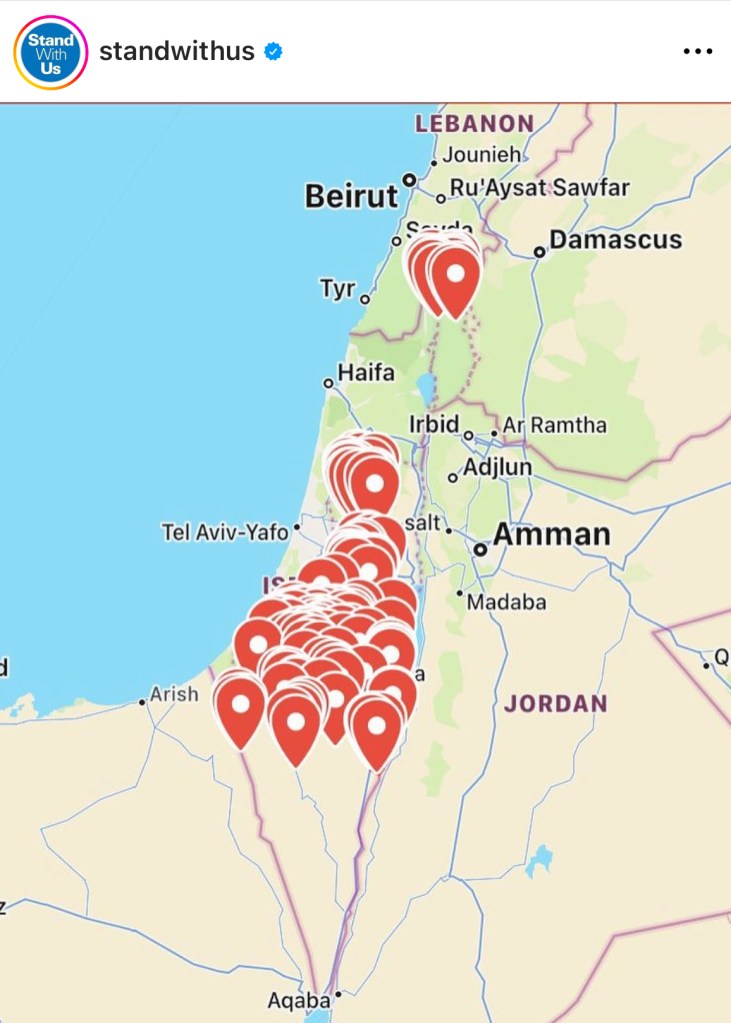
Trump’s Two-Week Window: Deceptive Delay or Determined Diplomacy in the Israel-Iran Conflict?

As war intensifies between Israel and Iran, a pivotal question looms large: Will the United States join in the military campaign? Yesterday (Thursday), the White House Press Secretary, Karoline Leavitt, read aloud the President’s statement: “Based on the fact that there is a chance for substantial negotiations that may or may not take place with Iran in the near future – I will make my decision on whether or not to go within the next two weeks.” She added: “The President is always interested in a diplomatic solution … if there’s a chance for diplomacy, the President’s always going to grab it. But he’s not afraid to use strength as well….” This move on the part of Trump could potentially reshape the course of the war.

A Pause for Diplomacy?

This pause reflects Trump’s latest pivot in a week that was marked by sharp swings between his hawkish rhetoric and diplomatic restraint. Only one day before this latest announcement, Trump threatened Iranian Supreme Leader Ayatollah Ali Khamenei, adding: “Nobody knows what I’m going to do” .

Behind-the-Scenes Talks

While waiting for “push to become shove”, and notwithstanding Israel’s ongoing strikes against Iranian nuclear and ballistic targets, U.S-Iranian dialogue has not entirely broken down. According to a Reuters report, referred to in The Jerusalem Post, Trump’s envoy, Steve Witkoff, has been in contact several times with Iranian Foreign Minister Abbas Araghchi. Iran expressed a willingness to return to the negotiating table and that it “could [note: not “would”] show flexibility in the nuclear issue”, but it is not willing to resume negotiations as long as Israel continues its war against Iran. Notwithstand the U.S. position that Iran must prohibit uranium enrichment and dismantle its ability to produce nuclear weapons, Iran views uranium enrichment as a sovereign right and asserted that this matter is non-negotiable. Israel’s position is that Iran’s nuclear ambitions need to be dumped into the trash bin of history. 

Given the conflicting positions of the major players, a delay of two weeks to test the waters of diplomacy appears to be an exercise in futility. But, that doesn’t deter representatives of the United Kingdom, Germany and France, as well as the European Union’s foreign policy chief, from meeting with Iran’s Foreign Minister to pressure him that Iran needs to put the brakes on its nuclear program. It was pointed out that the Iranians can’t just “sit down” with the Americans, but the European representatives can and that they would urge the U.S. to consider renewing negotiations about Iran’s nuclear intentions before the situation explodes out of control. Despite Germany’s involvement in a push for renewed negotiations, German Chancellor Freidrich Merz said earlier this week that by taking action against Iran’s nuclear program, “This is the dirty work Israel is doing for all of us.”

The primary issue for consideration, at least from Israel’s point of view, remains to be whether the U.S. would strike Iran’s heavily fortified Fordo uranium enrichment facility, which Israeli jets may be hard pressed to reach.

Just to clarify:The Fordo facility in Iran is one of the most heavily fortified nuclear sites in the world. Israeli jets would face significant challenges if tasked with bombing it, even with advanced “bunker buster” bombs. Some of the reasons for Israel’s present difficulty are the following:

1. Extreme Depth and Fortification

• Location: Fordo is built deep inside a mountain near the city of Qom.

• Depth: It is estimated to be buried under 80 to 100 meters (260–330 feet) of rock and reinforced concrete.

• Purpose-built: It was specifically designed to withstand aerial bombardment.

Even the most advanced conventional bunker-busting bombs, such as the U.S.-made GBU-28 (used by Israel) or GBU-72, have limited penetration capabilities. The most effective bomb for such a deep facility is the Massive Ordnance Penetrator (MOP) of the U.S., which is:

• 30,000 pounds (13,600 kg)

• Designed to penetrate up to 60 meters of concrete or deep rock structures. But Israel does not possess the MOP or the B-2 or B-52 bombers required to deliver it.

2. The U.S. Holds the Most Effective Weapon

• Only the U.S. Air Force has the aircraft (B-2/B-52) and bombs (like the MOP) capable of reliably damaging or destroying a site as fortified as Fordo.

• Israel’s F-15s or F-35s cannot carry the MOP due to its size and weight.

3. Risk of Incomplete Destruction

• Even if Israel used multiple bunker busters in succession (a technique called “burrowing”), there’s no guarantee of a successful strike that would disable the facility.

• Partial damage might leave centrifuge halls intact, allowing rapid repair and reactivation.

4. Operational Complexity

• Fordo is not just deep—it’s also protected by advanced Iranian air defenses, including:

◦ Russian-made S-300 systems

◦ Hardened missile and radar sites

• Israeli aircraft would need to:

◦ Penetrate heavily defended airspace

◦ Coordinate multiple refuelings

◦ Conduct a precise strike on a very small and buried target 

5. Diplomatic and Strategic Consequences

Even if it were technically possible, a bombing strike on Fordo could:

• Trigger a regional war

• Lead to Iran accelerating its nuclear program

• Put Israel at odds with key allies, including the U.S., unless the strike was fully coordinated

For the foregoing reasons, Israel cannot reliably destroy the Fordo facility with its current bunker-buster weapons or military aircraft. Fordo’s depth, fortification, and the limitations of Israel’s arsenal make it a uniquely challenging target—perhaps only vulnerable to a direct U.S. strike with strategic bombers and next-generation bunker busters.

Israeli Expectations vs. U.S. Timelines

In Jerusalem, the two-week timeline is causing visible tension. Israeli officials believe that if the U.S. intends to participate, it must act within days – not weeks. One senior official earlier told The Times of Israel, “The expectation is that they join, but no one is pushing them. They have to make their own decision.”

During an interview with one of the leading television news networks here, Israeli Prime Minister Benjamin Netanyahu said that the military campaign is progressing “ahead of the schedule we set – both in terms of timing and results.” and that Israel has the ability to hit all of Iran’s nuclear facilities, which of course would include Fordo, presumably even without U.S. assistance. Here and here.

Mounting Criticism and Skepticism

The Democrats are opposed to military involvement and the Republicans are split over Trump’s indecision. The concern is that America would be pulled into another, seemingly endless conflict. One Democratic U.S. Senator dismissed the president’s remarks about a two-week hold on decision-making, saying, “He’s used this ‘two weeks’ tactic a million times before to pretend he might be doing something he’s not.” But, given Trump’s track record and modus operandi, it’s worth considering that this statement may reflect a more complex calculation. And, it is quite possible that, beneath the surface of his diplomatic choreography, there lies a web of strategic ambiguity, political stagecraft, and psychological maneuvering. Time will tell and, realistically, it won’t take too long. 

Iranian Threats and U.S. Precautions

As President Trump considers a potential strike on Iran, Tehran has warned that any U.S. involvement would result in “irreparable damage to them”. Iranian Defense Minister Aziz Nasirzadeh stated that all U.S. bases in the region are within striking distance and would be targeted in the event of an attack. 

With a significant U.S. military presence across the Middle East, these bases could, indeed, serve as launch pads for an assault – and likely face Iranian retaliation. In preparation for potential Iranian retaliation, the U.S. military has been repositioning its assets in the region, moving unprotected aircraft to other locations; U.S. Navy ships leaving ports in Bahrain; increasing blood supplies (usually indicative of anticipated potential conflict and major U.S. airlines once again cancelling flights to the Middle East (not just to Israel). Moreover, although initially standoff-ish, the U.S. has since deepened its logistical support for Israel, with at least 14 U.S. cargo planes landing here in recent days, delivering weapons and supplies to bolster the IDF.

Final Thoughts: War or Waiting Game?

President Trump’s two-week deliberation window could be either a genuine opening for diplomacy or another calculated delay. While Jerusalem accelerates its military objectives, Washington appears indecisive, caught between an urge for non-involvement and a pull toward military action. One thing, however, remains clear: Iran’s nuclear ambitions need to be brought to nought and any negotiations that do not bring this to pass will simply be another “business deal” for the benefit of the U.S., at the considerable expense of Israel. .

Whether Trump chooses the path of restraint or military engagement, the consequences – for Israel specifically, and for the Middle East and global stability generally, will be profound.

This complex and rapidly evolving situation between Israel, Iran, and the United States stands at a critical juncture. 

The most likely short-term outcomes will hinge on four key variables:

🔑 1. Trump’s Strategic Calculation: Delay or Decisive Action?

🔑 2. Israeli Military Momentum: Self-Reliance or Expecting Backup?

🔑 3. Iran’s Posture: Threats vs. Real Red Lines

🔑 4. European Mediation & International Pressure

Fordo remains the “doomsday target” – its bombing could well mark the beginning of a regional war. But, for Israel, who is already dealing militarily on seven fronts, there is no middle ground. Maybe an earthquake will do the job and put an end to Israel’s need to destroy the Fordo plant.

From the macrocosm to the microcosm:

Iran’s missile attacks on Israel occur at all hours of the day and night. Their goal is to generate as much death and destruction as possible and target Israel’s civilian population and structures. Two days ago, residential communities in Israeli cities and a major hospital in Beer Sheva were hit. A serious catastrophe was averted when the hospital director instructed a day earlier that the third floor, which is used for operations, be completely cleared and the patients removed to other locations. But, where was the world’s outcry of Iran’s blatant war crimes?

Today’s attacks on the City of Haifa also resulted in severe damage, as well as injuries to about two dozen people, with several of them being in serious condition. 

Iran’s latest missile barrages against Israel included cluster‑munitions warheads. Around seven kilometers above the ground, these ballistic missile warheads are specifically designed to break apart in mid‑flight and release multiple smaller missile bombs, each of which contain about two kilograms of explosives and could affect an area with an approximate eight-kilometer radius. This shift marks a troubling evolution in tactics – as these missiles combine speed, maneuverability, and area saturation to overwhelm Israeli air defenses and increase the risk to civilian zones.

Your prayers are genuinely solicited:

For wisdom for the government in its decisions;

For wisdom, courage, boldness and precision for the IDF to accomplish its objectives;

For a spirit of unity amongst the people of Israel;

For the people of Iran who seek to live in peace;

For the hostages, alive and dead, being held in Gaza to be released;

For the thousands of wounded, that they would receive care and be treated with compassion;

For the families who lost loved ones as a result of the Gaza War, to be comforted.

“The Lord is my light and my salvation;
Whom shall I fear?
The Lord is the defense of my life;
Whom shall I dread?

When evildoers came upon me to devour my flesh,
My adversaries and my enemies, they stumbled and fell.

Though a host encamp against me,
My heart will not fear;
Though war arise against me,
In spite of this I shall be confident.” (Psalm 27:1-3)

Whatever situation you find yourself in, there is One Who is greater than all of our problems. So remember: Bless, be blessed and be a blessing. Your rewards will be eternal.

Shabbat Shalom,

Marvin

“Operation Rising Lion” – Israel’s Strategic Strike on Iran Cloaked in Deception and Biblical Symbolism

In what experts describe as the most intricate deception campaign in Israel’s history, the Israeli government launched a major preemptive strike against Iran – code-named “Operation Rising Lion”—targeting key nuclear facilities and senior military leadership. This unprecedented operation was concealed beneath layers of real political drama and misleading signals that misdirected both domestic and foreign observers.

Strategic Deception Behind the Strike

Israel’s operation against Iran was not only a military event but a carefully choreographed illusion. Amid genuine political turmoil over the controversial Conscription Law and speculation about a potential collapse of Netanyahu’s government, military preparations proceeded in secrecy.

Disguising Intentions: Key figures, such as Mossad Director David Barnea and Strategic Affairs Minister Ron Dermer, remained in Israel instead of traveling abroad for expected diplomatic consultations with U.S. Special Envoy to the Middle East, Steven Witkoff. Reports falsely suggested diplomatic priorities, while covert military plans were already in motion.

False Timelines: Prime Minister Netanyahu’s personal calendar—including a planned family vacation and his son’s wedding scheduled for the beginning of this coming week—helped foster the impression that no military action was imminent.

Information Control: Only a tightly restricted circle within Israel’s leadership was aware of the strike’s details. Even top officials were kept in the dark to avoid leaks.

Despite clear signals—like U.S. evacuation alerts in the region and increasing speculation in international media—Israel’s silence held, successfully preserving the element of surprise. Presumably, the only “outsider” who knew about the planned strike was U.S. President Donald Trump.

Operation “Rising Lion”: The Strike Itself

In the early morning hours of Friday, Israel initiated a sweeping aerial assault against Iran’s nuclear infrastructure. Over 200 Israeli fighter jets struck around 100 high-value targets, including:

Natanz and Fordo: Iran’s underground nuclear enrichment facilities

Military Command: Islamic Revolutionary Guard Corps commander Hossein Salami and Chief of Staff Mohammad Bagheri were killed, along with some other, senior personnel

Scientific Core: Six senior nuclear scientists were eliminated.

According to the IDF, the attack marked a critical point where Iran’s nuclear capabilities posed an imminent existential threat. Netanyahu emphasized that Israel could not afford to delay: “If we don’t act now, we simply won’t be here.” As one tabloid expressed it: “The danger is here, and the choice was between preemption and regret.”

The operation itself was planned and put together over a number of years. It was executed following extensive intelligence, covert operations inside Iran and meticulous planning, combined with an “extraordinary joint effort by the IDF, Mossad and Israel’s defense industries” .

Biblical Symbolism: Naming the Operation

The name “Rising Lion” is drawn from the biblical prophecy of Balaam in Numbers 23:24, where Israel is described as a powerful lion rising to conquer its enemies. This reference comes from the Torah portion Balak, where Balaam, sent to curse Israel, ends up blessing them under divine compulsion.

“Behold, a people rises like a lioness, and lifts itself like a lion; it will not lie down until it devours the prey and drinks the blood of the slain.” – Numbers 23:24

Netanyahu reportedly placed a written prayer with this verse into the Western Wall ahead of the operation, framing the strike not just as military necessity, but also as fulfillment of a prophetic vision of national survival and triumph.

Aftermath and International Reaction

Though the strike dealt a significant blow to Iran’s nuclear ambitions, retaliation was expected and was not late in coming.

Israel’s strike on Iran revealed deep political divides:

In Israel: Broad consensus across political lines supported the action. Israeli Defense Minister, Israel Katz, after being briefed on the results of the operation, including the pin-point elimination of military personnel and others who plotted to destroy Israel, lauded the operation as a “striking achievement” that sent a clear and unambiguous message: “Anyone working to annihilate Israel will be eliminated.”

In the U.S.: While the Trump administration backed the move, Democratic leaders and much of the international community condemned it, calling for restraint and renewed diplomacy, with very few countries taking their heads out of the sand and truly understanding “the threat that Iran’s nuclear and ballistic missile program represents to international peace and security…”

The strike against Iran’s nuclear facilities and military capabilities may have delayed Iran’s nuclear progress and restored Israel’s regional deterrence. But, it has also heightened tensions in an already volatile Middle East. As with the October 7 attack that left Israel reeling, this strike represents a critical turning point – except this time, Israel dictated the terms. The strike also clearly demonstrated that Israel is willing – and able – to act decisively when it perceives its very existence is at stake.

What is expected to happen in the coming days? As of this writing, it appears that Iran will be acting like a wounded lion in its hatred of Israel and blood lust to retaliate against it. Within hours following Israel’s preemptive strike, Iran launched over 100 armed drones, as well as Cruise missiles, from Iran and other locations, including Iraq.  Certain television news sites published that about 850 drones were actually sent against Israel by mid-morning.

Multiple barrages of ballistic missiles punctuated the sky line over Israel during the night (between Friday and Shabbat), particularly, in the center of the country. Most of the projectiles were downed by Israel and some of its neighbors, who came alongside when push came to shove. Nevertheless, some of the missiles did manage to get through, causing major damage to property, as well as injury to dozens and, as of this post, resulting in the deaths of at least three Israels. Israeli Defense Minister, Israel Katz, said that by targeting civilian population centers, Iran “crossed red line” and that  “We will continue to defend the citizens of Israel and ensure that the Ayatollah regime pays a very heavy price for its heinous actions.” See here and here.

While many of the missiles managed to make their way to Israeli air space, it is important to note what was expressed on Channel 12 News last night. Many Iranians reported independently of one another that a number of missiles that were launched from Western Teheran mysteriously exploded seconds after being launched. It was as though the “Beeper Operation” that occurred with the Hezbollah pagers took place in Iranian missiles. The attached site is in Hebrew.

Teheran accused the United States of complicity in Israel’s actions against Iran, saying that continued U.S.-Iran nuclear negotiations were meaningless and that Israel “succeeded in influencing” the diplomatic process and the Israeli attack would not have happened without Washington’s permission.” For its part, the U.S. gave mixed messages. The Secretary of State claimed that Israel’s action was “unilateral”, with Israel acting alone. The President, on the other hand, first expressed public opposition to Israel attacking Iran, but after Israel’s amazing accomplishments, he claimed to know and impliedly took credit for the preemptive strike against Iran. He gave the Mullahs 60 days to come to terms with the U.S. over their nuclear ambitions. The implications were clear. “Today is day 61…I told [Iran] what to do, but they just couldn’t get there.”

The days ahead, several key developments can be expected. These can be grouped into military, diplomatic, domestic, and regional outcomes:

1. Military Escalation: 

Continued Israeli airstrikes; Missile interceptions and damage control; Targeting of Hezbollah (if Hezbollah enters the conflict, Israel will likely open a second front in the north, including preemptive or retaliatory attacks on southern Lebanon); Cyber warfare: Both countries may escalate cyber operations, targeting infrastructure, military systems, and communications.

Regional Fallout: Proxy activation (Hezbollah, Houthis in Yemen, militias in Iraq and Syria) may launch coordinated attacks on Israel and U.S. interests in the region.

Gulf States will be on increased Alert: UAE, Saudi Arabia, and others may tighten defenses, anticipating possible spillover or being dragged into broader confrontation.

Oil Prices and Shipping: Disruption in the Persian Gulf could cause oil prices to spike; Iran may threaten shipping in the Strait of Hormuz, impacting global trade.

Civilian and Domestic Impact in Israel: Mass Mobilization: The IDF may expand its call up tens of thousands of reservists; Casualties and Trauma: If Iran’s missile barrages continue to penetrate Israeli defenses, civilian deaths and infrastructure damage could be significant.

Internal Unity or Political Crisis: A “rally-around-the-flag” effect could occur initially, but criticism of leadership decisions might increase rapidly, if casualties increase and the government response falls short of what will be required (primarily due to lack of sufficient resources and qualified personnel).

Massive casualties: Shelters and hospitals could become overwhelmed, with insufficient staffing and facilities.

2. Diplomatic Repercussions

U.S. and Western Response:

Strong rhetorical support for Israel is likely, along with enhanced military aid; increased U.S. presence into the region and offer of interception assistance. This could be accompanied by internal U.S. dissent, urging restraint to avoid full-scale regional war and potential U.S. involvement.

UN and International Condemnation: Nothing new on this end – condemnation of Israel and expressions of sympathy for Iran, as the terror king of the Middle East.

European Mediation Efforts: France, Germany, or Turkey may seek to mediate a ceasefire to avoid uncontrollable escalation.

3. Risk of Broader War:

All-Out War Potential: If attacks on civilians in Israel escalate or Hezbollah again opens a northern front, the situation could spiral into a multi-front war resembling or surpassing the scale of 1973 or 2006.

Nuclear Threshold Tensions: In response to Israel targeting of Iranian nuclear facilities, Iran may make an all-out effort to accelerate its nuclear program in response, or even withdraw from the NPT, prompting the need for more urgent and global intervention.

4. Media and Psychological Impact:

Disinformation and Propaganda: Both sides will flood social media and news outlets with narratives to sway domestic and international opinion.

Global Protests and Unrest: Expect pro-Israel and pro-Iran demonstrations around the world, along with increased antisemitic or anti-Muslim incidents in some regions.

Final Thought: The immediate days will likely be shaped by uncertainty, escalation, and international anxiety. The key question will be: Will this stay or contain the Israel–Iran conflict, or will it become a regional or even global crisis? Much will depend on:

The scale of civilian casualties.

The duration and targets of Iranian retaliation.

The role of the United States and the West.

And whether de-escalation channels remain open, especially via backdoor diplomacy.

Just as this was about to be sent out, Iran threatened to attack the U.S., the U.K. and France. Wake up now, world! You’ll never forgive yourself tomorrow, if you don’t act today.

“I pursued my enemies and overtook them, I did not turn back till they were destroyed,” (Psalm 18:37) quoted yesterday by Israeli President Isaac Herzog.

Thank you for continuing to pray for Israel (Gen. 12:3), for wisdom for its leadership; wisdom, skill, precision and success for the IDF; for healing, grace and compassion for the wounded; for the return of all of the hostages, both alive and dead; for a spirit of national unity; for an outpouring of a spirit of repentance and a return to the God of Abraham, Isaac and Jacob.

Bless, be blessed and be a blessing.

Shabbat Shalom.

Marvin

Failed Nuclear Diplomacy May Lead to Multi-Front War

Shalom all,

We all need a break from time to time. The pressures in the Middle East, the unending hostage crisis, the continuation of the Gaza War against the Hamas terrorist organization, the increasing missile launches from the Houthis of Yemen and the blaring of air-raid sirens, the internal divisions within Israel, the conflicts between left and right, religious and secular, just to name a few, affect all of us, in Israel as well as abroad. Included in these events are the increasing demonstrations calling upon the government of Israel to “bring the hostages home NOW”. We need to take a step back and try to put all of the pieces together and, sometimes, after we look at the entire picture, we notice that there are a few pieces still missing.

Add to that the events surrounding the recent trip to the Middle East of the President of the United States – a trip that left out a visit to Israel, with whom the U.S. has an “unbreakable bond” of friendship. Deals of different kinds were made with countries that were enemies of Israel, without any input from Israel. Political pundits began to express concern that the “New Middle East”, from America’s political and economic point of view, might not include Israel, who is seeing a few cracks in the bond that was supposed to be unbreakable. Many politicians who have a solid grip on the mentality of the Middle East, believe that the West, represented by the United States, was being played, lulled into a sense of false security with grandiose gifts and empty promises. From Washington’s perch of 9,500 miles from Jerusalem, its clouded vision doesn’t allow it to see that a terrorist who puts on a suit and tie is still a terrorist. But, that’s for another time. 

The big issue of the day, as it was yesterday, and as it was last year and the years before that, is Iran. The United States and Iran had been discussing a renewed “deal” regarding Iran’s nuclear ambitions. Israel has always considered such discussions a play for time on the part of Iran and that the U.S. was being dragged along into what could be the greatest fiasco in history. Iran can signed a thousand deals, but it will still consider the United States as the “big Satan” that needs to be brought under the thumb and rule of Islam.

As reported by most media, the latest round of nuclear talks between the U.S. and Iran in Rome ended without progress. Iran insists on enriching uranium at home, while the U.S. demands a full stop to enrichment. A key U.S. diplomat even left the talks early, signaling deadlock. According to U.S. defense intelligence, Iran could have enough weapons-grade uranium for a bomb in under a week. That leaves Israel with almost no time to act if it hopes to prevent a nuclear-armed Iran. 

At a recent Middle East Forum event in Washington, a simulation of conflict in the Gulf showed just how fast diplomacy can fail and military action can spiral. In the exercise, Iran used talks to stall while advancing its program and triggering a regional crisis.

Israeli leaders and intelligence officials are no longer just preparing quietly—they’re openly getting ready. Top officials flew to Rome to monitor talks firsthand, and U.S. intelligence has picked up signs of Israeli military readiness, including movement of special munitions and completed air force drills. We have learned that when an enemy hates us and says he wants to kill us, we take him seriously. When he has the means to harm us, we also have learned that the best defense is a strong offense.

Amid reports from CNN about Israel’s intentions to strike Iran, the IDF is ramping up preparations for a potential multi-front war, focusing on both home-front readiness and coordination within the General Staff. As part of these preparations, a military exercise was conducted to ensure continuity of operations on the home front, defensive measures, and the protection of critical military infrastructure. 

The IDF Spokesperson announced the completion of the drill, named “Barak Tamir”, that was designed to simulate multi-front war scenarios. According to the statement, the exercise aimed to improve coordination between various military branches and units during emergencies, ensuring a faster and more effective response to evolving threats.

Israel has already acted to reduce threats from Iranian-backed groups. Hezbollah’s rocket arsenal has reportedly been slashed, Hamas is isolated after the Gaza war (although its military wing continues to fight and missiles continue to be launched from Gaza into southern Israel), and Iran’s proxy networks in Syria have been disrupted. One Israeli official noted, “Iran’s regional allies lie in tatters.” Such statements should not be made publicly, if at all. We should be careful not to be proud or to boast about our military achievements. We still have the embarrassment of the intelligence failures that allowed October 7th to happen and have to live with the aftermath of the deadliest and most traumatic attacks in Israel’s history, the failure to bring about the return of all of the hostages who were taken by Hamas, as well as the sprawling anti-semitism that crept out and/or burst out from every nook and cranny following our retaliatory responses.

In light of Israel’s ongoing preparedness, Iran sent a letter to the UN threatening to hide enriched uranium at secret sites if Israel continues to pose a threat. This means Iran might move nuclear materials out of sight from international watchdogs, which should be an alarm not only to the region of the Middle East, but a blaring wake-up call to the rest of the world.

In the above simulation during the Middle East Forum event, China played both sides—supporting Iran while offering Gulf states a security alternative. It also reflects reality: China buys oil from Iran and helps it bypass sanctions. Meanwhile, Russia is supplying Iran with military upgrades and could soon sell it advanced air defenses.

Israeli Defense Minister Israel Katz has declared that Iran is “more exposed than ever” to an attack, indicating that Israel should seize the moment. The U.S. is also sending signals—like deploying B-2 bombers and transferring bunker-buster bombs to Israel—showing support while keeping official policy vague.

Israeli intelligence believes Iran is dangerously close to crossing the nuclear threshold. Without a diplomatic breakthrough, Israeli officials are preparing to act alone. Every sign—military, diplomatic, and intelligence—points to a strike happening within days, not weeks. <https://www.meforum.org/mef-observer/days-not-weeks-israels-imminent-attack-on-iranian-nuclear-sites>

If Israel does strike, the fallout could be global. Iran has promised a “devastating” response. Missiles could rain on Israeli cities. Iranian forces could retaliate from the locations of its proxies (Lebanon, Syria, Yemen), and beyond. Jewish communities worldwide could be at risk. And if they are at risk, the countries where they reside will be at risk as well.

But from Israel’s perspective, the cost of not acting is even higher: a nuclear-armed Iran that poses an existential threat.

All signs suggest that a major military confrontation is on the horizon. As diplomacy crumbles and Iran nears nuclear capability, Israel may act very soon. What happens next could reshape the Middle East—and test how far the world is willing to go to stop nuclear proliferation.

How can you pray?

For wisdom – for the government of Israel; for wisdom, courage, boldness and precision for the IDF; for a spirit of unity throughout the nation – we are all in this, together; for the families who have lost loved ones in the ongoing Gaza War; for the families who are still waiting for their loved ones to return from captivity, both alive and dead; for the thousands of wounded, whose lives and livelihoods have been upended because of their injuries; for the medical personnel treating the wounded and the hostages who have returned from Hamas captivity; for the inability of Iran to complete its nuclear ambitions.

Thus says the Lord,
Who gives the sun for light by day
And the fixed order of the moon and the stars for light by night,
Who stirs up the sea so that its waves roar;
The Lord of hosts is His name:
“If this fixed order departs
From before Me,” declares the Lord,
“Then the offspring of Israel also will cease
From being a nation before Me forever.” (Jeremiah 31:35-36)

Bless, be blessed and be a blessing – it is a “win win” situation.

Marvin

There once was a country called “Syria”.

Shalom all,

One can easily question whether the title of this post is valid. After all, notwithstanding that the long-standing tyrannical rule in Syria came to an end very recently, still, the country continues to exist, even though it is fragmented. This is a valid argument, at least to a point. 

What happened to our unfriendly, but relatively quiet, neighbor to our immediate northeast? A little over a decade ago, an event that was labelled the Arab Spring began in Tunisia and successfully removed oppressive leadership there and in several other countries in the Middle East, such as Libya, Yemen and Egypt. Attempts were made to also overthrow the government in Syria, which, until two week ago, was led by President Bashar al-Assad and they almost succeeded, twice, although those attempts were two-years apart. The Syrian Arab Spring quickly gave way to the Syrian winter frost, as peaceful protesters were arrested and tortured. And, as momentum increased for the release of the protesters, the Assad regime resorted to the use of its military to quell the fledgling uprisings.

It did not take long for the Syrian Arab Spring to turn into a civil war, which resulted in early losses of territory/cities to rebel forces that were opposed to the continuation of the Assad government. Within two years of the beginning of his country’s Arab Spring, Assad received assistance from Iran’s Revolutionary Guard Corps, as well as one of Iran’s long-standing proxies, the Hezbollah in Lebanon, both of which sent its forces to back up and support Assad. By 2013, Assad’s efforts to remain in power and leadership resulted in the bombing of Syrian civilians and the use of chemical weapons against them dozens of times

Moderate rebel groups began to lose ground against more radical extremists, such as ISIS, the terrorist group that claimed a very sizeable slice of Syrian terrority and whose establishment and activities eventually resulted in direct military intervention by the United States.

Once the U.S. became involved, Russia did not sit idly by, but also became a major player in the Syrian arena. It sent various forms of military assistance to the Assad regime in its actions against the more moderate rebel groups, all the while that Iran and its proxy in Lebanon took further root in the then, war-torn country. With the help of these outside forces, excluding the U.S., Assad was able to regain and re-establish control over areas seized by rebel forces. By that time, the Syrian winter frost was in place for seven years. Diplomatic efforts to resolve the civil war proved unsuccessful.

The Syrian civil war displaced at least half of the country’s population, generating a serious humanitarian crisis. Agriculture was seriously affected and political corruption skyrocketed. A large portion of the population found refuge in neighboring Arab countries, in addition to various locations in Europe, causing a demographic and political change in those locations.  

During the last seven years, various rebel/militia continued their armed struggle against the Assad regime, sometimes gaining territory, sometimes losing it. Over a period of thirteen years, the cost in lives exceeded what anyone would have thought when the Arab Spring first began in 2011. On the whole, and notwithstanding that the fighting continued and the “opposition” controlled small, unconnected regions in the area of northwest Syria, it appeared that the Assad emerged victorious in the civil war.

Israel, of course, was not a silent by-stander to the events taking place in Syria. The major cause of concern for the Jerusalem government was the transfer of military personnel and sophisticated weaponry to Syria by Russia and Iran. More specifically, Israel took action to prevent the transfer of weapons from Iran to the Hezbollah terrorist organization, through Syria.

And then, after what seemed like an endless round of tit-for-tat fighting between the government forces of Assad and the forces of the opposition, the rebels succeeded to sweep through parts of Syria, taking control of major cities and airports within a two-week period. Government forces abandoned their positions and fled. Bashar al-Assad saw the hand-writing on the wall and fled with his family to Russia. The iron-fisted rule of the Assad family (Hafez al-Assad and Bashar al-Assad) after half a century came to an abrupt end. 

“The king is dead. Long live the king!” Can that expression apply to a situation where the king is not dead, yet, but abandoned his kingdom and took up residence in a 5-star hotel in Moscow? By stretching the interpretation, we could say that it would apply. But, that begs the question: “Who is the replacing king?” Stated differently, what will happen to / in Syria after the fall of Assad? 

Within days following the collapse of the Assad regime, U.S. Secretary of State Antony Blinken, said

“The transition process and new government must also uphold clear commitments to fully respect the rights of minorities, facilitate the flow of humanitarian assistance to all in need, prevent Syria from being used as a base for terrorism or posing a threat to its neighbors, and ensure that any chemical or biological weapons stockpiles are secured and safely destroyed. The Syrian people will decide the future of Syria. All nations should pledge to support an inclusive and transparent process and refrain from external interference. The United States will recognize and fully support a future Syria government that results from this process.  We stand prepared to lend all appropriate support to all of Syria’s diverse communities and constituencies.” He added: “As the President said on Sunday, ‘it would be a waste of this historic opportunity if one tyrant were toppled only to see a new one rise up in its place. So it is now incumbent upon all of the opposition groups who seek a role in governing Syria to demonstrate their commitment to the rights of all Syrians, the rule of law, and the protection of religious and ethnic minorities’.” It seems as though after all that has happened in this region over the last dozen-plus years, they still did not get a handle on the mentality of the Middle East countries surrounding Israel.

Jackson Richman, in his article for The Epoch Times, commented: “In response to a question from The Epoch Times on Dec. 10, State Department spokesman Matthew Miller said that U.S. support for rebuilding Syria is ‘putting the cart before the horse…We need to see a political process play out here before we get to the discussions about reconstruction and who’s going to fund it’.”  At last, a ray of light.

The coalition of rebel forces that toppled the Assad regime was led by the Hay’at Tahrir al-Sham group (“HTS”-the “Organization for the Liberation of the Levant”), whose predecessor was Al Qaeda (of Osama bin-Laden fame) that dominated the Jabhat al-Nusra Front that opposed Assad. The HTS made a public split away from the terrorist organization in 2016 and focused its activities as an opposition movement to the Assad regime. The HTS is now headed up by its founder and militant leader, Abu Mohammad al-Jolani, who was formerly a member of the group that eventually became Islamic State. The Political Affairs Department of HTS announced on December 8th: “The liberation of Syria is a victory for all its sons who sacrificed for the unity of the land and the people. On this occasion, we affirm our commitment to strengthening societal unity and establishing the principles of justice and dignity among all components of Syrian society.” In my opinion, this statement of the HTS is made more for public relations purposes in an effort to find favor with the West, rather than for a genuinely planned eventuality. While the language of the announcement has a semblance of “democracy”, in all likelihood, the last thing to be expected is a democratic, secular rule that is committed “to the rights of all Syrians, the rule of law, and the protection of religious and ethnic minorities“, as expressed by President Biden. The organization maintains its Salafi-jihadist ideology and was added to the U.S. State Department’s list as a Foreign Terrorist Organization. And, it must be kept in mind that the HTS does not presently rule over all of Syria, so any statement concerning its intentions for “all its sons” is definitely premature.. 

Israel wisely took advantage of the collapse of the Assad regime and our air force effectively destroyed most of the Syrian military capability within the last few days, here and here, including chemical weapons facilities and other targets in and around the capital city of Damascus. It has also taken over full control of the buffer zone on the Golan Heights. Prime Minister Benjamin Netanyahu took credit for the collapse of the regime, saying that it was a “direct result [of the] heavy blows” inflicted on Hamas, Hezbollah and Iran by Israel and that we are “dismantling the Iranian axis piece by piece.”. The HTS rebel leader has come out with the comment that with the departure of the Iranians from Syria, Israel no longer has a reason to attack sites in Syria by the Israeli Air Force. While not an express, outward “threat”, still Israel will obviously take into consideration all statements  made by those who now appear to control Syria, whether in whole or in part. 

 Dry Bones cartoon, Syria, Assad, HTS,

The Dry Bones Blog – 8 December, 2024

President Biden is also claiming credit for the fall of the Assad regime. Really?

In reality, most of the political pundits are expressing their hopes regarding the future of Syria. But, until the dust settles, and the damage and devastation that has been done to the Syrian population and economy over the last half century, the realities of life in the area of our northwestern neighbor remains speculative at best, and pessimistic at worst. Assad was the devil we knew. Israel is not taking any chances and is taking measures to protect our northern borders from the rebel militias, who for the meantime, are all looking to get their “piece of the pie”, the more the better, a situation that leaves Israel “confronted with new and unpredictable threats”.

It would be a grievous mistake if we were to ignore the possibility of outside intervention from Turkey, Qatar and even Russia, who have their various interests in the area. And Iran is slowly making inroads into Iraq, which borders on Syria, possibly looking to add Iraq to its puppetry, as a belated act of revenge for the forced ceasefire in 1988, of the Iran-Iraq War, a ceasefire that temporarily extinguished Ayatollah Khomeini’s vision of subjecting Iraq to the Islamic Revolution.

Who will be the next victim of the belated Arab Spring? Obviously Iran ranks high on the list. Others, interestingly enough could include Egypt, Kuwait, Azerbaijan, and possibly Jordan, to name just a few.

 Dry Bones cartoon, Iran, Mullahs, Tehran, overthrow, Shia, Islam, Syria, Assad, HTS,

The Dry Bones Blog – 10 December, 2024

With Assad’s departure, the extent of his imprisonment, torture, execution, murder and other atrocities committed under his reign of terror, are now being exposed. The failure of the world community to raise an eyebrow during Assad’s reign of tyranny, while condemning Israel right, left and center for its actions in defending itself against ruthless enemies, reveals an incredible double standard and inexcusable hypocrisy. Take a look at Nadav Shragai’s Commentary in Israel Hayom published two days ago, who expresses the matter very clearly.

Not to be forgotten is our ongoing war with Hamas in Gaza. From all outward appearances, negotiations for the release of the hostages and ceasefire appear to be making headway. Hamas has agreed to certain key demands of Israel and has even provided, for the first time since November, 2023, a list of the first hostages to be released. Apparently, Israel is still willing to allow a staged return of the hostages, which could still end up being snagged before all of them, alive and dead, are returned.

We are approaching the seasons of Hanukkah and Christmas. Both deal with light, one physical and the other spiritual. Upon reflection of those lights, truly, there is much for which to be thankful and to remain thankful, in all things at all times.

Have a simply great, healthy and encouraging week.

Marvin

Understanding The Times, Doing What We Need To Do

Shalom all,

Events of the last few days necessitate an update, particularly for so many who have said that they don’t get the news properly reported, or reported at all.

On September 27th, in an effort to end the seemingly never-ending missile assaults upon Israel from the terrorist organization Hezbollah, the IDF eliminated the General Secretary of Hezbollah, Hassan Nasrallah, who thought he was secure in his bunker that was built under a residential building. Then the IDF eliminated Nasrallah’s successor, Hashem Safieddine. According to Israeli Prime Minister Benjamin Netanyahu, the successor to Nasrallah’s successor was also eliminated. And, in order to prevent an October 7th-style invasion in the north of Israel, the IDF launched a ground offensive into southern Lebanon last week. Tunnel infrastructures, more sophisticated and better equipped than those in Gaza, that were built under Lebanese towns and villages existing close to the border with Israel, were found and blown up.

Two nights ago, a Hezbollah missile landed a mile from where we live. It severely damaged a kindergarden and shattered windows in an adjacent semi-high-rise building. Five people were injured, none seriously. No lives were lost. 

Yesterday, one year after the atrocities of October 7th, 2023, the forces of evil once again tried to attack us with rockets, missiles and drones. Yet, we pressed on, with memorial services being conducted both by the government and by the families of the hostages and those whose loved ones were killed by the terrorist invasion of Hamas, the “Palestinian” Islamic Jihad, and other Gazans. Testimonies of survivors, of family members, of members of the IDF, of relatives and friends, permeated the air ways on television and radio and in heart-wrenching written accounts in numerous tabloids. We will always remember the day of slaughter, burning, rape and bodily dismemberment, that shocked the State of Israel and most of the world, a day that traumatized and continues to traumatize our our nation, as we yearn for the return of all of the hostages, both those who are still alive and those who are not.

As we begin the second year following the worst disaster perpetrated upon the Jewish people since the Holocaust, the IDF reported that Hezbollah managed to launch 135 missiles today against Haifa and its surrounding communities, as well as against places in the north of Israel. See here. There was property damage and a handful of people were injured. But, on the whole, Israel experienced many miracles during these massive missile barrages. The kindergarten where one of my sisters-in-law works took a direct hit. But, there were no children there at the time, due to the orders of the civil defense establishment. Her neighbour’s house took a hit and was severely damaged. The glass-window barriers of my mother-in-law’s small balcony was shattered by a shock wave of the blast of a missile that landed only a short walking distance from her apartment building. There were minimal injuries. Since the beginning of the ground offensive in Lebanon last week, Hezbollah managed to launch over 3,000 projectiles into Israel. Amazing!

Naim Qassem, one of the few surviving members of Hezbollah’s leadership team, said that the terror group’s military capabilities remained intact, that rocket fire on Israel had increased and, according to a report in The Times of Israel, Hezbollah was “itching for ‘clashes’ with Israeli troops in Lebanon.” That’s a bit difficult to accept, in fact, more than difficult to accept. In a speech that he gave today, Qassem said that the terror group was “agreeing to a cease-fire without preconditions. First, a cease-fire achieved through diplomatic means, and then we will discuss all the details.” We’ve heard that before from the terrorists in Gaza – first stop fighting. Then we’ll see what we’ll do next. Apparently, the Hezbollah terrorist organization that has reigned supreme in this region for the past several decades is now beginning to feel the consequences of Israel’s retaliation against Hezbollah, It is licking its wounds and is not getting its expected backing from the master-terror puppeteer, Iran. It is highly likely that such an announcement would not have been made if Hezbollah wasn’t hurting and if it wasn’t previously discussed with, and agreed to by, the mullahs, who are letting their proxies take the beating while they, themselves, take a minimal role in the conflicts with Israel.

Hezbollah’s misguided Persian patron laid down its “red lines”, warning Israel not to attack either its nuclear facilities, or its energy sites. Such as move by Israel “would have an impact on the kind of response by Iran. Imagine that. After firing about 200 missiles at Israel last Tuesday, which could have caused major damage to our own infrastructures, and after it continues to pursue the development of a nuclear weapon, purportedly for strictly peaceful purposes – as if anyone really would believe that, it is now telling us not to target and go after the greatest threat to Israel today, or to damage its oil assets (which would further the economic difficulties presently facing Iran and probably cause a widespread increase in oil prices).

Iran is struggling to “maintain face” before an ever-increasing, disbelieving population. In an article appearing today in ynet in Hebrew, that was written by Azita, a resident of Teheran who strongly criticizes the Iranian Revolutionary Guards, she said that the government lies and that the population is being deceived about Iran’s so-called successes against Israel.  As she writes (my free translation from Hebrew): 

“Those who live here know that everything is staged…The regime has maybe 20 percent support in the whole country, and after the two attacks in which Iran failed to hit Israel, more and more people are asking if all of this was worth the investment – if Iran even has the ability to hit Israel…They lie to our faces … Then when the information they give about the elimination of Israel is met by the Iranian opposition that shows them to be lying, more and more people automatically stop believing them…Then the citizens see Netanyahu threatening Iran on television, and they ask themselves: ‘If they lied to us about the damage to Israel, maybe they are also lying about how they will protect our lives?’…[People] know it’s propaganda. That Israel struck Iran, in the heart of Tehran, with the elimination of [Ismail] Haniyeh. Iran was not able to repay her. Honor is a very precious currency here, and Iran was unable to maintain its honor and take revenge on Israel.

The regime thinks we are afraid of Israel’s missiles, but the truth is – we are already waiting to see them in the skies of Tehran…Many people thought that Iran would succeed in dragging Israel into a war of attrition with Hamas, the Houthis and Hezbollah…And what they see is that Israel hit back with all its might, dealt a blow to Hamas and Hezbollah, and you ask yourself, okay, who’s next, and you realize you’re next.” (emphasis mine)

Former Israeli Prime Minister, Naftali Bennett, says the time is right to strike Iran’s nuclear facilities. In his post on “X” (Twitter) today, as reported in The Jerusalem Post, he stated, in part: “Now that the main proxies of Iran’s terror, Hezbollah and Hamas, are weakened, Israel finally has an opportunity to strike Iran’s nuclear program…This is a one-time opportunity, and we cannot miss it.” May Israel’s present leadership be granted wisdom, like that which was granted to the Tribe of Issachar, who “understood the times, with knowledge of what Israel should do.” (1 Chronicles 12:32)

We should never allow our enemies to dictate to us what we should do or how we should think. Notwithstanding barrages of rockets and missiles against us, and numerous failed attempts to destroy us as a nation throughout history, we remain a people called to be a blessing to all the families of the earth (Genesis 12:2-3). So, until our enemies learn that God will bless those who bless us and that they will face the consequences of cursing us, let us continue to bless, be blessed and be a blessing.

Marvin

The Importance of Getting the Facts

Shalom all,

It’s been a while since a full post of The Week That Was went out. This was due to a “working vacation” related to our non-profit society, A Future and A Hope <afutureandahope.org.il> – whose website is presently being re-designed and updated. During the course of a month, my wife and I visited some congregations and Israel prayer groups in the United States and Canada where we met with old friends, as well as made new one. We delivered information regarding the work of the society and the situation in Israel, including an overview of why Israel is the focus of efforts to destroy her. Most of the places were receiving only minimal input about what is really happening here from places that were supposed to be media news outlets. While both of those countries have been loudly expressing concerns about the possibile expansion of Israel’s war against the Hamas and Hezbollah terrorist organizations into a regional conflict, few local television stations in those areas took the time to properly convey factual information about Middle East events. And when it actually was discussed, often it was limited to a passing blip cross the screen with a few words of what was supposed to be “news”. And sometimes, even what was mentioned was lacking in a few important essentials, such as facts. This is a sad commentary on what was once believed to be responsible journalism, which has deteriorated into manufacturing information that is interspersed with expressing opinion, instead of reporting real facts and adding a bit of commentary to them. I discovered that information about Israel was obtained from very limited sources, and taken as gospel truth, although often failing to cite the sources of the information reported and rarely containing explanatory comment or anticipated consequence of what was communicated. Like cold water to a thirsty soul is factual information to a person hungry for truth. 

A lot has happened over the course of a month. One hostage being held by Hamas was found by the IDF and freed, while the bodies of six more hostages were found by the IDF in a tunnel after they were executed by Hamas. Negotiations for the release of the hostages were on again, then off again, then on again. Increasingly larger demonstrations continued in Israel calling for the release of the hostages and pressuring the government to agree to the demands of the terrorists, whatever the cost may be. Demonstrations against Israel continued in places around the world, accusing Israel of every evil under the sun, while ignoring the responsibility of the monstrous evil that is called “Hamas” that prompted the present war. The Israeli air force destroyed thousands of rocket launchers in a pre-emptive attack in Lebanon, which prevented a massive missile attack against Israeli targets. Iranian weapon-manufacturing facilities were destroyed in Syria. Car rammings and car bombs continued in Israel. Fighting in Judea and Samaria (the “West Bank” of the Jordan River) intensified. Missile barrages and weaponized drones continue unabated from the Hezbollah affecting more and more communities in the north of Israel. And Turkey is chomping at the bit to get involved in the present distress of the Middle East. And more…

And while many in the world condemn Israel for its actions on the battlefield, even some of its “fair weathered friends”, others have a more seasoned perspective, noting that Israel’s war with Hamas is justified, but is complicated by the hostage issue. As noted in today’s The Jerusalem Post, a delegation of “high-ranking” foreign, military officials from various countries, seasoned veterans of modern conflicts, visited Israel. They got the facts and “gained rare insight into Israel’s military operations”, which “provided them with a direct understanding of the challenges Israel faces.” The above article quoted a former commander of the British forces in Afghanistan, Colonel Richard Kemp: “There’s no question that this war Israel is fighting in Gaza is probably the most complex battlefield any army has ever fought on…You have to consider the dense population and the extensive preparations Hamas has made over decades, including a vast network of tunnels. The large number of hostages held by Hamas also complicates the situation.” 

Retired Delta Force Lt. Col. Jeff Tiegs reported that they saw some of the Hamas tunnel network and that the IDF was drilling to locate more tunnels. His heart was broken when he saw an area that could have the site of a beautiful hotel, were it not for the devastation of Gaza over the last twenty years. He described the failure to develop Gaza economically as “a crime against humanity”.

Col. Tiegs was clear in expressing his opinion that Israel has to keep the pressure on Hamas until we break through and are able to recover the hostages, but noted that the urgency of saving the hostages has a higher priority than the defeating of Hamas. He added that part of the ruthlessness of Hamas’ strategy of warfare atrocity is “the barbarism of assassinating [the] hostages…It’s like a ‘Sophie’s choice’ for the Israeli army—an impossible decision between two objectives.”  

The conclusion of the group of military veterans could probably best be summarized by the statement of former British Army officer, Maj. Andrew Fox, who now serves as senior lecturer at the Royal Military Academy Sandhurst: “The events of October 7 justified the war. But the hostage situation complicates things. It’s an inherent paradox between defeating Hamas and rescuing the hostages. It may come down to choosing one.”(emphasis mine). That’s exactly what I have been contending from the outset of the Gaza War. We cannot exert 100% to both of those efforts. One has to give way to the other. Put another way – Which choice is the one that will be for the greater good of the nation and people of Israel? Defeating a ruthless, totally immoral enemy that is committed to the destruction of Israel, knowing that another one will eventually raise up to take its place, or trying to negotiate for the release of the hostages (Israel’s weak spot) in stages, in the hope of returning all who remain alive (with no guarantee that they will all be returned), in exchange for releasing terrorists, who are serving multiple life sentences for the planning and murder of hundreds of Israels? Both are fraught with danger. The present leader of Hamas was included in the “trade” of over 1,000 prisoners for one Israeli soldier. Israel needs Solomonic wisdom.

The rest of the above article touches on the situation with Hezbollah, as well as the growing violence in the area of the “Palestinian” Authority with “car bombs, IEDs [improvised explosive devices], and weapons” and the concern by the IDF over the possibility of a third Intifada. It is worth the read.

While eyes are focused on Israel and her actions, Iran and its proxies are getting minimal condemnation. Hamas puts the people of Gaza at risk, using them as human shields and placing its weapons, as well as its command centers, in the middle of what are supposed to be humanitarian “safe zones”. The strings to the puppets of the 3-H Club (Hamas, Hezbollah and Houthis) are being pulled by Iran, who is the world’s leading state sponsor of terrorism and is, more or less, getting a free pass. Israel is learning, although it took a long time for her to be educated, that slowly slowly, it will end up standing alone against Iran. Our “friends and allies” speak of their support of Israel against terrorism. But, instead of acting against Iran, the greatest terrorist entity in the world, our friend and ally who spoke of an unbreakable bond between Israel and the U.S. is releasing an estimated $100 billion (yes, billion) that will undoubtedly be used to continue its terrorism against Israel, the United Arab Emirates and Saudi Arabia, as well as the US. There are none so blind as those who will not see. And what about Iran’s fraternal twin brother, Qatar, who is the major financial benefactor of Hamas to the tune of some $6 billion, not to mention its financial involvement in anti-Israel demonstrations on university campuses? It is difficult to explain Israel’s decision to allow Qatar to serve as chief negotiator with Hamas. Qatar’s press releases refer to renewed “cease-fire negotiations”, whereas Israel’s press releases refer to renewed “hostage release negotiations”. Are we not paying attention to the emphasis placed on words? Apparently not. If the U.S. and other militarily-strong countries do not act quickly against Iran and Qatar, just to name a few, we’ll wake up one morning with a nuclear Iran and then we’ll ask each other how we could have missed the writings on the wall. By then, it will be too late. The present Gaza War can end quickly and Hamas will be forced to yield, if the sources of its funding are cut off. This is where Israel’s “friends and allies” can make the greatest contribution to ending the war. As Sen. Lindsey Graham (R-S.C.) said during his interview on Fox News two weeks ago while speaking about the murder by Hamas of American-Israel Hersh Goldberg-Polin: “He was murdered by Hamas. Hamas [couldn’t] care less about the hostages or the Palestinians. And if you want the hostages home, which we all do, you have to increase the cost to Iran…Iran is the Great Satan here. Hamas is the junior partner. They’re barbaric, religious Nazis, Hamas…They [couldn’t] care less about the Palestinian people. I would urge the Biden administration and Israel to hold Iran accountable for the fate of remaining hostages, and put on the target list oil refineries in Iran if the hostages are not released.” He got it right. Hurt them economically and the fallout will reach Iran’s proxies in the Middle East.

The war in the north continues unabated. Hezbollah has unleashed dozens of missiles throughout the entire day and mushroom clouds were seen even over the Sea of Galilee. Sirens blared in most of the northern cities and towns. Hezbollah’s “support” of Hamas began on October 8th, one day after the Hamas massacre of 1,200 people in the Gaza Envelope and took over 250 people hostage. As a result of the steady bombardment, tens of thousands of residents in northern communities had to vacate their homes and are living in temporary residents. They wonder how long they will continue to be refugees in their own land. According to an article in The Times of Israel today, Prime Minister Benjamin Netanyahu “is expected to bring a motion before the security cabinet on Sunday to make their return back home an official war goal.” But, it is not clear whether this “official war goal” is related to the present Gaza War, or the expected land operation against Hezbollah. 

In this latter regard, Defense Minister Yoav Gallant, speaking to members of the IDF in the north following an operation simulating ground combat in Lebanon three days ago, said here and here: “The center of gravity is shifting to the north. While we are wrapping up our missions in the South, an important task remains in the North: to restore security and allow residents to return to their homes…In the South, I gave the order to proceed after three weeks. The same will happen here, and you must be ready to execute that mission when the time comes…This arrow is ready to be fired, and we will know when to release it…Use this time wisely to prepare.” And as Israel expresses readiness for a ground operation against Hezbollah, the terrorist organization, that has entered the fray in support of Hamas, is, apparently, now treating that readiness as an “existential” threat. That could well be one of the main reasons why it has launched unrelenting missile attacks to northern Israel throughout the course of the day. There is no doubt that the situation is escalating, not only with words, but with action as well.

Notwithstanding the multi-faceted military engagements that occupy our attention almost a year after October 7th, Israel is still doing what it does best – coming up with ideas, inventions and discoveries that will be of benefit to all mankind. This time it is the development of a system that will extract clean water from the air. You can read briefly here.

There are times when we simply don’t know in which direction to turn or how to deal with situations that are beyond our understanding or control. At such times, our best solution is to remember the words of the Psalmist: 

I will lift up my eyes to the mountains; From where shall my help come?My help comes from the Lord, Who made heaven and earth…He who keeps you will not slumber. Behold, He who keeps Israel will neither slumber nor sleep. The Lord is your keeper…The Lord will protect you from all evil; He will keep your soul. The Lord will guard your going out and your coming in from this time forth and forever. (from Psalm 121)

And above all, remember: Bless, be blessed and be a blessing.

Marvin

Regaining “Deterrence”

Shalom all,

“With the killings of two terror chiefs in the capital cities of two enemy nations in the past few hours, the existential war that began for Israel with Hamas’s invasion and slaughter on October 7 has now entered uncharted territory.”

Fuad Shukr was the #2 man on the list of Hezbollah’s leadership and its most senior military official. But, he was also said to be responsible for the horrendous Hezbollah missile attack last Saturday that killed 12 children in the Israeli Druze of Majdal Shams. Israel said that it would respond. Yesterday, it carried through with its promise and killed Shukr in a strike in Beirut, the capital city of Lebanon.

But, that wasn’t all. At the outset of the war, Prime Minister Netanyahu and Defense Minister, Yoav Galant, said that the Hamas leadership would be reached wherever they are and described them as “dead men walking”. Within a matter of a few hours after eliminating Fuad Shukr, Hamas political leader Ismail Haniyeh was assassinated in Tehran, Iran, by a missile strike at his residence. While Israel openly admits eliminating Shukr, it has remained quiet regarding the killing of Haniyeh, Hamas’ political chief in exile who was visiting Tehran for the inauguration of the newly elected Iranian president. Nevertheless, Iran promptly accused Israel of his assassination and pledged relaliation for violating Iranian’s territorial sovereignty.

Senior Hamas leader, Khalil al-Hayya accused Israel of striking Lebanon and Iran “to set the region on fire,” but added that Hamas and its allies do not want a “regional war.” At a news conference in Tehran, al-Hayya said that Haniyeh’s killing “sent a clear message: that our only option with this enemy is blood and resistance.”

Yoel Guzansky, a former official on Israel’s National Security Council, now a senior fellow at the Institute for National Security Studies in Tel Aviv, said “I don’t think it will change the balance of power or the face of the war, but it sends a strong signal to Iran and the axis [of proxy militant groups]…It shows them they cannot be safe anywhere, even in Tehran.”

David Suissa, the Publisher and Editor-in-Chief of Tribe Media/Jewish Journal, simplified the matter, noting in his excellent article yesterday, Israel Just Took Down a Terrorist Who Loves Room Service,: “The most important word in the Middle East is not power or honor or religion. Those are important, but the supreme word is ‘deterrence.’ Deterrence is how sophisticated people say ‘scared sh-tless.’ If your neighbors are scared of you, they’ll behave. If they’re not, you’re in trouble. That’s how Israel has survived for so long– it’s the rule of the jungle. October 7 broke that rule. One of Israel’s sworn enemies said to the all-powerful Israel: ‘We’re not afraid of you. And we’re so not afraid of you that we are invading your country and slaughtering your people.’ In fancy language, Israel lost deterrence.” There is little doubt that the elimination of the top echelon representatives of Hezbollah and Hamas was designed to re-establish that “deterrence”.

Iranian Supreme Leader Ayatollah Ali Khamenei vowed “harsh punishment” and revenge against Israel . Officials in Iran said Iran’s Supreme Leader Ali Khamenei ordered a direct attack on Israel, in response to the assassination of Haniyah on Tehran soil. Iran is considering responding with a combined attack with military targets in Tel Aviv and Haifa, but will target civilian targets. <https://www.timesofisrael.com/khamenei-said-to-order-direct-strike-on-israel-after-haniyeh-killed-in-tehran/> The U.S. Embassy in Jerusalem is taking the Iranian threat seriously and issued a “Security Alert”, noting, among other things:

“The U.S. Embassy in Jerusalem reminds U.S. citizens of the continued need for caution and increased personal security awareness as security incidents often take place without warning.  The security environment remains complex and can change quickly. 

On July 31, we updated the Travel Advisory for Israel, West Bank and Gaza to reflect U.S. government travel restrictions to northern Israel within 2.5 miles of the Lebanese and Syrian borders to Level 4: Do Not Travel – the full text of the Travel Advisory may be found here.  U.S. citizens are encouraged to read the current Travel Advisory and Country Information Page for Israel, the West Bank, and Gaza, that advises U.S. citizens to be aware of the continuing risks of travel to Israel, the West Bank, and Gaza due to the security situation and heightened regional tensions and warns against travel to Gaza. U.S. citizens can find additional information regarding steps to take in case of mortar and rocket fire or unmanned aircraft system (UAS) intrusions in the Country Information Page for Israel, the West Bank, and Gaza: 

Mortar and Rocket Fire or Hostile Aircraft Intrusion:  In the event of mortar or rocket fire or hostile aircraft intrusion, a “red alert” siren may be activated.  Treat all such alerts as real; follow the instructions from local authorities and seek shelter immediately.  Know the location of your closest shelter or protected space.  U.S. government personnel and their family members may be restricted from traveling to areas affected by rocket activity, sirens, and/or the opening of bomb shelters.  For additional information on appropriate action to take upon hearing a siren or explosion, see the Israel Defense Forces Home Front Command website (available on devices within Israel) or view the Preparedness Information PDF.  U.S. citizens may also wish to download the free Israel Defense Forces Home Front Command application on Android or Apple devices to receive real-time security and safety alerts.  Free commercial applications, such as Red Alert: Israel, are also available.” The alert also specified what actions should be taken, including making sure that the families of Americans have our travel documents in order and that they should be “prepared to travel”.

The City of Haifa is also taking the threats seriously., with the Mayor issuing an announcement calling upon all residents of Haifa to stay close to protected areas, adding that Haifa is prepared to accommodate residents in underground parking lots. Turkey’s Recep Tayyip Erdogan is not willing to wait on the sidelines. He threw his two cents into the pot and threatened to invade Israel because of the war in Gaza. In reality, however, Erdogan’s desire to attack Israel has very little, if anything, to do with the Gaza war and almost everything to do with his desire to re-establish the Ottoman Empire under an Islamist Caliphate, under his authority, of course.

Daniel Pipes, President of The Middle East Forum, n his clear and incisive article appearing in yesterday’s Wall Street Journal, asserted that the indecision and equivocation of Prime Minister Benjamin Netanyahu during the last 10 months between military victory over Hamas and negotiation for the release of the hostages, is over. The assassination of terrorist leaders should be understood as revealing Israel’s intention to achieve victory over Hamas. “The drama and chutzpah of killing Haniyeh on a ceremonial visit to Iran appears to end the indecision. Mr. Netanyahu has thrown down the gauntlet, indicating that Israel intends to crush Hamas and win rather than negotiate with it and permit it to survive.”

Yesterday’s article of the Middle East Forum added the following: “Appearing on Fox News Channel’s “Fox and Friends” this morning, MEF chief editor Jim Hanson – channeling his U.S. Army Ranger background – said that Iran has to retaliate. ‘What kind of terrorist puppet masters are you if, in a twelve-hour period, one of your top Hezbollah guys gets returned to his component molecules, and then you invite the Hamas leader to a party in your own capital city and those pesky Zionists return him to ambient temperature.’ Hanson added that: Israel is ‘fundamentally ready’ to deal with Iran’s proxies throughout the region. Israel’s actions show they ‘are not going to take the path of appeasement that so many are trying to force upon’ them. Instead, they will defeat Hamas and Hezbollah while making the point that ‘both of them are terror proxies of the tyrannical theocracy in Tehran’.”

The IDF is at peak readiness to deal with attacks from the puppeteer and his ha-he-hu (Hamas, Hezbollah and Houthis) cronies. Local authorities are preparing for damage to infrastructures. And now we wait.

LORD, open our eyes that we may see that those who are with us are more than those who are with them, that the mountains of Israel are filled with angelic beings and chariots of fire. (see 2 Kings 6:16-18) and that no weapon formed against us will succeed (Isaiah 54:17).

As this week begins to draw to a close, let us remember not to let what we don’t know to take away from what we do know.

Bless, be blessed and be a blessing.

Marvin

Houthis Attack Israel and Blame Israel for Responding.

Shalom all,

The events of last week inched the Middle East closer to a regional war. The Hezbollah terrorist organization continued to launch barrage after barrage of missiles and armed drones into the north of Israel and into communities largely abandoned shortly after October 7th. Large sections of land have been destroyed by fires caused by the Hezbollah attacks. The easiest way to disprove terrorists’ repeated and historically baseless claims to the land of Israel is by pointing out their willingness to destroy it. This is what is being done in the north by the Hezbollah, what was done in the south by Hamas and what has recently been attempted in Tel Aviv by the Yemenite Houthis.

Whoever heard of the “Houthis” before the barbaric Hamas onslaught that took place 9-1/2 months ago? They seemed almost to come out of the woodwork after October 7th, revealing themselves as one more Iran-funded proxy, to be added to Hamas and Hezbollah – the unholy terrorist triumvirate of the Triple “H” Club (Ha-He-Hou, for short). A terrorist infant, yearning to be weaned and to flex its muscles in an attempt to find its nitch in the world of terrorism, the Houthis joined the attacks against Israel purportedly until Israel ends the fighting in the Gaza Strip.

Since last October, the Houthis have attacked Israel some 200 times, most of them geared towards the southern-most city of Eilat. But, last week, an armed Houthi drone managed to make it through and struck a residential building in Tel Aviv, resulting in the death of one Israeli and injury to at least ten others. Following this attack, Israel finally responded against the Houthi aggression. It sent fighter planes 1,700 kilometers (approximately 1,060 miles) to Yemen and destroyed the oil depot and electrical installations at the Port of Hudaydah (or Hodeidah), the second largest port in Yemen. 

We could try to rationalize why it took Israel so long to respond to the provocations of the Houthis. Two main excuses top the list: the first, that Israel has its hands full with Hamas and Hezbollah and did not want to open up a third “active” front. The second relates to the claim that as long as the Houthi threats did not result in the death of any Israeli, there was no serious need to retaliate. While the first excuse can stand the test of reason and practicality, the second one cannot. Waiting until the threat of harm becomes realized and people are killed and/or seriously wounded is exactly the kind of misguided thinking that allowed the events of October 7th to take place. Up until that time, Hamas tried time and again to inflict major harm to the communities in the Gaza Envelope, but failed to achieve widespread success. As a result, Israel tolerated repeated launches of mortars, missiles and fire balloons from Gaza and did not see the need for substantial retaliation to put an end to the potential threat. As long as multitudes of Israelis were not being killed, Israel was content to strike back with “proportionate responses”. It was part of the failed “concept” that allowed foreign funding, mostly from Qatar, to be poured into Gaza, which was intended to build a civilian infrastructure and improve the lives of the residents in Gaza. But, instead, the money was used by Hamas to build a terrorist infrastructure that Israel ignored until October 7th, when a thousand missiles rained hell and destruction on dozens of communities in the south of Israel, allowed for the assault by 3,000 terrorists from Gaza, resulting in the death of 1,200 Israelis and the capture of 250 who were taken hostage to Gaza. We waited too long. This same failed perspective was in play regarding the Houthis and appears to be part of the considerations regarding the nature of our responses vis-a-vis the Hezbollah.

One death in Tel Aviv from a Houthi projectile resulted in the massive destruction of an essential port in Yemen that was used for military purposes. What about the deaths of civilians and military in the north of Israel resulting from Hezbollah missiles, and the displacement of over 80,000 residents from their homes? This has only resulted in tit-for-tat responses by Israel and verbal warnings that have been ignored. Is the honor of Tel Aviv to be upheld, while the entire region of the north of Israel is being allowed to be sacrificed? The Israeli retaliation against the Port of Hudayda accomplished two necessary goals: First, it was a demonstration of Israel’s ability to reach its enemies, undetected, despite the considerabale distance from the shores of Israel. This was particularly important to show to Iran that it is within the striking distance of Israel (closer to Israel than Yemen). The second is to point out that Israel understands how relationships work – or don’t work – in the Middle East. “Israel’s enemies are deterred by actions, not words. If words had a deterrent power, the country’s North would not still be under a barrage of daily rocket fire from Hezbollah, because Israel’s threats against Hezbollah – with Gallant leading the way – have been many and frequent…Still, Hezbollah has not gotten the message. It’s actions that count, not threats.” The take away from the Israeli retaliation against the Houthis: There is a price to pay for repeated attacks against Israel. At some point, it will be paid and paid in full. Better sooner than later. 

Incredible as it may seem, after the hundreds of attacks against Israel by the Houthis, when Israel finally retaliated, the Houthis accused Israel of “opening a war with the Yemeni people”. A Houthi spokesman, speaking to the Qatari-owned news site Al Jazeera, said: “The conflict with the Israeli enemy will be open, without boundaries or a commitment to rules of engagement…”The threats will continue in Tel Aviv, and the new equation is clear evidence that anyone who defends the enemy fails. The Americans, the British, European nations and Arab agents will not succeed in preventing the threat from reaching Israel. We are pleased to have a direct battle against the Israeli enemy…There are several critical and sensitive targets in Israel that we will strike. We will announce our actions once they are carried out.” The major open question is whether the Houthis will try to recruit other pro-Iranian militias for a coordinated attack on Israel. Israel is preparing for different scenarios.

Israel is actively engaged in two fronts against two of Iran’s proxies: Hamas in Gaza and Hezbollah in Lebanon. The latter is usually referred to as a terrorist organization, but it has clearly developed into an unofficial army. Israel cannot wait until Hezbollah succeeds in carrying out major destruction to cities, kibbutzim and moshavim. Hezbollah is not Hamas. It is well trained, well financed, has a tunnel infrastructure better than that of Hamas and has a quarter of a million missiles pointed in our direction. Israel needs to take preventative action to seriously disrupt Lebanese infrastructure and destroy depots storing missiles and military equipment of Hezbollah. Diplomacy doesn’t work with the Hezbollah. Threats against it fall on deaf ears. All that they understand is power and force. Nobody wants an all-out war, but crossing our fingers and hoping that it is not going to happen is wishful thinking. If the Gaza war ends, the conflict with Hezbollah will only be put on hold. It is doubtful that the Houthis will simply walk away and carry on with their terrorism elsewhere. Iran does not pay them to sit around and do nothing.

Needless to say that other Arab countries condemned Israel’s “aggression” against Yemen, expressing concern that Israel’s actions “harm regional security and undermine international efforts to end violence”. Why is there no expression of concern about the attacks upon Israel from the Hezbollah and the Houthis? The simple answer is that Arab communities see each other as members of a broader family, irrespective of where all the family members live. An attack upon one member by Israel is treated as an attack upon the entire family, hence the repeated call for united action against Israel. 

Hostage negotiations are back on the table and the Israeli delegation will be returning to Doha on Thursday, to respond to the 29 Hamas comments to the proposed outline. As will be recalled, the present situation calls for the release of 30 live hostages. The pressure to reach a “deal at any price” is gaining momentum, particularly in light of today’s news that two additional hostages died while in Hamas custody. This latest push, even from members of the security establishment, also includes support from the far religious right, who see the release of the hostages as a matter of pikuach nefesh – the saving of a life. But, their support of making a deal now is related to freeing “all” of the hostages “now”, while Israel is willing to negotiate for 30 now, the rest later. Given the prior track record of unreliability of the Hezbollah, the willingness to enter into piece-meal negotiations only prolongs the agony of the hostages, their families and the division of the nation, half of which wants to force Hamas to surrender and return the hostages, while the other is interested only in the return of the hostages, essentially ignoring the fact that we are at war. And the entire country suffers as a result of the disunity.

Prime Minister Benjamin Netanyahu is now in the United States and will be delivering a message to the Congress. He is scheduled to meet with President Joe Biden and, undoubtedly, the latter will push for Netanyahu to close the deal with Hamas and end the war, while Biden is still in office. As for the consequences of Biden’s decision not to pursue re-election, that remains a matter of speculation. America will once again soon demonstrate how ugly politics can be, while Israel, who is not a stranger to ugly politicking, is hoping that Biden’s replacement, whoever it is, will be supportive of Israel, not only as a friend, but as an ally.

Finally, if Israel didn’t have enough to worry about, traces of polio virus in the sewage system of the Gaza Strip. There is a concern that it might affect the members of the IDF presently engaged there, who might bring the virus back with them when their tours of duty are over. As a result, the IDF was instructed “to ensure that all soldiers are vaccinated against polio. It is recommended that even those vaccinated in the routine immunization program receive a booster dose due to potential exposure risk, especially in field conditions. Besides protecting the soldiers themselves, it is crucial to prevent them from getting infected and subsequently infecting others, as the virus is excreted in large quantities through the intestines…The [Israeli] Health Ministry’s directive to the IDF also said that ‘the vaccine is recommended for all combat teams currently in Gaza or those about to enter the area. There is no need to vaccinate soldiers who were previously in Gaza’.”

Israel continues to suffer from national trauma. The nation is divided over hostages and war. The drain is evident in all areas, particularly as more deaths of hostages or members of the IDF are announced. We need a spirit of unity. We need wisdom, courage and decisiveness. We need an undergirding of fervent prayer for: the hostages who are still alive; for the families of the hostages; for the soldiers who are wounded; for the families of those who lost loved ones since October 7th; for wisdom to know how to proceed, the boldness to pursue what we know to do and the skill to be able to accomplish what needs to be done.

Elijah was a man with a nature like ours, and he prayed earnestly that it would not rain, and it did not rain on the earth for three years and six months. Then he prayed again, and the sky poured rain and the earth produced its fruit. (James 5:17-18)

Have a healthy and a safe week. And remember: Bless, be blessed and be a blessing. In a world that doesn’t know which end is up, these things are still possible.

Marvin

Iran vs. Israel-An Opening Salvo or Enough for Now?

One could easily say that this past week was truly a difficult one. But, as we look back over it, we see that we made it through and are pressing on. 

As everyone knows by now, during the early morning hours between Saturday night and Sunday of last week, Iran launched hundreds of missiles towards Israel. The numbers vary, but it is conceded at the very least, there were 320 missiles. Some reports indicated 350. While others indicated at least another 100-150 were launched, but never made it outside of Iran. On the Israeli side, it was aerial warfare with Israel achieving a resounding success rating of 99%. Some were quick to say that Iran’s unsuccessful efforts to exact vengeance on Israel for the killing of a very senior member of Iran’s Revolutionary Guard was attributable to Israel’s military prowess. Others said that training and coordinated efforts from different countries contributed to Israel’s successful aerial defense. No matter how one wants to look at it, a miracle happened here a week ago.

When the aerial warfare was over and the world was in shock over Israel’s military and technical success – with the help of a few countries, rumors began to circulate that the U.S. “negotiated” the scale of Iran’s attack upon Israel. Former U.S. Ambassador to Israel, David Friedman, during an interview that took place on April 15th on the New York City-based radio show, “Sid & Friends in the Morning”, responded to the comment by Sid Rosenberg, the program’s host, who said that he believed President Biden was “behind the whole thing”. Friedman stated: “I was kind of skeptical, but as the stories are coming out … Look, if this ends up being true, this will be an absolute outrage and a scandal the likes of which I haven’t seen before.” Here, at minutes 5:20 – 7:00. John Kirby, the U.S. National Security Council Spokesman, said, in part: “I’ve also seen this speculation about messages passed back and forth and warnings…We did receive messages from Iran. And they received messages from us, too. But there was never any message to us or to anyone else on the timeframe, the targets, or the type of response.” (my emphasis) So, was it “speculation”, or was it fact?

According to Reuters, the planned Iranian attack was discussed between official representatives of the U.S. and Iran, through the intermediary of the Foreign Minister of Turkey, Hakan Fidan. The unnamed, Turkish diplomatic source that conveyed the above information, said that in a meeting between Fidan and U.S. Secretary of State, Antony Blinken, “Iran informed us in advance of what would happen. Possible developments also came up during the meeting with Blinken, and they (the U.S.) conveyed to Iran through us that this reaction must be within certain limits.” (my emphasis) 

On the Friday before the attack, President Biden said that he expected Iran to attack Israel “sooner, rather than later” but warned Iran not to attack Israel, with the simple message, “Don’t”, while underscoring America’s commitment to defend Israel. In light of these conflicting reports, what are we to believe? It’s obvious that “Don’t” was not a real threat to the Iranians. Instead, the message that Iran apparently walked away with was that its “reaction must be within certain limits”. Were those “limits” conveyed? Was the message understood? A day and a half after President Biden said “Don’t”, the Iranians “did”.

Three days ago, on April 18th, during an interview with Biden, he made what appears to be a geographical blunder, while responding to a question about how he planned to regain pro-“Palestinian” voter support, in light of the Israel-Hamas war. His response was that he was meeting with them, “that we have to vastly increase the amount of food, water, healthcare going into Gaza.” But, then he added: “And I made it clear to Israelis – don’t move on Haifa. And he immediately went on to say, “It’s just not … I mean, anyway, I just, look what we did recently when Israel was attacked.” See here.

It’s obvious that there was a mistake in his statement. Haifa is Israel’s third largest city. He certainly couldn’t mean that Israel should refrain from attacking its own city. Almost all of the media jumped on his case, ridiculing his “faux pas” and claimed that what he really meant was not Haifa, but Rafah (“Rafiah”), which is the last base of operations of the four remaining Hamas battalions. Some described the error as “seriously embarrassing”, while others said that it was a sign of “cognitive decline”, which, of course, was denied by the White House.

But, if we take Biden’s statements together – “Don’t”, “Don’t move on Haifa”, “look what we did…when Israel was attacked”, and then link them to the instruction to Iran that its reaction against Israel must be within certain limits, then maybe, in Biden’s mind, he jumped to the thought that he gave Iran instructions not move on Haifa. Is this a possible understanding of all of the statements and actions attributable to the U.S. and the President during the last week and a half?

Look at the map that was attached to the last post and is re-inserted here. It shows the areas of air-raid warnings that were triggered during Iran’s missile attack on Israel (displayed in red). 

Take note that Haifa (in the northwest along the coast of the Mediterranean Sea) not only was not attacked (for which we are exceedingly thankful), but there wasn’t even a single siren that was triggered. For those familiar with the area, it immediately becomes clear that Haifa is a militarily strategic location. Yet, it was not targeted, not by Iran and not by the Hezbollah. That would add credence to the claim that the U.S. gave a limited “green light” to Iran to attack Israel, but not to go after a strategic target that would trigger a major response and cause the entire Middle East to become engulfed in flames. Just thoughts. But, given what we do know, is it possible?  

Following the Iranian missile strike against Israel, the question that kept floating around international circles was whether Israel would respond militarily. Israel was strongly encouraged to just “take the hit” and not retaliate. Then, the claim was widely circulated that Israel would not attack Iran, in exchange for receiving “permission” to go against Hamas in Rafah (Rafiah). Arguments for and against both propositions were everywhere, in the halls of government, as well as on the streets of Israel. Everyone had an opinion on the matter. But, on Friday morning, the question was resolved. An air base in Iran was attacked and radar installations were destroyed. The attack was precise and limited. Israel remained silent, while Iran tried to downplay the attack, even claiming that the attack was by drones from inside the country. Most official reports inside Iran denied that there was serious damage, while others did not mention Israel at all. Like almost everything else that has taken place here in recent days, the extent of the damage caused to Iran varied, according to the source of the information. But, we need to remember that only the side being attacked, as well as the side doing the attacking, know exactly what was attacked and the damage that was caused. Everything else is cheap speculation.

Still, Israeli silence spoke volumes. As expected, that silence was meant to be broken, and it was. 

As The Times of Israel pointed out: “It’s important Iran understands that when it acts against us, we have the ability to strike any point and we can do enormous damage – we have a capable air force and the US on our side,” former national security adviser Eyal Hulata told Army Radio…The Israeli response was thought to have been tempered by international pressure to make sure that the reply did not further escalate tensions… ‘Nobody wants war with Iran right now,’ Netanyahu confidant Natan Eshel was quoted saying by journalist Ben Caspit. ‘We proved to them that we can infiltrate and strike within their borders and they weren’t able to inside ours. The messages are more important than the grandstanding. We currently have more important tasks both in Gaza and Lebanon’.” (my emphasis)

Although much of the news this past week related to Iran’s attack and Israel’s retaliation, the war against Hamas continued. Negotiations for the release of the hostages stalled, as Hamas continued to change and increase its terms for a hostage release/prisoner exchange/ceasefire. Its latest terms include a willingness to release up to 20 hostages, in exchange for hundreds of prisoners in Israeli jails and a 6-week ceasefire, that being the time that Hamas says is needed for them to locate the remaining hostages. There are additional terms, but it should be clear to any objective observer that the constant hardening of its conditions reflects an unwillingness to seriously negotiate to bring an end to this war. In reality, it is hoping that international pressure will force Israel to unilaterally end all military action in the Gaza Strip, leaving Hamas intact and still retaining Israeli hostages. At this point, there are “guesstimates” that most of the hostages either died in captivity, or were killed. We STILL don’t know who is alive or the condition of their health.

Finally, tomorrow evening is the begining of Passover. The gathering for the evening meal will include a recitation of the release of the ancient Israelites from slavery in Egypt. Notwithstanding that Passover is an historical milestone for the people of Israel, still, even this is the subject of debate. Some say that we should not celebrate the Feast of Passover and our freedom from slavery, while Hamas is still holding some of our people hostage. Others say that celebrating the Feast is a moral imperative, to show that notwithstanding our adversaries and our circumstances, we remain strong as a people and as a nation. 

In his annual Passover message to the nation, Prime Minister Benjamin Netanyahu alluded to the story of Passover, while hinting at the action that will soon take place against Rafah (Rafiah), stating, in part that just as “Pharaoh hardened his heart and refused to allow the Jewish slaves to leave Egypt…[so] Hamas was ‘hardening its heart and refusing to let our people go’…Therefore, we will strike it with additional painful blows – and this will happen soon’.”

May you all have a blessed Passover, with good health and thankfulness. And, despite the difficulties of these days, remember to bless, and you will be blessed to be a blessing.

Marvin

A Great Miracle Happened Here!

No, last night was not Hanukkah. It was a night in the life of Israel. Truly, last night was quite surrealistic. After the television news media informed about the launch of missiles from Iran towards Israel, most of the country sat up and waited for the missiles to arrive. The announcement of the launch was said to be of “suicide attack drones”, but that statement was soon followed by another one saying that a second launch would follow with ballistic missiles and then, finally, by a third launch of cruise missiles. The threat was such a major concern that once the news of the first launch was announced, it was enough to cause the dispersion of the crowds that gathered for one of the major, nightly demonstrations against the present government and their unceasing call for an immediate deal to release the hostages being held by Hamas, whatever may be the price that Israel will be requested to pay.

“There’s nothing like a dose of existential dread to turn the People of the Book into the People of the Meme.” In typical Israeli fashion, once they are confined to their homes, they seek to alleviate the emotional pressure by posting different forms of humor over the internet. Last night, they included poems, limericks, drawings of Mullahs on missile-driven Persian carpets and a straight-forward announcement that the missiles were the “First direct flights to Israel from Iran since 1979”, as posted by British Journalist Matthew Kalman on Facebook.

The different types of missiles were given different names, as if one was ordering a food delivery from a restaurant and listing alongside estimated delivery times, ranging from 12 minutes to 2 hours to 12 hours, depending on the type of “delivery” to be anticipated. The first expected to arrive was the ballistic missiles, while the last to be expected was the “suicide attack drones”, with the cruise missiles making the journey in only about two hours. These extended time periods (except for the ballistic missiles) allowed time to organize both a ground and aerial defense. To their credit, television news teams remained at their posts, reporting on areas of the heaviest missile traffic and on-the-scene photo-journalism that captured the tracking, intercepting and downing of some 350 Iranian missiles having a combined weight of close to 50 tons of explosive material. Sirens blared as the night sky was lit up and the in-coming missiles were tracked and eliminated by a combination of Israel’s Iron-Dome Defense System, David’s Sling anti-missile system, the Israeli Air Force and Fighter Jets from the United States, the United Kingdom, Jordan, France and others. By mid-morning, an assessment was made that some 99% of all of the missiles were destroyed, which was confirmed by the IDF Spokesman and that no drones or cruise missiles entered Israeli airspace . A 7-year-old girl suffered serious shrapnel injuries, but there were no other reports of physical injury. No matter how ones looks at it, a great miracle happened here last night.

The areas of “Red Alert” sirens are shown in the attached photo.

Also attached is a photo of an Iranian ballistic missile that was shot down. It has a range of 1,700 kilometers, carries an explosive warhead of 750 kilograms (1,650 pounds) and is accurate to within 50 meters.

Iran claims that only “strategic areas” were targeted, including the F-35 (Phantom Jet) Air Force Base, in southern Israel, which suffered minimal damage and continues to function as usual. But, despite its claims, it is clear that its missiles were also directed at civilian locations, as air-raid alarms were set off through most of the center and eastern areas of the country.

Iran’s attack on Israel was widely condemned, including by G7 leaders, who said: “With its actions, Iran has further stepped toward the destabilization of the region and risks provoking an uncontrollable regional escalation. This must be avoided.” While Israel is the last country that would want to cause “regional escalation”, the events of last night cannot be ignored, particularly in its dealings with a soon-to-be nuclear powered Iran. 

Following last night’s missile attack against Israel, which was a military failure and an embarrassment to the Iranian regime, it became necessary for Iran to fabricate a success story in a blatant effort to “save face” in the Middle East and, particularly, vis-a-vis its proxies in the region. As reported by Iran International : “In the face of the humiliating failure of Iran’s first ever direct hit on Israel, Hossein Salami, the Iranian Revolutionary Guard chief commander, also alleged that the attack had been a success beyond expectations’.” Iran also claimed that it has evened the score for the alleged Israel air strike on the Israeli consulate in Damascus at the beginning of the month that killed a senior commander of the Iranian Revolutionary Guard. 

The Guardian reports that: The chief of the general staff, Gen Mohammad Bagheri, claimed that an Israeli intelligence centre close to the Syrian border and an airbase had been destroyed ‘to a significant extent and put out of operation…We see this operation as a result, and in our opinion, as over and there is no intention to continue it, and if the Zionist regime takes action against us, either on our soil or in the centres belonging to us in Syria, or another country does, our next operation will be bigger’. He said the operation could have been 10 times larger.” The threat contained in these statements is that any action against Iran or Iranian personnel or interests in the Middle East will result in a far-greater Iranian military response. This is intended not only as a warning against Israel, but against the U.S. and any U.S. or Israel-military ally. So, far from being over, the events of last night are actually an attempt by Iran to flex its military muscles and to try to maintain “face” in this region and towards other Shiite entities. It needs to be remembered that in this region, if one is not emphatically shown to have lost, then he is considered to have won.

Israel needs to be careful and not be carried away by its achievements in the missile attack against it. Nor should it deceive itself into thinking that it has achieved a strategic “win” over Iran, but needs to exercise wisdom, discernment and patience in analyzing yesterday’s events and outline her actions for the immediate and not-too-distant future. In this regard, the Op-Ed of David Horowitz, appearing today in The Times of Israel, is helpful and provides eight insights into the events of Iran’s missile attack upon Israel and how Israel should deal with it. The article is a worthwhile read.

For the time being, this was the day that was.

We are thankful for answered prayer and continue to encourage you to bless, be blessed and be a blessing.

Have a great week.

Marvin

Preparation for War!

Shalom all,

This will be brief. The headlines that filled the tabloids and news media in Israel throughout the week was the threat of Iran to “punish Israel” for the death of Iranian general Mohammad Reza Zahedi, who was killed in Syria earlier this month. He was the commandeer of the al-Quds force and the highest-ranking Iranian military officer to be killed since Qassem Soleimani, who was assassinated four years ago by an attack from a United States drone.

According to most media sources in Israel, as well as abroad, including the United States, it is expected that Iran will attack Israel within 48 hours. The reports vary, as they all are based on gathered intelligence, but without a specific day and hour. As a result, Israel’s military is on highest alert, while the public is being inundated with media “guesstimates” as to when and how the attack will take place, whether directly from Iran and/or through its proxies in the region, most notably, from the Hezbollah terrorist organization in Lebanon. Sources from the U.S. believe that the attack will take place within the next 24 hours.

A short while ago, missile barrages were launched from Lebanon and it is reported that those missiles were directed at military targets in the area of the Golan Heights. There is no doubt that the intention will be to strike strategic locations, meaning power sources, military bases and communication systems. The IDF Spokesman just gave a brief announcement, indicating that it is prepared for whatever scenario might develop.

I won’t get into speculation and certainly do not want to generate any sense of panic, or unnecessary anxiety. But, this is being sent out now, requesting that the recipients of this blog who have the privilege to pray and to petition before the Throne of Grace, would do so and that you would ask others to pray as well. If power stations will be attacked, there will not be any opportunity to send out a post. Please also remember our youngest son, who is stationed in the north.

We continue to pray that we will be kept under the shadow of His wings (Psalm 91:4) and that no weapon formed against us would prosper (Isaiah 54:17).

With blessings always,

Marvin