“What can we expect from an American administration under the presidency of Joe Biden? We cannot ignore the fact that he was the Vice-President under the Obama administration, which was one of the most, if not the most, anti-Israel administrations in U.S. history. That’s eight years of influence that he would bring with him to the White House.
“In all likelihood, an attempt will be made to resurrect the so-called “two-state solution” to the Israeli-“Palestinian” conflict, which many political pundits considered to be a dead policy. Of necessity, that would mean that the U.S. would oppose any increased settlement activity in Judea and Samaria. Without question, unilateral annexation of territory in those areas is no longer viable – an opportunity missed by the Netanyahu government in favor of normalization agreements with certain Arab countries. Notwithstanding that Biden and Netanyahu have known each other for over 30 years, it is doubtful that such acquaintance would develop into such a friendship that the Biden administration would continue relations with Israel where the Trump administration leaves off. In all likelihood, it would revert to the perspective of the Obama administration and try to dictate to Israel how things should be worked out, namely, through a “two-state” solution. This would also entail re-establishing diplomatic ties with the “Palestinians” that seriously deteriorated under the Trump administration. This would also fulfil a Biden campaign promise to renew relationships with the “Palestinians”, which could well mean that Biden would direct the reopening of the “Palestinian” mission in Washington that was closed by Trump. Things could be somewhat different, as Biden is not Obama. This remains to be seen. Much will depend upon the politicos in the Senate and House of Representatives.” [The Week That Was: A Joe Biden Presidency – What Can Israel Expect? – November 7, 2020]
And here we are, three and a half years later, in the midst of a war with a brutal, vicious, blood-thirsty, Israel-hating terrorist organization and another U.S. presidential election looming in the not-too-distant future. And what do we hear from our friend, our ally, the one who has repeatedly stated that there exists between us an “unbreakable bond”?: Conduct your war the way WE want you to conduct it. Prioritize the safety of civilians in Gaza. Don’t fight to defeat your enemy; work out an agreement that WE think is the right one to end your war and bring home all of those taken hostage by a totally immoral group of terrorists, who use their own people as human shields and who execute their own people who disagree with them. Don’t expand your settlements in Judea and Samaria; Consent to give your enemy international recognition as a sovereign state that will exists both sides of your heartland with a shared Jerusalem as the capitol of both states, as the only way that you will both have enduring peace (a two-state solution). And if you don’t want to, we’ll go ahead and recognize your enemy as a sovereign state without your consent. By the way, we think the proposed deal with Hamas is a good one. Go for it. If you don’t listen to what we tell you to do, we’ll consider putting a few chinks into our “unbreakable bond” with you. That latter demand, to close the deal with Hamas, is the epitomy of hypocrisy. The United States doesn’t want to negotiate with terrorists, but it wants Israel to do so.
On Thursday, March 14, 2024, Chuck Schumer, the U.S. Democratic Senate Majority Leader, gave a speech explaining his views of the present war and giving his opinion how to live in peace and harmony with people sworn to Israel’s destruction. The full text of Senator Schumer’s speech can be viewed here.
If my count is correct, he referred in his speech to a “two-state solution” 21 times and to the term “Palestinian” 66 times. If something is repeated often enough, the one making the statement expects that it will become internalized by those who hear it and they, themselves, will begin to believe it and maybe pass it on. He said that Israel should call for new elections and refers to P.M. Netanyahu one of four obstacles to peace (the other three being Hamas; radical right-wing Israelis in government and society; “Palestinian” Authority President Mahmoud Abbas). He ignores reports that the vast majority of the people in Gaza voiced support for Hamas and its actions of October 7th. He also said, in part: “We should not let the complexities of this conflict stop us from stating the plain truth: Palestinian civilians do not deserve to suffer for the sins of Hamas, and Israel has a moral obligation to do better. The United States has an obligation to do better.” Well, Senator Schumer, the civilians in Gaza (not “Palestinians”) elected Hamas. That turned out to be a major mistake on their part and they are suffering the consequences of their actions. As for Israel having a “moral obligation” vis-a-vis the civilians in Gaza, it should be understood that Israel’s “moral obligation” is first and foremost is to its own population, to defend against and to fight an enemy bent on Israel’s destruction. The problem is that this enemy hides in civilian population centers and uses those civilians as human shields. The United States and its allies in WWII should first and foremost apologize for their failure to prioritize the safety of the civilian population in Hiroshima and Nagasaki, in Dresden and in a multitude of other locations that were bombed to oblivion and not to point a moralizing finger at Israel, who is seeking to eliminate a ruthless enemy and ensure that there will not be a repeat of October 7th – an event that Hamas has publicly announced that it plans to pursue over and over again.
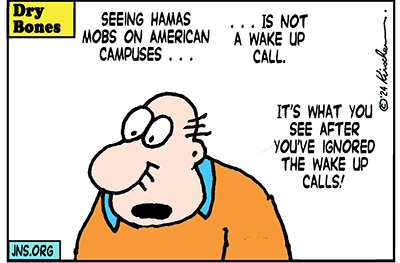
One of the problems with Senator Schumer’s speech is his apparent failure to understand that the present situation is a continuation of a religious war against Israel and the Jewish people, that is based on an ideology that demands, in part, the total elimination of Israel from the area of the Middle East. The Qur’an and Islamic traditions support and nurture an ideology of hatred towards the Jews, whose destiny, as determined by Islam, is one of absolute and total slaughter. Qur’an, Sura 5:64, makes clear that there will be “enmity and hatred” against the Jews until the end of the present age. This position has been inculcated in Islamic teaching for well over a thousand years old. So, the call for the final slaughter of all Jews is not based on the present war with Hamas, or even upon the establishment of the State of Israel. Yet, it continues today with even greater force than in previous years. Speeches by modern-day Imams confirm the call of the “Palestinians” to take the lead in the war against the Jews and that irrespective of how many agreements are signed or how many treaties are ratified, the Islamic call is to annihilate the Jews, as well as those who support them. If the United States thinks that it is exempt from the ultimate call of the Qur’an and its related Hadiths, to subject the entire world to an acceptance of Islam or be killed, then it is in for a very rude awakening. It should take a look at what has happened in France, in the countries of Scandinavia, in England and in other democratic countries, as well as take a good and long look at the demonstrations taking place in the streets across the U.S. and the statements made by elected officials in its own government.
I rarely attach a link to a video in this blog. But, given the misguided and uninformed opinions of a multitude of politicians in the U.S. and around the world, I would urge them to view, “Israelis must listen to the Palestinians” . My first reaction to this was to consider it one more attempt to get us to compromise with the so-called “Palestinians”, again. But, when viewed, it becomes readily apparent that the content does not leave much room for misunderstanding. We are encouraged to really listen to how much we are hated, how different our perspectives are and how we, as a people, value life, while those with whom we are told should be given an independent state value death, and, particularly, Israel’s death. If you can, send this to your political leaders. Maybe it will open their eyes to what they want us to ignore.
Senator Schumer says that his name is derived from the Hebrew word “shomer”, which means “guard”, “guardian”, or “keeper”. He adds: “Of course, my first responsibility is to America and New York. But as the first Jewish Majority Leader of the United States Senate, and the highest-ranking Jewish elected official in America ever, I also feel very keenly my responsibility as Shomer Yisrael – a guardian of the People of Israel.” But, Israel already has a Protector, the best there is, the Keeper of Israel, Who neither slumbers nor sleeps (Psalm 122:6 – Hineh, lo yanoom v’lo yeeshan Shomer Yisrael = same word).
There are dates and events in history that become etched in our memory banks. They are brought forth from time to time to remind us to remember them. Some events are international in their scope, such as September 11, 2001 (i.e., 9/11) and the Coronavirus Pandemic of 2020. Some are national, such as the Exodus from Egypt on Passover and the giving of the Law to Moses on Mount Sinai; December 7, 1941 – the bombing of the U.S. Naval Base in Pearl Harbor, “… a day that will live in infamy forever”. Some events are regional, such as 70 A.D. – the destruction of the Temple in Jerusalem by the Roman General Titus. Some relate to individuals – the death of Messiah Yeshua as the Passover Lamb and His resurrection, both according to the Scriptures. But, there are other events that relate to a specific people, and the attempts to eliminate them from the face of the earth – Psalm 83:4 – “Come, and let us wipe them out as a nation, that the name of Israel be remembered no more.” This is actually a series of events and attempts by those who hate God, who have exalted themselves and who made and make shrewd plans against “Your people” (Psalm 83:2-3; Deuteronomy 7:7; see the Scroll of Esther). And to this list we now solemnly and painfully add “Black Saturday” – October 7, 2023.
The Passover Haggadah (the telling of the Passover story at the annual Seder meal, the night of the Passover) contains the following statement (translation from Hebrew): “In every generation they rise up against us to destroy us.” A reading of Biblical history confirms this – Pharaoh’s command to kill all newborn, Jewish males and Herod’s command to kill all Jewish males under the age of two years old. Persecution under the Romans – You cannot live here as a Jew; convert or die. The slaughter of over a million Jews during the time of the Crusades; the expulsion of Jews from Spain and Portugal – You cannot live here. The pogroms in Russia and Eastern Europe and, eventually, to the Holocaust, the planned “final solution” to rid the world of the Jewish people – You cannot live!
But, WE DO LIVE. [The Week That Was: We Will Remember and Will NOT Forget – April 21, 2020]
“In 1898, Mark Twain’s “Concerning the Jew” essay was published in Harper’s Magazine. When his comment about the Jews not serving in the military was later proven to be untrue, he issued a public apology. In the latter part of his essay, he wrote, in part:
“What has become of the Golden Rule?”
It exists, it continues to sparkle, and is well taken care of. It is Exhibit A in the Church`s assets, and we pull it out every Sunday and give it an airing. But you are not permitted to try to smuggle it into this discussion, where it is irrelevant and would not feel at home. It is strictly religious furniture, like an acolyte, or a contribution-plate, or any of those things. It has never been intruded into business; and Jewish persecution is not a religious passion, it is a business passion.
. . . If the statistics are right, the Jews constitute but one percent of the human race. It suggests a nebulous dim puff of star dust lost in the blaze of the Milky Way. Properly the Jew ought hardly to be heard of; but he is heard of, has always been heard of. He is as prominent on the planet as any other people, and his commercial importance is extravagantly out of proportion to the smallness of his bulk. His contributions to the world`s list of great names in literature, science, art, music, finance, medicine, and abstruse learning are also away out of proportion to the weakness of his numbers. He has made a marvelous fight in this world, in all the ages; and has done it with his hands tied behind him. He could be vain of himself, and be excused for it. The Egyptian, the Babylonian, and the Persian rose, filled the planet with sound and splendor, then faded to dream-stuff and passed away; the Greek and the Roman followed, and made a vast noise, and they are gone; other peoples have sprung up and held their torch high for a time, but it burned out, and they sit in twilight now, or have vanished. The Jew saw them all, beat them all, and is now what he always was, exhibiting no decadence, no infirmities of age, no weakening of his parts, no slowing of his energies, no dulling of his alert and aggressive mind. All things are mortal but the Jew; all other forces pass, but he remains. What is the secret of his immortality?” (Mark Twain: Concerning The Jews, Harper’s Magazine, March, 1898).
“Indeed, the question of the ages has been “What is the secret of the immortality of the Jew?” Clearly, we are but human, fallible, given to every vice and virtue of almost every other people on the earth, whether presently existing or in ages past. We cannot over-simplify the answer, nor should we try. Yet, a question that relates to immortality can only be answered by reference to that which “immortal”, which lives forever, which defies logic and necessitates a reliance upon faith.
“We need to wake up to reality from a Biblical point of view. A time is coming, and it is not very far off, when the world will turn against this tiny stretch of desert land and its inhabitants and/or will idly stand by as nations gather together in an attempt to destroy us, so that the name of Israel would be no more (Ps. 83:4). Life for the Jew will be difficult beyond our imagination. Non-Jews who will come to faith in the Lord Yeshua, the Lord of Glory, the Holy One of Israel, during that time, will have their faith tested by the manner in which they relate to the Jew, as He stated (see Matt. 25:40): “…’to the extent that you did it to one of these brothers of Mine, even the least of them, you did it to Me.’” This statement was made by the Lord Yeshua before He went to the cross and died as the Passover Lamb that took upon Himself the sins of the world. His “brothers” were, therefore, according to the flesh, namely, the Jews. This is not the place to deal with the similarities or distinctions between the wars referred to in Psalm 83; Ezekiel 38:4-5, 10-12; 39:2 and Revelation 16. That is for another time.
“Israel as a nation and the Jews as a people, will continue to exist. “Thus says the LORD, Who gives the sun for light by day, And the fixed order of the moon and the stars for light by night, Who stirs up the sea so that its waves roar; The LORD of hosts is His name: ‘If this fixed order departs From before Me,” declares the LORD, “Then the offspring of Israel also shall cease From being a nation before Me forever.’ Thus says the LORD, ‘If the heavens above can be measured, And the foundations of the earth searched out below, Then I will also cast off all the offspring of Israel For all that they have done,’ declares the LORD.” (Jer. 31:35-37). The wars seeking to eliminate Israel and the Jews are physical manifestations of the spiritual warfare taking place – the spirit of Islam against The Spirit of the Resurrected Messiah, Israel in the midst of a sea of her enemies, who seek to destroy her.
“What is the secret of the immortality of the Jew? Simply, God! He is sovereign in all His ways…This world, with all of the evil that is in it, is fading away. We have to hold on to that which is eternal and to the One who dwells in eternity. We need to see the whole picture.” [The Week That Was: The Immortality of the Jew – 29 September, 2019]
By the way, notwithstanding Senator Schumer’s claim that Jews around the globe are driven by “Tikkun Olam”, the call to “repair the world”, it should be clear that we don’t need to try to fix the world. Efforts to do that over the millenia have failed miserably and we, as a people, have paid the price. “Fixing the World” is not our job. It belongs to the Creator of the Universe, the Maker of Heaven and Earth, the One who has fashioned us in our mother’s wombs. He alone can channel the hearts of kings like water and turn them whichever way He wants (Proverbs 21:1).0
Lest one think that my criticism of Senator Schumer’s speech is an isolated one, I am joined by politicians from both sides of the Congressional political isle, although some from Schumer’s own party were more reserved in their responses. Some of those comments can be read here and here. In the words of Senate Minority Leader Mitch McConnell (R., Ky), Schumer’s comments were not only “unprecedented”, but “grotesque and hypocritical”, as well. He added: “The Democratic Party doesn’t have an anti-Bibi* problem. It has an anti-Israel problem.” [* Bibi is the nickname for Benjamin Netanyahu.]
The present U.S. Administration should stay away from playing armchair-military strategists and leave the decisions about how to conduct warfare to the people who are best trained for it and who have life experiences that guide their decisions. In short, President Biden should take the advice of General Jack Keane (Ret.) and “Leave Israel Alone”. Gen. Keane, who was interviewed on Fox News, dealt first with the return of ISIS in Afganistan and then applauded Israel’s actions in the present Gaza War. He disagreed with President Biden’s comments and said that Israel should be allowed to achieve its military goal of eliminating Hamas: “I just wish frankly that the President and his teams would leave Israel alone here and let them conduct their military operation in accordance with their values and as they see fit. They have taken unprecedented moves to remove the problem that no other military has had in my memory of dealing with such a concentration of civilians that are actually in the combatant zone inside urban centers. When the sound of the guns come, people normally leave. Hamas doesn’t let them leave. The Israelis had moved them away, as best as they possibly can. And so it’s resulted regrettably in civilians casualties. But, the rose has to be pinned. The reason for those casualties is Hamas. We’ve got this thing twisted and blamed Israel for that. That’s not the case. Israel has to finish this…If we let Hamas live again because we don’t destroy the remaining batallions and their leaders, they’re going to rearm and re-attack and make the people of Israel vulnerable once again…They’re after [Israel’s] destruction and … the millions of Jews who are living there. They certainly trust their government and their security forces, until October 7th. And that trust will have to be renewed and regain the trust of the Israeli people so they’re not put further at risk by not destroying this force.”
I will repeat, and continue to say, that Western nations fail to understand the realities of the present situation of Israel and her neighbors. A “two-state solution” would add insult to injury, fuel the flames of antisemitism, and be a reward for terrorism. Nations may choose to abandon Israel because of the present Gaza War. Their choices will have consequences, either for good or for bad. If they do choose to forsake Israel, then we can rely on a statement from Mordechai to his niece, the Queen, in the Book of Esther: “For if you [fail to help Israel] at this time, relief and deliverance will arise for the Jews from another place” (Esther 4:14).
A little longer than usual, but every now and then, we need to say what needs to be said.
Whatever your situation may be, remember: Bless, be blessed and be a blessing!
Have a safe, healthy and God-honoring week.
Marvin









 The Week That Was